

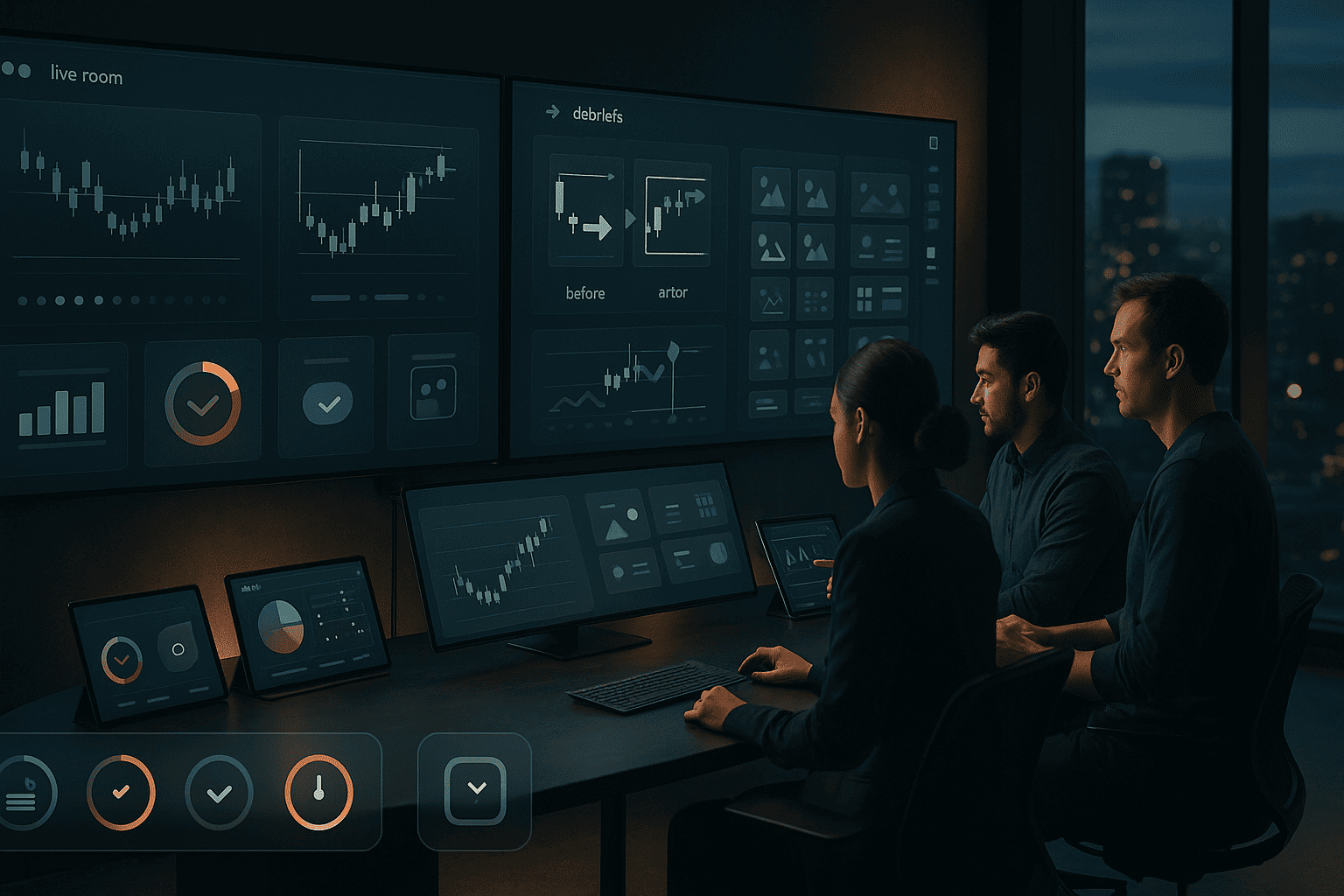
The bell is minutes away. One screen shows levels, another shows chat, and a dozen opinions race by. A good mix of stock signals and trading room context turns that noise into a calm, tradable plan. Below is a clean look at formats, safeguards, and the kind of data a healthy stock trading community should surface so you can act with confidence rather than adrenaline.
“A trade signal is a market indicator suggesting when to buy or sell securities.”
The landscape in plain English
Signals point to potential entries or exits. Trading rooms add narration, timing, and post-trade accountability. Used together, they compress research time, but they also magnify behavioral risk if no guardrails exist.
“Past performance does not necessarily predict future results.”
Common room styles and when they help
| Room style | What you see | Strength | Watch-out |
| Live scalp room | Hosts call levels and pace in real time | Timing for active traders | Overtrading without strict sizing |
| Swing room with debriefs | Fewer, deeper ideas with recaps | Teachable process and logs | Slower feedback loop |
| Hybrid community | Live plus library and tools | Best balance for most | Needs strong moderation |
Turning streams into decisions
Raw calls are entertaining; decisions need structure. Favor rooms that show the full path from thesis to outcome and that speak in cash risk, not just “confidence.”
| Metric to surface | Why it matters | Green flag |
| Max drawdown per strategy | Risk footprint, not just wins | Shown beside returns, not hidden |
| Slippage vs quote | Execution reality in fast minutes | Timestamped leader vs follower fills |
| Holding-time bucket | Fit to your schedule | Median duration and session bias |
| Calendar awareness | Spread and gap control | News windows flagged before they hit |
Research continues to find peer effects in trading behavior, with individuals reacting more to peer gains than peer losses. A reminder to anchor on rules, not excitement.
Safety notes for chat-driven trading
- Signals are information, not instructions. Rooms and forums fall under communications rules when run by regulated firms, including standards against misleading claims.
- Day-trading promotions carry required disclosures because risk is high; losses can exceed expectations quickly when leverage or margin are involved.
- Social channels can host manipulation. The SEC has charged groups that used Discord and Twitter to pump and dump stocks. Keep your skepticism switched on.
“Day trading can be extremely risky… you should be prepared to lose all of the funds that you use for day trading.”
Anatomy of a room that actually helps
| Building block | What good looks like | Why you feel the difference |
| Time-stamped plans | Entry, stop, target in one line | You can replay and learn fast |
| Pre-session map | Levels, scenarios, key events | Fewer surprises, cleaner sizing |
| Post-trade recap | Screenshots plus slippage | Evidence replaces anecdotes |
| Culture of “pass” | Skipping is normal | Lower churn and calmer weeks |
Evaluating community-driven trading insights
Your best filter is consistency. Sort leaders and threads by drawdown-adjusted returns, not by single hot months. Compare like with like: a five-minute scalper and an overnight swing trader can both be excellent, just not interchangeable. Keep a personal rule that no room can change your per-trade cash risk without a week of logs to justify it.
“The rules protect investors from false, misleading claims, exaggerated statements, and material omissions” when firms communicate on social media. That standard is a good yardstick for communities, too.
Quick comparison of signal sources you will encounter
Costs you actually feel
Spreads, commissions, and slippage are the obvious ones. The hidden cost is attention. Every extra idea you chase steals time from the one idea you can measure. Good rooms reduce ideas, not inflate them.
If this fits your style, pick one session this week, take exactly one idea at a tiny size, and compare your result with the room’s recap. If your notes look calmer and your stats look cleaner, you found a stock trading community worth keeping.
FAQ
Are stock-signal rooms the same as copy services
No. Most rooms share analysis and timing. You still choose entries and sizes. Regulated copy or auto-execution products are a different category and trigger additional oversight.
Can social rooms be unsafe
They can be, especially around low-float stocks and hype cycles. The SEC has brought cases tied to coordinated promotions on social channels.
What single rule improves outcomes fastest
Treat every call as a hypothesis and cap the cash you can lose on it. Remember the baseline: past performance is not a promise.
Why do rooms stress risk disclosures
Because regulators require fair, balanced communications, and because day trading on margin carries very real loss potential.