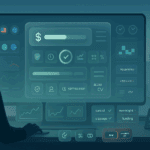


A dependable stock indices broker does not drown you in widgets. It gives you a tight routine, a clean ticket in cash terms, and statements that match your exports line by line.
Whether you are testing the waters with index trading for beginners or scaling CFD trading on global indices, the edge is structure, not noise.
“If you can explain the risk in one sentence, the trade is ready.”
The idea in one minute
One login. One ticket. One cash risk number per trade. You press on S&P 500, NASDAQ 100, DAX, FTSE, or Nikkei using the same position sizing, the same bracket template, and the same review checklist. When platform and paper tell the same story, trust grows.
“Consistency beats intensity.”
Broker traits that actually matter
| Area | Look for | Why it matters |
| Cash risk on ticket | Risk shown in dollars before submit | Prevents accidental oversizing |
| Bracket templates | Stop and target attach automatically | Removes hesitation at exits |
| Transparent specs | Tick value, trading hours, funding in cash | Fewer surprises on opens and overnights |
| Delay and slippage panel | By index and session with exports | Confirms the fills you really get |
| Reports with parity | Statements equal CSV or API totals | Ends disputes in minutes |
| Status and incidents | Public timelines with planned reverts | Trust during loud market days |
Choose the stack you can audit, not just admire.
Index personalities at a glance
| Index | Rhythm you can expect | Common traps | Practical guardrail |
| S&P 500 | Liquidity at US cash open and final hour | Slippage at the bell | Trade the opening range break retest |
| NASDAQ 100 | Faster moves, tech heavy | Chasing momentum spikes | Smaller risk unit and strict stops |
| DAX | Active around Frankfurt and London | Whipsaw pre news | Wait for clear retests after the first break |
| FTSE 100 | Measured pace | Thin stretches at lunch | Keep targets modest mid session |
| Nikkei 225 | Japan session trends | Off hour gaps | Prefer liquid windows and defined news checks |
You do not need every lane at once. One clean lane beats three noisy ones.
Index trading for beginners, without the stress
Start with a tiny, repeatable routine.
- Pick two windows you can actually trade
- Write a single cash risk number on a sticky note
- Trade only one setup per window for two weeks
- Save two bracket templates: tight day trade, slightly wider trend
- Journal two screenshots and two lines per entry
“Progress is a series of small, boring upgrades.”
CFD trading on global indices, explained simply
CFDs mirror the price of an index and settle differences in cash. They provide access to global sessions with flexible sizing. Treat that flexibility with respect by sizing in dollars, not vibes, and by checking funding costs before you hold overnight.
Ticket math in cash
- Risk per trade: 45 dollars
- Planned stop on an index: 9 points
- Dollar per point: 1 dollar
- Size = 45 ÷ 9 = 5 contracts
The same math travels from S&P to DAX to FTSE. Keep it.
Two beginner-friendly setups that travel across indices
Opening range break and retest
Box the first minutes after the bell. After a decisive break, take the first clean retest back to the box edge, with your bracket attached. Works well on S&P and NASDAQ.
Pullback into value
Define direction on a higher timeframe. Mark a value zone, such as VWAP or a fair mean band. Take the first pullback that pauses, bracket attached. Solid on DAX and FTSE.
Short definitions hold when price speeds up.
Guardrails that protect the month
Turn these on before touching the Buy or Sell button.
- Per day loss cap that auto pauses trading until reset
- Max position size per symbol and per ticket
- Two attempts per idea, then stand down
- Session filters so you avoid thin or news-heavy minutes
- Plain messages when rules fire, so you understand the why
Cost lines that decide more than you think
Treat costs like ingredients. Measure them for twenty sessions.
| Cost | Where it bites | Practical move |
| Spread and commission | Every fill | Trade liquid minutes, avoid chasing breaks |
| Slippage | At the open and near data | Prefer retests over chasing first prints |
| Overnight funding | Holding CFDs after hours | Match hold time to cost or avoid overnights |
| Data and tools | Extras you rarely use | Keep only what changes outcomes |
Cost clarity turns uncertainty into a choice you can live with.
A small toolbox that punches above its weight
- Levels list: yesterday’s high and low plus session open
- Calendar view: top releases in your local time
- Screenshot shortcut: before and after for every trade
- Export check: statement totals match your CSV
- Review card: keep, tweak, or drop each setup weekly
Minimal tools, maximum accountability.
Sample day you will recognize
US cash opens. The S&P builds a tight box. You wait. A clean break forms, price retests, and you enter with your bracket. Risk sits at 45 dollars, nothing more. Thirty minutes later, NASDAQ sets a similar structure, but pace looks hot, so you use the smaller risk preset. Spreads and slippage stay inside your normal band. In the afternoon you skip a choppy move because it fails your retest rule. That evening your statement matches the CSV export line by line. No detective work. That is a stock indices broker doing its job for a steady plan that fits index trading for beginners and CFD trading on global indices alike.
Quick comparison: two sample routines
| Routine | Window | Setup | Targets | Why it works |
| Calm opener | First 45 minutes | Opening range break retest | 1R then trail small | Uses liquidity and clear structure |
| Midday patience | Post news to lunch | Pullback into value | 1R fixed or flat | Avoids chop and respects rhythm |
Keep it this simple for your first month.
FAQ
Is a specialized stock indices broker necessary
Yes if you want cash risk on the ticket, bracket templates, export parity, and slippage panels by session. Those traits cut errors and end debates.
Can index trading for beginners start with live money
Start with the smallest size your broker allows and a written per day cap. Two attempts per idea. Scale only after two calm weeks.
Are CFDs the right wrapper for everyone
CFDs are flexible and accessible. If you hold overnight often, check funding costs and consider whether shorter holds fit your plan.
Should I trade multiple indices on day one
Pick one index and one window. Add a second only after your notes, fills, and costs behave for two straight weeks.
How do I keep slippage under control at the open
Trade the retest of the opening range instead of the first burst. Size smaller on NASDAQ and during hot catalysts.
What proves my broker is reliable
Cash shown on the ticket before submit, brackets attached by default, statements equal exports, and a status page with real incident timelines.
One quiet nudge before you fund
Write one page that lists your two windows, one or two setups, cash risk per trade, and per day cap. Confirm your platform shows dollars on the ticket, saves bracket presets, and exports data that equals statement totals. Start with a single index and a simple rule. Add the next piece only after your routine stays calm.