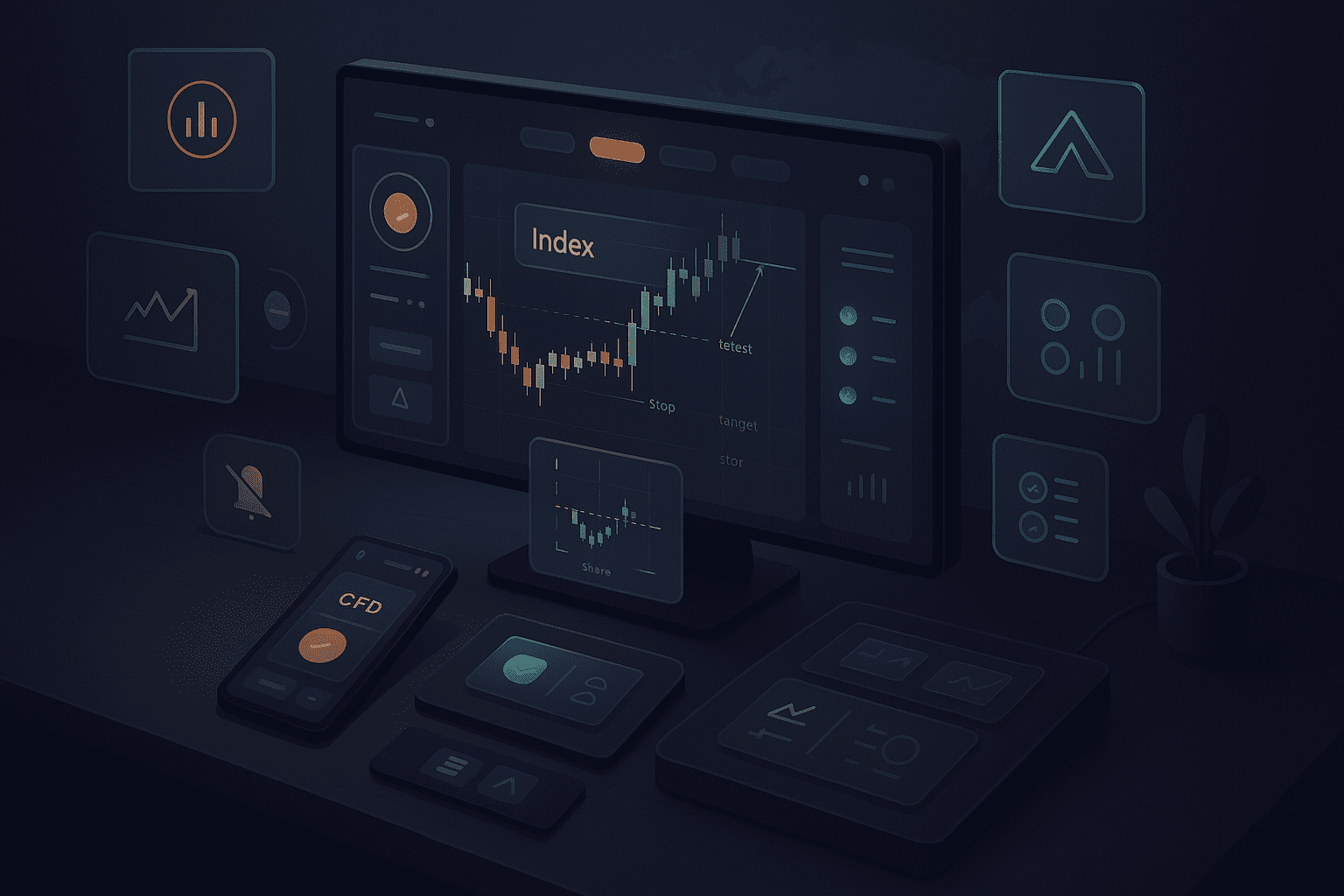

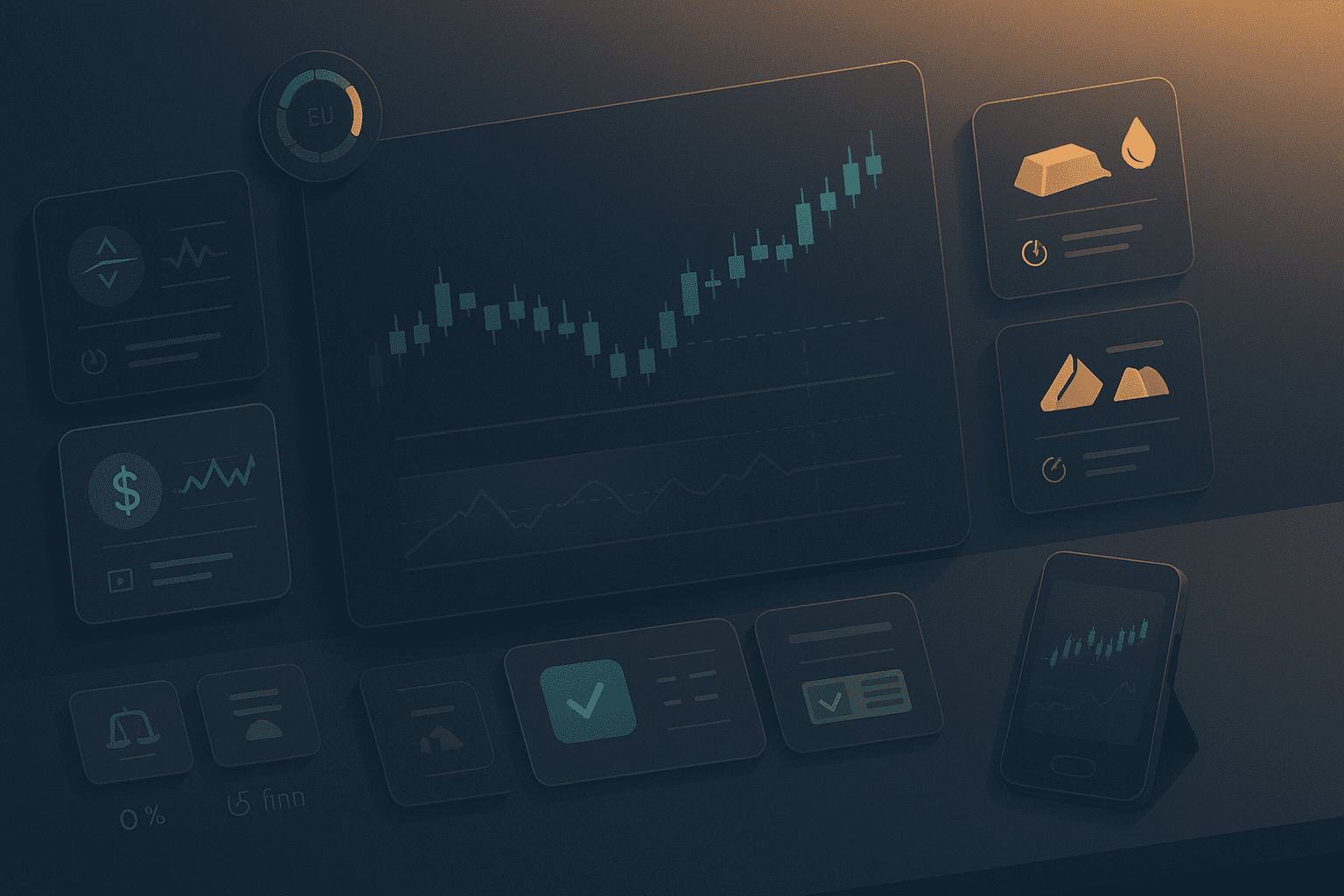
You want platforms to trade multiple financial markets that stay quiet on loud days. Orders should route cleanly, risk should show in cash before you click, and statements must match exports line by line.
Below is a non-hype guide that shows the features that actually matter, a practical forex vs stocks vs commodities trading guide, and how to trade different markets using CFDs without unwanted surprises.
The quick take
- One login, one ticket, one cash risk number per trade
- Brackets attach by default so exits stay honest
- Session-aware routing and clear symbol specs in cash terms
- CSV or API exports that equal statement totals, every time
Choose tools you can audit, not just admire.
What a true multi-market platform should look like
| Area | Must-have behavior | Why it matters |
| Order ticket | Cash risk preview, OCO brackets, market-if-touched | Prevents accidental oversizing and late exits |
| Product coverage | FX majors, top indices, gold and oil, selected equities or ETFs | Variety without overwhelm |
| Symbol specs | Tick value, min step, session hours, funding shown in cash | Fast sizing across assets |
| Routing quality | Session-aware venues with price collars | Cleaner fills at opens and around prints |
| Risk tools | Per day loss cap, max size per symbol, session filters | Small mistakes stay small |
| Mobile parity | Same ticket logic on phone and desktop | No second learning curve |
| Reporting | Statement totals equal CSV or API exports | Disputes end in minutes |
| Status page | Public timelines with start, fix, and planned revert | Calm communication during stress |
If a demo cannot prove these in ten minutes, live trading will not be kinder.
Forex vs stocks vs commodities trading guide
Use this table to match instruments to your schedule and temperament.
| Dimension | Forex | Stocks (CFDs or cash) | Commodities (gold, oil, silver) |
| Session rhythm | 24 hour with EU–US overlaps | Strong at each market’s open and close | Event driven around inventories and macro prints |
| Typical drivers | Rates, dollar flows, macro releases | Earnings, guidance, sector news | OPEC, EIA reports, inflation and growth tone |
| Volatility style | Frequent but smoother intra day | Larger gaps on news and earnings | Bursts around scheduled reports |
| Research load | Moderate, macro-focused | High if you track many names | Moderate, strong calendar discipline |
| Costs and slippage | Tight in overlap windows | Varies by stock and cap | Can widen near data and rolls |
| Best for | Routine builders and technical setups | Company-edge traders and earnings fans | Event-aware traders who respect calendars |
“Pick the instrument that matches your window and your patience.”
How to trade different markets using CFDs
CFDs mirror price moves on underlying assets and let you size trades in small steps. Treat them with the same discipline you would apply to listed products.
Set up your workflow
- Cash-first sizing
Decide dollars at risk before you click. The platform converts dollars to size. - Bracket presets
Save stop and target templates so exits are automatic. - Session discipline
Trade only your liquid hours. Use filters to avoid thin sessions. - Calendar awareness
Post time and event reminders inside the platform. - Export parity
Confirm that your daily CSV equals statement totals line by line.
Sizing examples in plain cash
- FX pair: risk 30 dollars, 10 pip stop, 1 dollar per pip on a mini
Size = 30 ÷ 10 = 0.3 mini lots - Index CFD: risk 45 dollars, 9 point stop, 1 dollar per point
Contracts = 45 ÷ 9 = 5 - Gold CFD: risk 50 dollars, 0.50 stop, 10 dollars per 0.10 move
Dollars per 0.50 = 50, so 1 lot risks 50 dollars
“Cash language travels across assets. Keep it.”
Feature checklist to copy into your trial
Must-haves
- Cash risk on ticket before submit
- Bracket exits saved as default
- Symbol specs in cash terms for FX, indices, metals, and selected stocks
- Per day loss cap, max position size, and session filters
- Exports that equal statement totals without edits
Nice-to-haves
- One-click screenshot for journaling
- Alerts by price and time in your time zone
- Workspaces that switch layouts between FX, indices, and commodities
Build a short, liquid product menu
Start narrow. Expand only after two quiet weeks where fills, costs, and notes behave.
- Week 1–2: EURUSD, USDJPY, S&P 500, gold
- Week 3–4: Add oil and one large-cap stock or ETF that you actually follow
- After quiet weeks: Consider silver or DAX if support stays calm
You can cover a world of opportunity with five symbols if your routine is tight.
Costs decide more than headlines
Track real numbers for twenty sessions so your comparison is honest.
| Cost line | What to check | Practical move |
| Spread and commission | Typical bands in your hours | Trade core minutes, avoid chasing |
| Slippage | Fill minus expected price | Favor retests, reduce size near prints |
| Funding or swaps | Overnight holds | Match hold time to cost or day trade early on |
| Data and platform fees | Only what you use | Keep the toolset lean and effective |
| Payments | Deposit and withdrawal timelines and fees | Document steps so you avoid surprises |
“Cost clarity turns uncertainty into a choice you can live with.”
Two setups that travel across markets
Opening range break and retest
Box the first minutes of your session. After a decisive break, take the first clean retest to the box edge with brackets attached. High clarity on S&P 500, DAX, gold, and active FX pairs.
Pullback into value
Confirm direction on a higher timeframe. Mark a value band such as VWAP. Take the first measured pullback that pauses. Useful across majors, large-cap stocks after the open settles, and metals.
Short definitions survive loud markets.
FAQ
Do I need multiple accounts to trade many markets
No. A solid multi asset platform gives you FX, indices, and core commodities on the same login with identical cash sizing and bracket logic.
Are CFDs appropriate for beginners
They can be, if you use micro sizing, fixed cash risk, strict per day caps, and trade only your liquid session. Measure costs for twenty sessions before scaling.
Which is easier to learn first, forex or commodities
Forex pairs like EURUSD and USDJPY often have steadier liquidity during overlaps. Start there, then add gold or an index once your routine is calm.
How do I cut slippage around major reports
Size down, skip the first spike, and trade the first clean retest. Use session filters or a short blackout timer during hot minutes.
What proves a platform is trustworthy
Exports equal statements, a public status page with real incident timelines, and fast human replies during your trading hours.
A gentle nudge before you commit
Write a one page plan with your session, fixed cash risk, two setups, and the three numbers you will track for twenty sessions: spread, slippage, export parity. Then choose the platforms to trade multiple financial markets that make your journal boring and your reporting exact while you apply how to trade different markets using CFDs calmly.