

You do not need five logins and ten dashboards to trade across assets. You need one account for multi-market trading. It should keep the same order ticket everywhere and show risk in cash before you click.
It should also produce statements you can read easily. Pair this with a reliable cross-asset trading broker. Add real access to a unified trading platform. This way, you get a wide range of options without confusion.
The promise you can feel in a single session
A single login. One ticket language. Many markets. You rotate from majors to metals to indices without changing how you size, place, and review trades. The platform stays quiet while your routine does the work.
What “unified” feels like
- One ticket for price, size, stop, and target across symbols
- Cash risk preview on every order
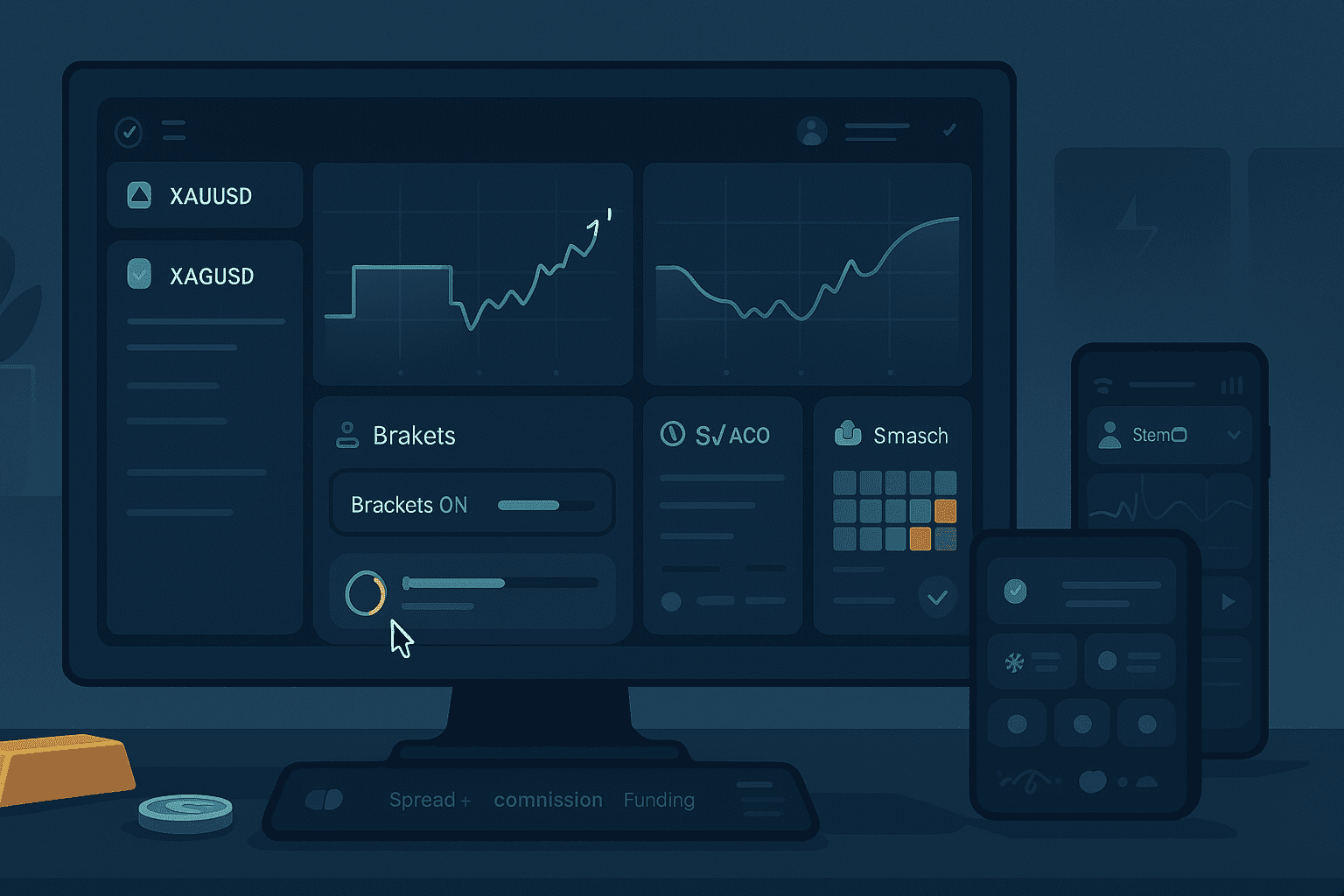
- Brackets by default so exits happen on time
- Alerts in your local time before key prints
- Statements that itemize spread, commission, funding, and slippage
None of this is flashy. All of it is durable.
Why the broker matters
A strong cross-asset trading broker brings order to variety. Look for non-negotiables that keep you in control.
| Area | Must have | Nice to have | Red flag |
| Risk on ticket | Cash preview before submit | Preset risk tiers | Percent hidden in a sub tab |
| Orders | Brackets and OCO everywhere | DOM or ladder for futures | Manual stops every time |
| Specs | Tick value, contract value, hours, funding in cash | Inline links to roll or swap rules | Vague docs and missing hours |
| Reports | Itemized statements and CSV export | API or webhooks | PDFs only |
| Status | Incident timestamps with reverts | Postmortems | Silence during stress |
“Choose partners you can audit, not just admire.”
Ticket math in plain cash
Let the platform do arithmetic. You set the cash risk and let size follow.
Index micro example
- Risk unit: 40 dollars
- Stop: 4 ticks equals 1 point
- Tick value: 1.25 dollars per tick
- Risk per contract: 4 × 1.25 equals 5 dollars
- Position size: 40 ÷ 5 equals 8 contracts
Metal CFD example
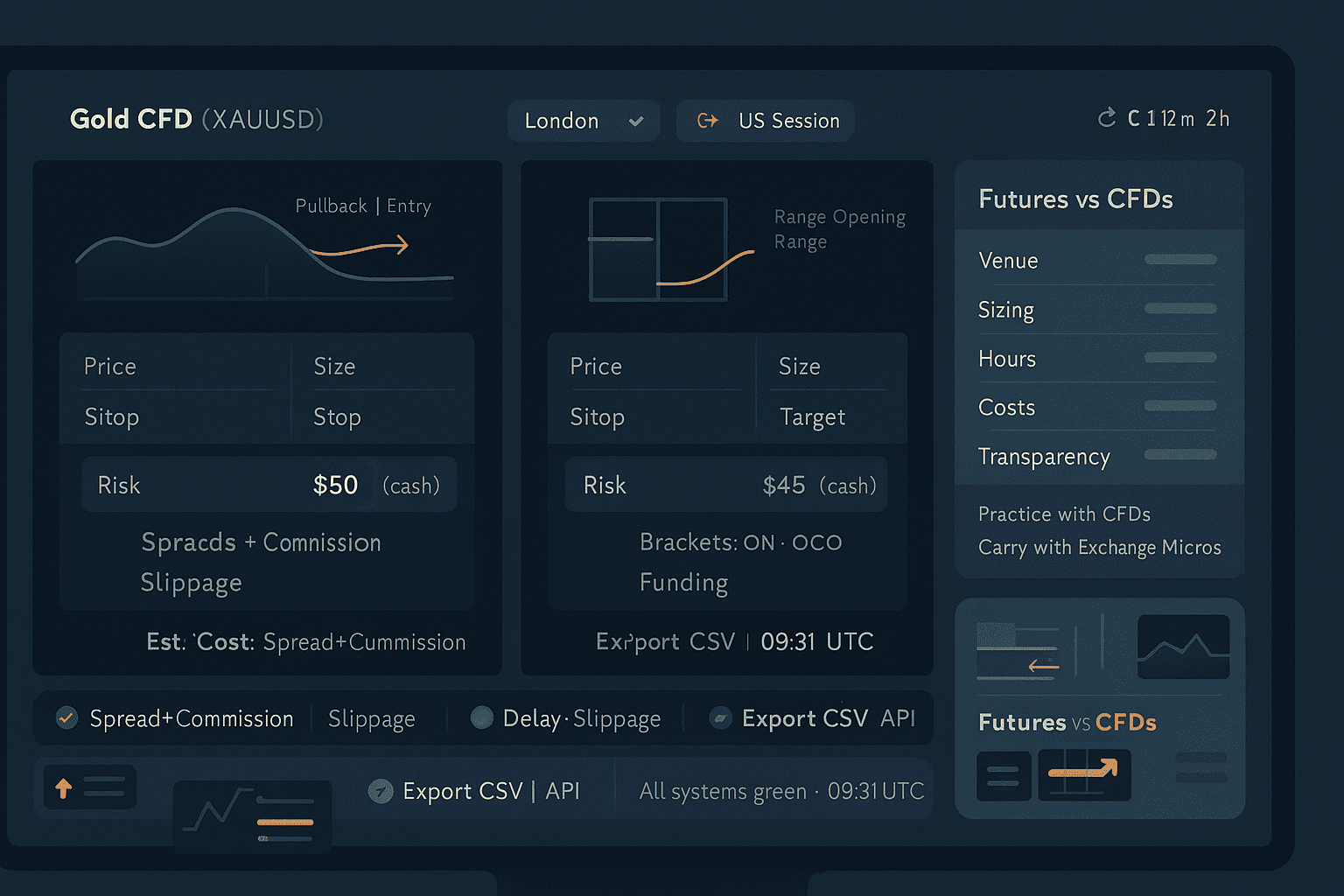
- Risk unit: 50 dollars
- Stop: 0.50
- Risk per contract: 50 dollars
- Position size: 1 contract
“You cannot control the market. You can always control position size.”
Costs that quietly decide your month
Treat costs like ingredients. Measure them for twenty sessions and your habits will improve on their own.
| Cost line | Where it bites | Practical move |
| Spread plus commission | Every fill | Trade liquid minutes and pick a pricing tier that fits your average ticket |
| Slippage | Opens and macro minutes | Prefer retests over chases, use limits when speed tempts you |
| Funding or swaps | Overnight CFD holds | Hold smaller or switch to exchange futures for carries |
| Exchange and data | Exchange products and depth | Subscribe only to what you use, review monthly |
“Cost clarity turns uncertainty into a trade you can choose.”
Unified trading platform access in practice
If you truly enjoy unified trading platform access, these behaviors become normal:
- Symbol search and watchlists act the same in every asset class
- Hotkeys and order templates travel across instruments
- Calendar merges economic prints and earnings in your local time
- Layouts sync across web, desktop, and mobile
- Exports rebuild statements exactly, line by line
When the right habits are easy, you picked the right stack.
Three setups that travel across assets
Keep definitions short so they hold under pressure.
Range break and retest
Box the opening range. When price closes outside, wait for a clean retest. Enter with your bracket already attached. Works on indices, liquid stocks, and majors.
Pullback into value
Confirm directional intent. Use VWAP bands or a prior value zone. Enter on the first pullback that pauses. Great on metals and FX during macro windows.
Quiet session fade
During calmer periods, fade stretches into well tested bands with small size and firm stops. Useful on mid-day indices and late FX overlaps.
“If the entry needs a paragraph to justify it, it is not ready.”
Two focused mixes that keep stress low
Metals plus indices
- Windows: London morning for metals, first cash hour for indices
- Risk: 50 dollars per metal trade, 40 dollars per index trade
- Plan: pullback into value on gold, box to retest on the index
- Why it works: different rhythms, same ticket logic
FX plus single stock
- Windows: London open for majors, regional cash open for the stock
- Risk: 40 dollars each lane
- Plan: pullback on EURUSD, VWAP reversal on the stock
- Why it works: avoids overlap while using one routine
Guardrails that protect your month
- Daily loss cap that pauses trading
- Max contracts or notional per symbol and per ticket
- Two attempts per idea, then stand down
- Avoid top tier prints unless that is your explicit edge
- Clear on-screen messages when limits trigger
Short messages prevent tickets.
“Order blocked. Free margin below threshold. Reduce size or fund.”
“Pause active. Daily limit reached. Resets at 00:00 server time.”
Signs you picked the right partner
- You spend less time rearranging layouts and more time reviewing outcomes
- Alerts arrive early and in your local time
- Your journal shrinks because the platform does the boring math
- Withdrawals land on schedule and status notes match reality
- Your mental invoice matches the statement line by line
“Trust lives in spreadsheets and status pages, not in taglines.”
A day that proves the point
Picture a Tuesday. London sets a tone and gold pulls back into value. You size by cash, click once, and the bracket attaches. Thirty minutes later the S&P micro breaks its morning box and retests. Same ticket, same math. In the afternoon a single stock taps VWAP and reverses. Smaller size, identical logic. That evening your statement matches your notes line by line. No creative labels. No guesswork. That is one account multi-market trading doing the job you hired it to do.
FAQ
Does one account multi-market trading really help performance
It helps focus. One ticket language, cash based risk, and consistent exits reduce mental friction. You make fewer accidental mistakes and learn faster from your own data.
Will unified trading platform access raise my costs
Not if you measure. Track total cost per trade for twenty sessions and keep the windows and instruments that remain efficient. Prune the rest.
Is mobile safe for edits and exits across assets
Mobile is fine when size shows in cash and brackets are visible. Fast entries still feel better on the desktop during the open.
How do I avoid doubling risk across lanes
Watch correlation. Dollar moves echo in gold and majors. Equity risk can rhyme with your favorite single stocks. When exposures overlap, pick the cleaner idea or split size.
Which feature matters most on day one
Cash risk preview. If the ticket shows dollars before you click, every other decision gets easier.