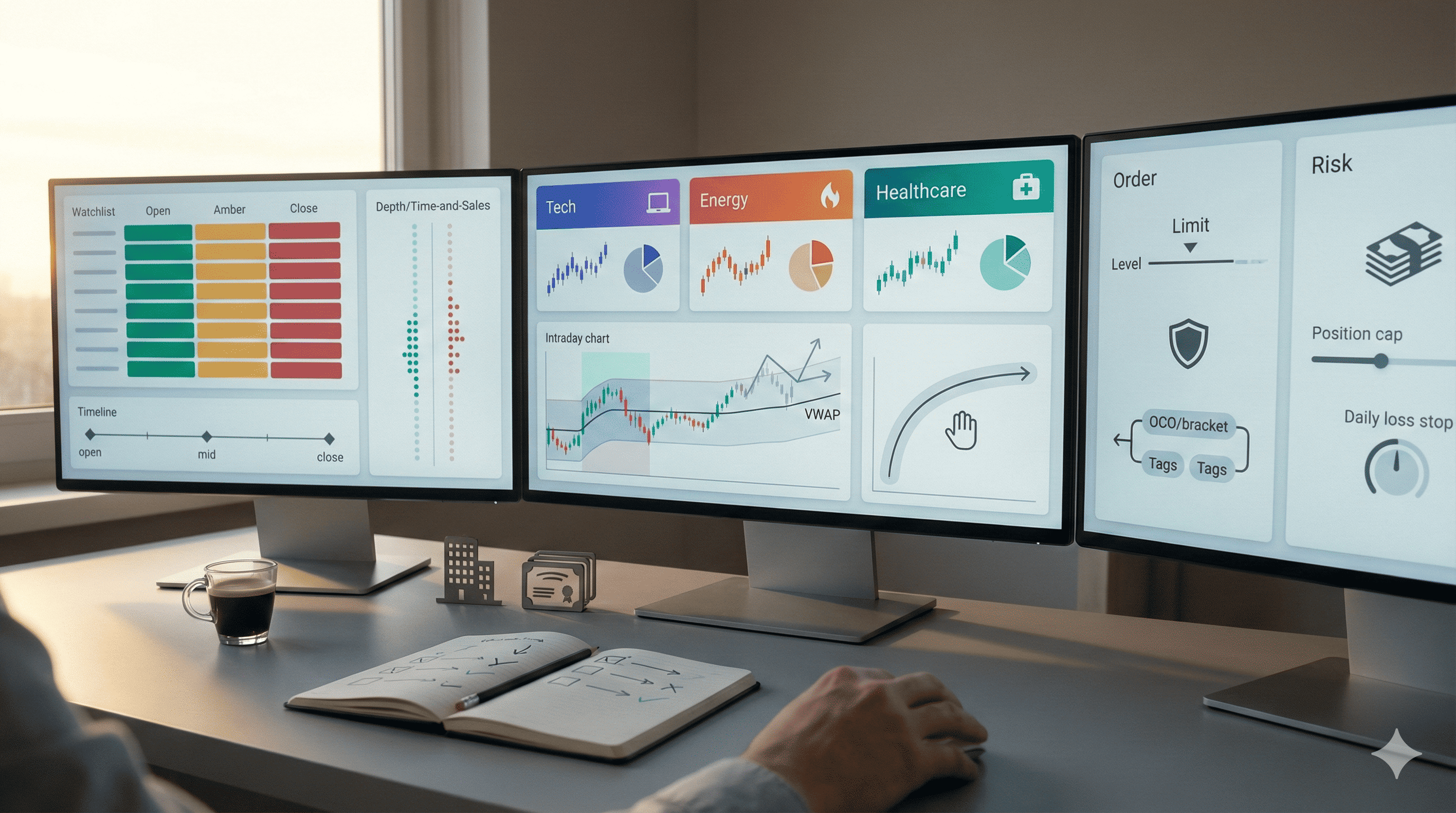

The ladder moves, the clock is loud, and liquidity ebbs before data hits. This is futures day trading in real life, with a clear take on protections, practical setups, and the exact answer to does pattern day trading apply to futures while keeping how to day trade futures grounded in repeatable steps.
“The risk of loss in trading commodity futures contracts can be substantial.”
The live landscape in plain English
Futures trade nearly around the clock with short maintenance breaks, which is why timing and venue matter as much as your chart reads.
- CME Globex lists product hours and the daily maintenance window, useful for planning entries and exits.
- Futures margin is performance bond style, not securities-style margin, so your risk math looks different from stocks.
Securities vs Futures at a glance
| Topic | Futures | Securities (stocks, ETFs, equity options) |
| Day trading rule | No FINRA pattern day trader rule | PDT applies if 4+ day trades in 5 business days and other criteria are met |
| Regime | CFTC and exchange rulebooks | FINRA rules for broker-dealers, SEC oversight |
| Trading day | Nearly 24 hours with short breaks | Core cash session, limited extended hours |
| Margin concept | Performance bond, marked to market | Reg T and day-trading margin rules |
“Futures aren’t subject to the pattern day trading regulations that apply to ETFs, stocks or stock options.”
The exact answer to does pattern day trading apply to futures
Short answer, no. The FINRA pattern day trader regime is defined for day trading in a margin account in securities. Futures are not securities, so the PDT equity minimum does not apply. CME education explicitly contrasts equity PDT with futures, noting futures traders can trade frequently so long as exchange and clearing margins are met.
“A pattern day trader must maintain 25,000 dollars of equity, but a futures trader is not required to meet this minimum account size.”
Core habits that make futures day trading calmer
- Treat scheduled releases as separate regimes. Liquidity thins, spreads and slippage change, and your stop-to-target math should shrink accordingly.
- Journal slippage by product and hour for two weeks. Your real cost lives in those numbers, not the brochure spread.
- Keep brackets defaulted. Every entry gets a stop and first targets the instant you click.
A compact checklist you can reuse
| Item | Quick test | Keep it if |
| Product hours | Pre, regular, and maintenance noted | You can list them from memory before placing size |
| Risk per trade | Cash amount fixed before session | Same dollar risk regardless of mood |
| Slippage log | By hour and by release | You can point to the worst 15 minutes each week |
| Platform fills | Timestamps, venue, price improvement lines | Exportable and easy to reconcile |
Practical section: how to day trade futures without drama
You do not need ten setups. You need one that respects structure and time of day.
Two intraday templates that travel across products
- Break and retest near the open
Price clears a pre-session level, then drifts back. Entry near the retest, stop beyond structure, first target equals cash risk, then trail swing lows. - Mean reversion to a session midline
A stretched push stalls. Fade to a midline such as VWAP when pace slows. Use smaller sizes near scheduled news.
“Futures contracts are standardized agreements traded on exchanges.” That standardization is your friend when you design repeatable entries.
Session rhythm that actually helps
- Asia, Europe, and US overlaps feel different. Many traders focus on Europe to US overlap for depth and pace.
- CME support hours and notices help you plan around maintenance and rare outages.
Costs and frictions you will actually feel
- Implicit: spread and slippage, which spike around economic releases and thin books.
- Explicit: exchange, clearing, commissions.
- Tail risk: fast moves against you. The risk disclosure is blunt for a reason.
Tiny 10-session experiment
Day 1, pick one contract.
Days 2 to 9, trade one setup per day with fixed cash risk, log spread and slippage, and note any rule you broke.
Day 10, keep the parts your log confirms, drop everything that lives only in memory.
Before the FAQ, a quick nudge: if this approach fits, write a one-page rules sheet, pin product hours, and commit to that 10-session test. You will feel the difference within a week.
FAQ
Does the PDT rule ever affect futures accounts
The FINRA PDT rule applies to day trading in securities. Futures are not securities, and exchanges like CME emphasize that futures trading is not subject to PDT, provided you meet margin requirements.
What documents should I read before I trade
Read the CFTC Risk Disclosure. The first line says the risk of loss in futures can be substantial. It is short and worth rereading.
When are futures markets actually open
Most major futures trade nearly 24 hours from Sunday evening to Friday with brief daily maintenance. Check the product’s Globex schedule each week.
Do futures use the same margin idea as stocks
No. Futures margin is a performance bond. NFA’s handbook notes the difference from securities margin, which helps explain why PDT does not apply.
What is the fastest way to improve fills
Record slippage by hour and around specific reports, then avoid your worst five minutes. Most traders find a small set of windows where their fills are consistently better.
“Futures aren’t subject to the pattern day trading regulations that apply to ETFs, stocks or stock options.” Keep that line in mind while you build your routine