
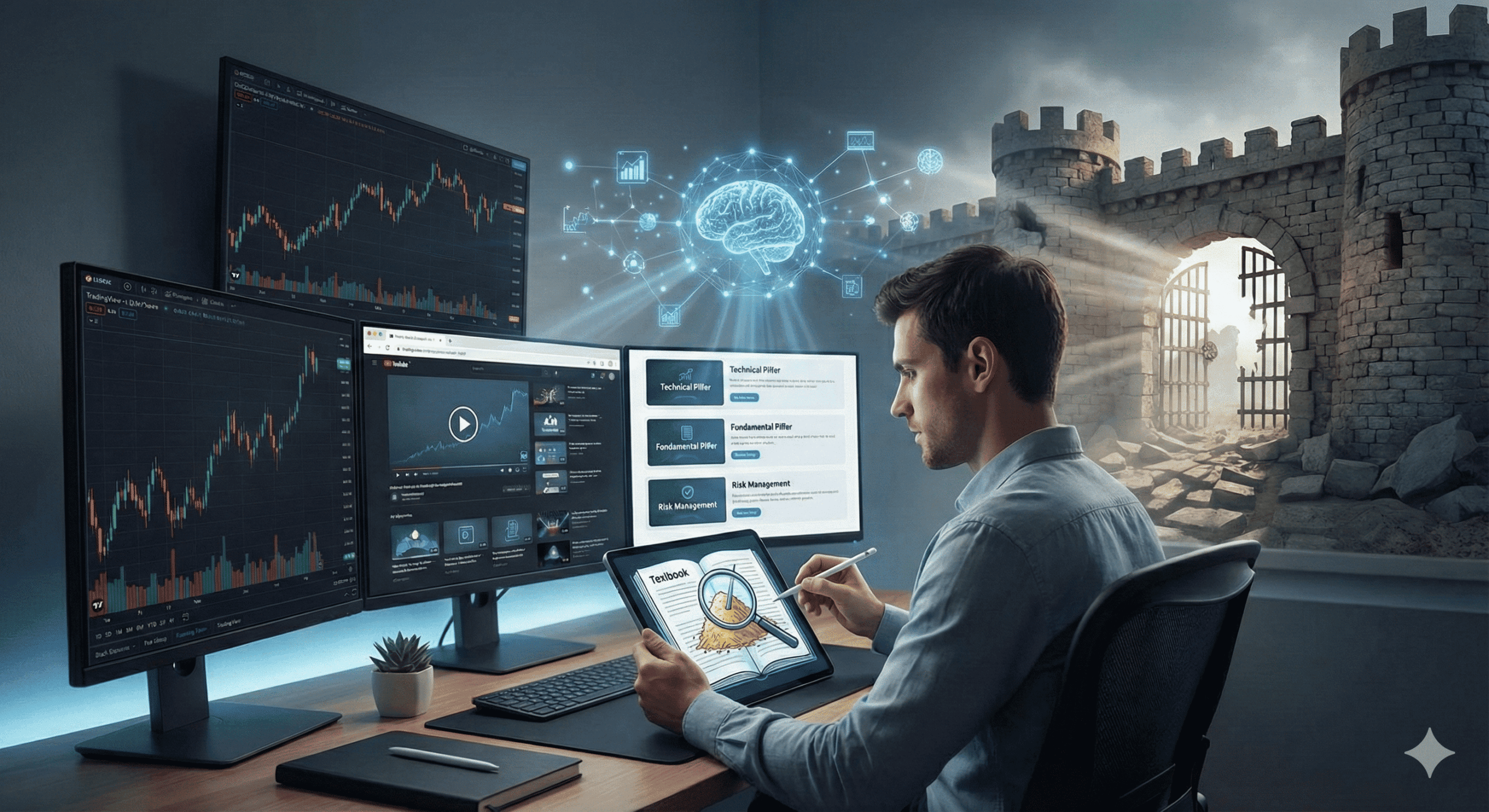
The financial markets were once a fortress. High walls of exclusivity surrounded them, and the only way inside was through expensive institutional training programs or by paying exorbitant tuition fees for seminars that promised the moon but delivered very little. Today, those walls have crumbled. The internet has democratized access to information, creating a landscape where anyone with an internet connection can access high-level market data and instructional content.
However, this abundance of information creates a new problem: noise. The challenge is no longer finding information; it is filtering it. You are not looking for a needle in a haystack; you are looking for a specific needle in a stack of needles. Navigating the world of free trading education online requires a discerning eye and a structured approach. It is about separating the marketing fluff from the actionable mechanics that actually move asset prices.
The Shift from Gatekeepers to Open Access
We are living in the golden age of the autodidact. In the past, learning about derivatives, options greeks, or macroeconomic indicators required a university degree or a seat on a trading desk. Now, major brokerage firms and independent analysts are incentivized to educate you. Why? Because an educated trader stays in the game longer.
This alignment of interests has flooded the web with resources that rival paid courses. The key is understanding that “free” does not mean “low quality.” In fact, the most valuable information often comes from sources that have no need to sell you a PDF course because they make their money from the market infrastructure itself.
“True market education is not about buying a secret strategy; it is about understanding the public mechanics that everyone ignores.”
When you begin this journey, you must adopt the mindset of a curator. You are building your own personal university, selecting professors and textbooks from the vast digital library available to you.
Building Your Personal Digital Ecosystem
To succeed without a paid mentor, you need to centralize your learning. Think of this as constructing a digital trading hub. This is your command center where data, news, and educational materials converge. A scattered approach leads to scattered results.
Your hub should consist of three distinct pillars:
- The Technical Pillar: This is where you learn to read the charts. Resources like TradingView offering free charting tools are essential here.
- The Fundamental Pillar: This involves understanding the “why” behind the moves. Central bank websites and economic calendars act as your primary sources.
- The Psychological Pillar: This is often overlooked but critical. It involves understanding your own reactions to risk and reward.
Leveraging Broker Academies
One of the most underutilized resources in the free trading education online space is the broker academy.
These aren’t just blog posts. They are often structured curriculums with quizzes, video modules, and progress tracking. They cover everything from the basics of what a stock is to complex multi-leg option strategies. The incentive for them is clear: they want you to trade, and they want you to survive. A trader who blows up their account in a week generates no revenue. A trader who survives for ten years is a valuable client.
Comparison of Educational Resource Types
| Resource Type | Best For | Typical Format | Trust Level |
| Broker Academies | Structured learning, platform mechanics | Video courses, quizzes | High |
| Regulatory Bodies (SEC/FCA) | Fraud prevention, market structure | Whitepapers, guides | Very High |
| Exchange Websites (CME/NYSE) | Product specifications, deep dives | Webinars, data sheets | High |
| Independent YouTube Channels | Strategy ideas, live analysis | Vlogs, streams | Variable |
The Social Aspect of Modern Learning
Trading can be a solitary endeavor, which is why community learning has exploded in popularity. This brings us to the concept of the social trading plataforma. While the term often refers to specific software that allows for copy trading, its value for education is immense.
In a globalized market, many of these platforms operate across borders, and you will often see terms like social trading platform used in international communities to describe networks where users share ideas in real-time. Using these platforms strictly for education allows you to peer over the shoulders of experienced veterans.
Analyzing Sentiment and Psychology
The true value of a social platform isn’t in copying trades blindly, that is a recipe for disaster. The value lies in sentiment analysis. You can observe how the “crowd” reacts to a news event in real-time.
For example, if the Federal Reserve announces a rate hike, you can watch the feed. Are people panicking? Is the majority trying to short the market while the price keeps rising? This provides a live case study in market psychology that no textbook can replicate. You are watching fear and greed play out on a screen.
“The market is a mechanism for transferring wealth from the impatient to the patient. Social platforms let you see who is who.”
Technical Analysis: The Charting Landscape
When delving into the technical side of free trading education online, you will encounter a vast array of methodologies. It is easy to get “analysis paralysis.” The goal is to find a methodology that resonates with your personality.
For the visual learner, sites like BabyPips (primarily for Forex) have set the standard for breaking down complex technical concepts into digestible, humorous lessons. They explain concepts like Japanese Candlesticks, Fibonacci retracements, and Bollinger Bands with clarity that expensive courses often lack.
For the data-driven learner, platforms like Investopedia serve as the ultimate encyclopedia. If you encounter a term like “Gamma Squeeze” or “Dead Cat Bounce,” accurate definitions are crucial. Precision in language leads to precision in thought.
The Importance of Simulation
Knowledge without application is merely trivia. The bridge between learning and doing is the simulator, often called “paper trading.” Almost every major brokerage offers a demo account that mimics live market conditions with virtual money.
However, a word of caution: paper trading cannot simulate emotional stress. When you lose virtual money, your heart rate doesn’t increase. When you win, you don’t feel the rush of dopamine. Use simulation to test the mechanics of your strategy, entry triggers, stop-loss placement, and profit targets, but do not mistake success in a simulator for readiness to manage a million-dollar fund.
The Macro View: Institutional Resources
Retail traders often obsess over charts, while institutional traders obsess over data. To bridge this gap, you must go to the source. The Federal Reserve, the European Central Bank, and the Bank of Japan all publish minutes, speeches, and economic data for free.
Reading a Federal Reserve meeting protocol might sound dry, but it is the single most important document for the direction of the US Dollar and the S&P 500. Understanding how interest rates affect currency flows is the “macro” backdrop that informs the “micro” decisions on your chart.
Additionally, regulatory bodies like the CFTC (Commodity Futures Trading Commission) in the US provide free data on where big hedge funds are positioned in the market. This is called the “Commitment of Traders” (COT) report. Learning to read this free report gives you insight into institutional positioning that many retail traders would pay thousands to access, yet it is available to the public every Friday.
Avoiding the “Guru” Trap
In your search for free trading education online, you will inevitably encounter the “lifestyle marketer.” These are individuals selling a dream rather than a skill. They often pose in front of rented luxury cars or in rented mansions.
Distinguishing between a legitimate educator and a salesman is a vital survival skill. Here are the red flags:
- Guaranteed Returns: No honest trader guarantees profits. The market is probabilistic, not deterministic.
- Secret Systems: If someone truly had a secret code to print money, they wouldn’t sell it for $49.99; they would be running a hedge fund.
- Urgency: “Spots are limited” is a marketing tactic, not an educational reality.
Legitimate education focuses on risk management. If a resource spends more time talking about how much money you can make rather than how much you can lose, close the tab. The primary job of a trader is risk control; profit is just the byproduct of good risk habits.
Structuring Your Self-Made Curriculum
Since you don’t have a syllabus provided to you, you must create one. A structured approach prevents you from jumping into advanced options strategies before you understand what a stock actually is.
Phase 1: The Vocabulary
Spend the first two weeks just learning the language. What is a bid? What is an ask? You cannot trade if you don’t speak the language of the market.
Phase 2: The Mechanics
Focus on how orders work. Learn the difference between a Market Order, a Limit Order, and a Stop Order. Understanding order types can save you money on slippage.
Phase 3: The Analysis
Choose one style to start with. Either Technical Analysis (charts) or Fundamental Analysis (economic data). Do not try to master both simultaneously. Deep dive into one until you are competent.
Phase 4: The Risk Plan
This is the graduation phase. Develop a set of rules. “I will never risk more than 1% of my account on a single trade.” “I will not trade during high-impact news.” Write these down.
The Continuous Journey
The market is a living organism. It evolves. Strategies that worked in 2020 might fail in 2026. Therefore, your education never truly ends. Your trading hub must evolve as well, adding new sources of information as you grow.
You might start by reading Investopedia articles, graduate to reading Federal Reserve whitepapers, and eventually find yourself reading specialized academic journals on quantitative finance. This progression is natural.
The barrier to entry has never been lower, but the barrier to success remains high. The tools are free, but the discipline is expensive. It costs time, effort, and a willingness to be wrong. If you are prepared to treat this pursuit with the seriousness of a university degree, creating a rigorous schedule and utilizing the robust tools available to you, then you are ready to begin the transition from observer to participant. We encourage you to start building your personal curriculum today, vetting your sources carefully, and taking the first step toward financial literacy.
Frequently Asked Questions
Is it possible to become a profitable trader using only free resources?
Yes, absolutely. The mechanics of the market, risk management strategies, and technical analysis concepts are all available for free. Profitability comes from experience, discipline, and emotional control, which cannot be bought, only developed through practice.
What is the best free platform for charting?
TradingView is widely considered the industry standard for free, browser-based charting. It offers a vast library of indicators and covers almost every asset class, from crypto to futures. MetaTrader 4 and 5 are also excellent free options, primarily for Forex and CFD traders.
How long does it take to learn trading?
There is no fixed timeline. Gaining a basic understanding might take a few months, but achieving consistency often takes years. It is a profession like engineering or medicine; you shouldn’t expect to master it in a few weeks.
Are broker academies biased?
While brokers want you to trade, their educational content regarding how the market works is generally objective. A candlestick chart works the same way regardless of which broker explains it. However, be aware that they might emphasize strategies that generate more commissions (like frequent active trading).
What is the difference between investing and trading?
Education for these two differs significantly. Investing typically focuses on long-term value, fundamental analysis, and wealth preservation over years. Trading focuses on short-term price movements, technical analysis, and generating income over days or minutes.
Can I trust trading advice on social media?
You should be extremely skeptical. While there are legitimate traders on social platforms, there are also many scammers. Never send money to anyone claiming to trade for you, and verify any “winning” track record with third-party audits if possible. Treat social media as a place for ideas, not financial advice.