
There is a calm when commodities trading MT5 refers to metals, energies, and index commodities. You click from gold to crude to a soft commodity CFD and the ticket never changes its grammar.
Risk shows in cash before you click. Margin reads like a sentence, not a riddle. At that moment you stop collecting platforms and start collecting evidence.
“A consistent routine across assets is worth more than a catalog you never touch.”
The promise without the fog
Most traders want three things: clean tickets, predictable costs, and trustworthy statements. The right MT5 broker for commodities makes those three feel boring in the best way. You log in, see your watchlist, and every symbol obeys the same rules. If you also plan to trade metals on MT5, you do not switch brains. Gold, silver, and even a cash-settled index commodity use the same flow.
What that consistency feels like
- One order ticket for every instrument
- Brackets attach with the entry so exit logic is automatic
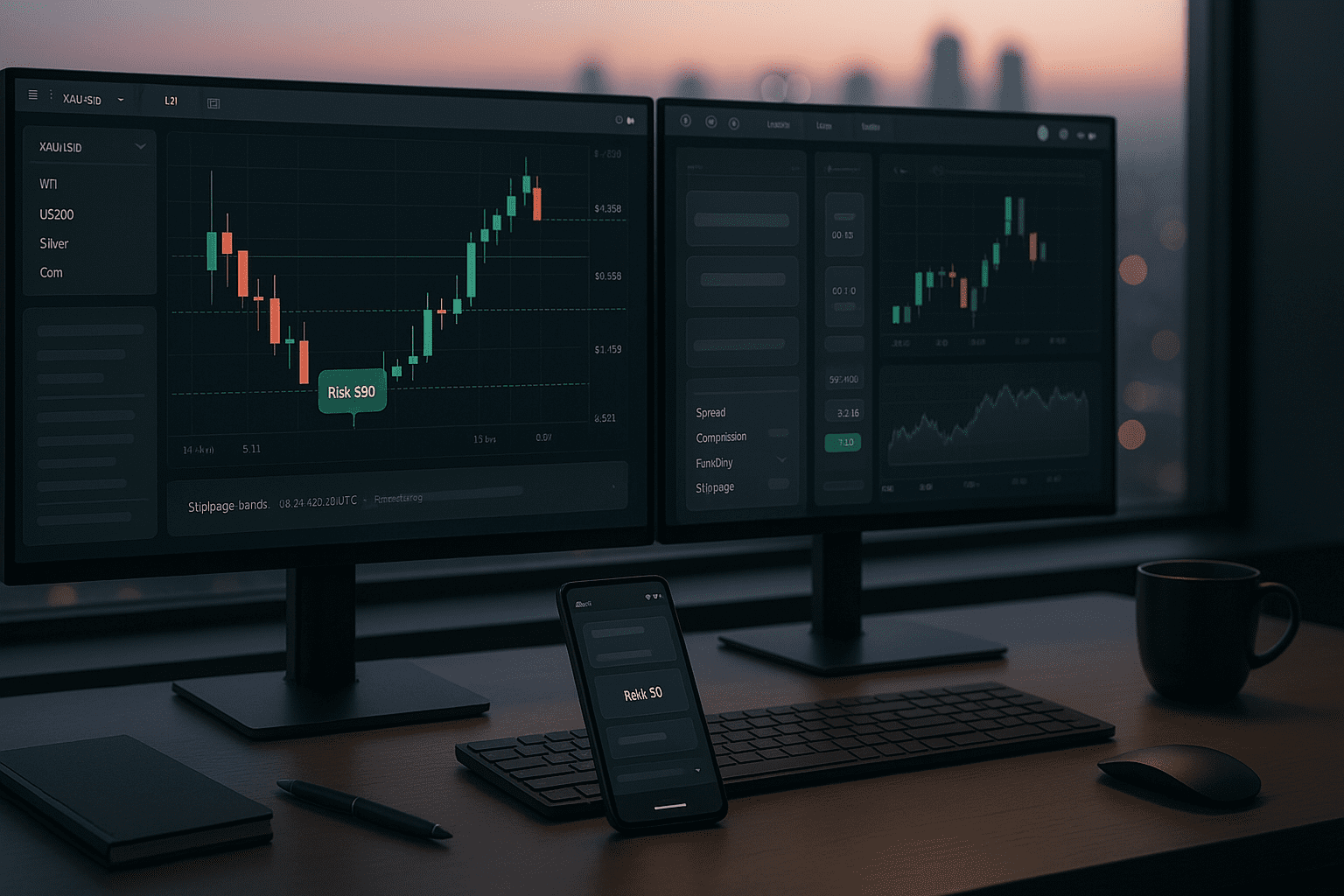
- Cash risk and estimated cost appear on the ticket before you place a trade
- Statements itemize spread, commission, funding, and slippage in plain lines
- Mobile edits feel safe because the number you see is the number you change
“Cost clarity turns uncertainty into a trade you can choose.”
Sessions, catalysts, and realistic rhythms
You do not need the whole calendar. You need a simple map that matches your life.
| Commodity lane | Lively windows* | Common catalysts | What it tends to feel like |
| Gold and silver | London morning, US macro hours | Real rates, USD tone, risk appetite | Trend friendly around data, clean pullbacks |
| WTI and Brent | Europe morning, US session | Inventories, OPEC, growth signals | Faster swings, respect slippage on reports |
| Index commodities CFDs | Regional cash sessions | Earnings tone, breadth, flows | Range breaks and retests near the open |
*Exact hours vary by venue and season. Pick the slice you can repeat.
Ticket math you can trust
A few numbers make MT5 feel like home across symbols.
- Risk unit: a fixed cash amount you can lose without stress
- Stop distance: in ticks or points, translated to cash on the ticket
- Size: calculated by risk unit ÷ (stop distance × tick value)
- Bracket logic: stop loss and target submit with the entry
“You cannot control the market. You can always control position size.”
Example
Risk unit 50 dollars. Stop 0.50 dollars on a metal CFD where each 0.01 equals 1 dollar per contract. Tick value per 0.01 is 1 dollar, so per 0.50 stop the risk per contract is 50 dollars. Size equals 1 contract. No guesswork.
Features that make an MT5 broker for commodities feel grown up
- Cash risk preview on every ticket
- Depth of Market to feel real liquidity instead of guessing
- Symbol specs in cash: contract size, tick value, trading hours, swap rules
- Partial close and OCO so you can scale out and avoid double fills
- Reliable statements and raw exports for journals and tax tools
- Status notes with timestamps during scheduled reports or maintenance
If these sound obvious, good. Obviousness is what protects you on busy days.
Metals on MT5 without the drama
If your plan is to trade metals on MT5, keep definitions short so you can follow them under pressure.
Pullback into value
Mark a higher timeframe trend. Use a prior value area. Enter on the first pullback that shows slowing momentum. Place a bracket. Scale half at 1R, trail the rest.
Breakout and retest
Box a range. Wait for a close outside. Enter on the retest if it holds. Keep size honest around scheduled prints.
Quiet session fade
When price stretches into a well tested band during calm hours, fade back toward value with small size and firm stops.
“If the entry needs a paragraph to justify it, it is not ready.”
Futures look, CFD feel: understanding the trade-offs
Some venues list exchange futures alongside CFDs that mirror front months. Others focus on CFDs. Either way, your job is to know the differences that touch your wallet.
| Topic | Futures contract | Commodity CFD that mirrors futures |
| Venue | Exchange order book | Broker routed OTC instrument |
| Fees | Commission, exchange, clearing, market data | Spread, commission, funding, no exchange data fee |
| Sizing | Fixed contracts or micros | Flexible fractional sizing |
| Hours | Exchange schedule | Often mirrors futures, confirm details |
| Use case | Strict transparency, hedging | Flexible tactics, smaller accounts, off hours exposure |
Pick tools for repeatable behavior, not ideology.
Costs that shape outcomes more than you think
| Cost line | Where it bites | Practical way to manage |
| Spread and commission | Every fill | Trade liquid hours and pick a pricing tier that fits your average ticket |
| Funding or swaps | Overnight holds on CFDs | Hold smaller, shorten duration, or use futures if you swing longer |
| Slippage | Opens and news minutes | Prefer retest entries, use limits when chasing breaks |
| Data fees | Exchange instruments | Subscribe only to what you use and review monthly |
Track total cost per trade for 20 sessions. You will naturally gravitate toward efficient hours and symbols.
A day that proves the point
Picture a Tuesday. London sets a tone. Gold pulls back into a level you marked on Sunday. You click, the bracket attaches, and your cash risk is exactly what you expected. Ten minutes later WTI breaks a tight morning range. You swap lanes without swapping mental models. Later, your statement mirrors your notes: spread, commission, a small slippage line that matches the open. No creative labels. No guesswork.
“Small and repeatable beats big and random.”
Common mistakes and clean fixes
| Mistake | Why it hurts | Fix |
| Trading into top tier reports by accident | Slippage and spread spikes | Preload calendar alerts in local time, stand down or size down |
| Sizing from memory instead of cash | Inconsistent risk | Use the ticket’s cash preview and a fixed risk unit |
| Chasing first spikes at the open | Regret and poor fills | Favor range break plus retest or first pullback |
| Ignoring funding on swings | Profits erode overnight | Know swap rules, choose instruments that fit the hold time |
Signals you picked the right partner
- You spend less time rearranging layouts and more time reviewing outcomes
- Alerts feel early and relevant rather than loud and late
- Your journal shrinks because the platform does the boring math
- Support replies with examples in the same language the platform speaks
- Withdrawals land on schedule and status notes match reality
“Trust lives in spreadsheets and status pages, not in taglines.”
FAQ
What makes commodities trading MT5 feel truly seamless
One ticket covers metals and energies. It uses cash-based risk on the ticket. Bracket orders are set by default. Symbol specifications are in cash. Statements match your mental invoice.
How do I choose an MT5 broker for commodities
Favor clarity over hype. Tight spreads during active hours, honest swaps policy, raw exports for logs, and a help center that shows real screenshots. Timestamps on status notes are a quiet trust signal.
Can I trade metals on MT5 with small size
Yes. Many symbols offer flexible sizing or micro contracts. Set a fixed cash risk per trade and let the ticket handle the math, then scale only after your average R stays steady.
Are CFDs worse than futures for commodities
Not automatically. CFDs can be efficient for fractional sizing and off hours exposure. Futures excel at strict transparency and deep hours. Choose the tool that fits your routine and costs.
What is the simplest way to keep risk consistent across commodities
Choose a cash risk unit. Limit yourself to two tries for each idea. Avoid trading through top-tier prints unless that is your advantage. Use brackets to set stops and targets when you enter.