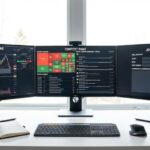


Choosing the best online trading platform depends on your trading style, experience, and the markets you want to access. While some investors prioritize long-term stock investing, others need professional tools for Forex trading, stocks, futures, and other global markets.
In this guide, we compare the best online trading platforms in 2026 based on trading costs, available markets, platform features, ease of use, and overall value. Whether you’re a beginner or an active trader, this comparison will help you find the platform that best fits your needs—including brokers like Tradeview Markets, which stands out for its wide range of professional trading platforms and multi-asset market access.
Quick Picks by Investor Type
- Best overall for most investors: Fidelity
- Best advanced platform suite: Charles Schwab
- Best for global and professional-style traders: Interactive Brokers
- Best multi-asset trading platform: Tradeview Markets
- Best for options tools with a mainstream brokerage: E*TRADE
- Best dedicated options and futures experience: tastytrade
- Best simple mobile stock app: Robinhood
- Best chart-focused mobile trading app: Webull
- Best for Bank of America customers: Merrill Edge
- Best for all-in-one personal finance: SoFi Active Invest
- Best for buy-and-hold ETF investors: Vanguard
What We Looked For
The best online trading platforms were evaluated using practical decision factors rather than a one-size-fits-all ranking.
Trading Costs
We considered stock and ETF commissions, spreads, options contract charges, margin rates, transfer fees, overnight financing, and other costs that may affect the total price of trading.
A platform advertising zero commissions is not necessarily completely free. Traders should also review exchange fees, account charges, margin interest, and product-specific costs before opening an account.
Tradable Assets
Not every platform provides access to the same financial markets. We considered whether each broker supports:
- Stocks
- ETFs
- Options
- Mutual funds
- Bonds
- Forex
- Futures
- International markets
- Fractional shares
- Other multi-asset products
Traders interested in accessing more than one market may benefit from a broker that supports Forex, stocks, futures, and other financial instruments through a single trading ecosystem.
Trading Platform Experience
A trading platform should support a trader’s strategy rather than limit it. We evaluated web, desktop, and mobile platforms based on:
- Charting capabilities
- Order execution
- Watchlists
- Alerts
- Research tools
- Paper trading
- Platform stability
- Ease of use
- Advanced order types
We also considered whether brokers provide only one proprietary interface or allow traders to choose between several professional solutions.
Tradeview Markets, for example, offers a broad selection of trading platforms, including MetaTrader 4, MetaTrader 5, cTrader, Sterling Trader Pro, CQG Desktop, DAS Trader Pro, Takion, and EQView. This variety allows traders to select software that more closely matches their preferred markets and trading strategies.
Investor and Trader Fit
Some online platforms are designed primarily for long-term investors who purchase stocks and ETFs occasionally. Others are built for active traders who require advanced charting, faster execution, sophisticated order types, and access to professional trading technology.
We considered:
- Beginner friendliness
- Active-trader features
- Educational resources
- Customer support
- Research capabilities
- Portfolio management tools
- Availability of professional platforms
The best option therefore depends on whether a person wants to invest over the long term, trade occasionally, or participate actively in multiple financial markets.
Risk Controls and Transparency
We also reviewed the availability of risk-management features, account security, order types, margin disclosures, regulatory information, and general pricing transparency.
Regardless of the platform selected, traders should understand the risks associated with the products they trade. Forex, futures, options, margin products, and other leveraged instruments can involve substantial risk and may not be suitable for every investor.
Platform-by-Platform Comparison
Fidelity
Best for: Long-term investors who want a well-rounded brokerage with strong research and retirement tools.
Fidelity remains one of the strongest choices for investors building long-term portfolios. It combines commission-free trading on U.S.-listed stocks and ETFs with extensive research, retirement accounts, fractional investing, and educational resources.
Pros
- Excellent balance between investing and trading features
- Strong research and market analysis
- Great for retirement and long-term investing
- Beginner-friendly without sacrificing advanced functionality
Cons
- Limited appeal for traders focused on Forex or futures
- Advanced trading tools require some experience
Charles Schwab
Best for: Active traders who want powerful analysis tools alongside a full-service brokerage.
Charles Schwab combines its brokerage services with the popular thinkorswim platform, making it an excellent choice for traders who require advanced charting, paper trading, and sophisticated order management.
Pros
- Professional-grade charting and technical analysis
- Excellent paper trading environment
- Strong educational resources
- Broad investment products
Cons
- Platform may feel overwhelming for beginners
- Some advanced products involve additional fees
Interactive Brokers
Best for: Experienced traders seeking global market access.
Interactive Brokers has earned its reputation by offering access to more than 170 markets worldwide through its Trader Workstation platform. It is particularly attractive for traders looking for international diversification, advanced order routing, and competitive margin rates.
Pros
- Exceptional international market access
- Professional trading tools
- Competitive margin pricing
- Supports multiple asset classes
Cons
- Steeper learning curve than many competitors
- Better suited for experienced traders
Tradeview Markets
Best for: Traders looking for professional trading platforms and true multi-asset market access.
Tradeview Markets stands out by giving traders the freedom to choose the platform that best fits their trading style instead of relying on a single proprietary solution. Clients can access Forex, stocks, futures, and other markets through a comprehensive suite of professional software.
Unlike many online brokers, Tradeview Markets supports multiple institutional-grade platforms, including MetaTrader 4, MetaTrader 5, cTrader, CQG Desktop, Sterling Trader Pro, DAS Trader Pro, Takion, and EQView. This flexibility allows traders to select the platform that best aligns with their preferred markets, trading style, and experience level.
For traders who value execution quality, platform choice, and access to multiple financial markets through a single broker, Tradeview Markets is a compelling alternative to many traditional online brokers.
Pros
- Access to multiple professional trading platforms
- Supports Forex, stocks, futures, and additional asset classes
- Institutional-grade trading technology
- Multiple account types for different trading styles
- Suitable for both retail and experienced traders
Cons
- Advanced platforms may require a learning curve
- Better suited for active traders than passive investors
E*TRADE
Best for: Options traders who want advanced tools within a traditional brokerage.
ETRADE combines a beginner-friendly brokerage with robust options trading capabilities. Features such as Snapshot Analysis, probability tools, and the Power ETRADE platform make it attractive for traders who actively trade options while still investing in stocks and ETFs.
Pros
- Strong options analysis tools
- Easy-to-use interface
- Comprehensive brokerage services
Cons
- Some transactions may carry additional fees
- Active traders should compare overall trading costs
tastytrade
Best for: Dedicated options and futures traders.
tastytrade was built specifically for derivatives traders. Its pricing structure and educational ecosystem make it particularly attractive for traders focused on options strategies and futures markets.
Pros
- Excellent for options strategies
- Competitive pricing for derivatives
- Strong educational content
Cons
- Less suitable for long-term investors
- Focused primarily on derivatives trading
Robinhood
Best for: Beginners and mobile-first investors.
Robinhood helped popularize commission-free trading and remains one of the simplest platforms for buying stocks, ETFs, options, and cryptocurrencies. Its intuitive mobile experience makes it especially attractive to first-time investors.
Pros
- Extremely easy to use
- Commission-free stock and ETF trading
- Excellent mobile experience
- Fractional share investing
Cons
- Limited research tools
- Fewer advanced trading features than professional platforms
Webull
Best for: Active traders who want advanced charting without paying platform fees.
Webull offers considerably more technical analysis tools than many beginner-focused brokers while maintaining a commission-free pricing model. Its desktop and mobile platforms include customizable charts, indicators, screeners, and extended-hours trading.
Pros
- Advanced charting tools
- Commission-free trading
- Strong desktop and mobile platforms
- Paper trading available
Cons
- Research resources are more limited than full-service brokers
- Primarily focused on self-directed traders
Merrill Edge
Best for: Existing Bank of America customers.
Merrill Edge integrates seamlessly with the Bank of America ecosystem, making it an attractive choice for investors who prefer managing banking and investing from one place.
Pros
- Strong integration with Bank of America
- Quality market research
- Good retirement planning tools
- Commission-free stock and ETF trading
Cons
- Platform is less appealing for active traders
- Fewer advanced trading tools than specialized platforms
SoFi Active Invest
Best for: Investors looking for an all-in-one financial platform.
SoFi combines investing with banking, loans, credit cards, and financial planning services. While it doesn’t provide the advanced functionality of professional trading platforms, it offers a simple solution for individuals managing multiple financial products.
Pros
- Easy-to-use platform
- Integrated financial services
- Commission-free investing
- Beginner friendly
Cons
- Limited advanced trading capabilities
- Not designed for high-frequency or professional traders
Vanguard
Best for: Long-term ETF and index fund investors.
Vanguard remains one of the most respected names in long-term investing thanks to its low-cost index funds and ETF lineup. The platform prioritizes investing over active trading, making it ideal for buy-and-hold investors.
Pros
- Industry-leading index funds
- Excellent long-term investment options
- Low investment costs
- Trusted reputation
Cons
- Trading platform is relatively basic
- Limited tools for active traders
How to Choose the Right Online Trading Platform
The best trading platform depends on your investing goals rather than simply choosing the broker with the most features.
If you’re primarily investing for retirement or building a long-term portfolio, platforms like Fidelity or Vanguard may be the right fit.
If you actively trade stocks, options, or international markets, Interactive Brokers and Charles Schwab offer professional-grade trading environments with advanced research and execution tools.
However, traders who participate in multiple asset classes may benefit from a broker that combines professional trading software with broad market access. Tradeview Markets, for example, provides access to Forex, stocks, futures, and other global markets through multiple professional platforms, including MetaTrader 4, MetaTrader 5, and cTrader.
Rather than focusing solely on commissions, compare each platform based on the markets you want to trade, available trading tools, execution quality, platform stability, research resources, and long-term flexibility. The right platform is ultimately the one that supports your trading strategy today while allowing room to grow as your experience evolves.
Frequently Asked Questions
What is the best online trading platform for beginners?
The best platform for beginners depends on their goals. Investors focused on long-term wealth building often prefer platforms like Fidelity or Vanguard because of their educational resources and ease of use. Traders interested in active markets may prefer brokers that offer paper trading and professional tools to support their learning.
Which online trading platform has the lowest fees?
Many online brokers now offer commission-free trading for U.S. stocks and ETFs. However, total trading costs may also include spreads, options contract fees, overnight financing, margin interest, and exchange fees. Always compare the complete pricing structure rather than focusing only on commissions.
Which trading platform offers the most markets?
Interactive Brokers is widely recognized for its international market access. However, brokers such as Tradeview Markets also provide access to multiple asset classes—including Forex, stocks, and futures—through a range of professional trading platforms.
Is MetaTrader better than proprietary trading platforms?
It depends on your trading style. Many active traders prefer MetaTrader 4 and MetaTrader 5 because of their advanced charting capabilities, automated trading support, and large trading communities. Others may prefer proprietary platforms that offer integrated research or portfolio management tools.
Can I trade multiple asset classes with one broker?
Yes. Some brokers provide access to several financial markets from a single account. For example, Tradeview Markets allows clients to trade Forex, stocks, futures, and additional products while choosing from several professional trading platforms based on their individual preferences.
The Bottom Line
There is no single online trading platform that is perfect for every investor or trader. The best choice depends on your experience, preferred markets, trading frequency, and the tools you need to execute your strategy effectively.
Long-term investors may prioritize low-cost investing, retirement planning, and research resources, while active traders often require advanced charting, fast execution, and access to multiple financial markets.
For traders seeking flexibility, brokers that support multiple professional platforms—such as Tradeview Markets—offer an alternative to traditional single-platform brokers. Access to solutions like MetaTrader 4, MetaTrader 5, cTrader, and other institutional-grade platforms allows traders to choose the environment that best matches their trading style while accessing global markets through one broker.
Before opening an account, compare each platform based on pricing, available markets, platform quality, regulation, research tools, and overall trading experience. Taking the time to evaluate these factors will help you choose a platform that supports both your current needs and your long-term trading goals.