

You want stock CFD trading that feels steady, not frantic. The idea is to use one login, one ticket, and one risk language you can carry from Apple to Nvidia to Shell.
With a clear workflow, you can trade global company shares through CFDs while keeping size, costs, and statements predictable. The right stack helps you find the best broker for stock CFDs without guessing.
Why trade stock CFDs at all
| Benefit | What it means in practice | Watch out for |
| Flexible sizing | Start small and scale in dollars, not vibes | Too small and results feel random |
| Long and short access | Express both sides without borrowing stock | News minutes widen costs |
| One account for many markets | US, EU, UK, and more under one login | Session hours vary by region |
| Simple ticket math | Same cash risk logic across names | Earnings days need smaller risk |
| No certificate delivery | Cash settlement keeps ops light | Overnight funding applies |
CFDs are a wrapper. Your edge still comes from structure and risk control.
How to trade global company shares with one routine
Pick two windows you can actually trade. Then apply the same plan across regions.
| Region | Active slice | First focus | Guardrail to enable |
| United States | Cash open and last hour | Mega cap tech or index leaders | Opening range rules, smaller first risk |
| Europe | Frankfurt to London mid morning | DAX and FTSE heavyweights | Wait for retests after first break |
| UK | London cash open | Liquid banks, energy, consumer staples | Tight brackets, clear funding checks |
| Asia Pacific | Local open | Flagship names and ETFs | Avoid thin mid sessions |
You do not need every region on day one. One clean lane beats three noisy ones.
Ticket math in plain cash
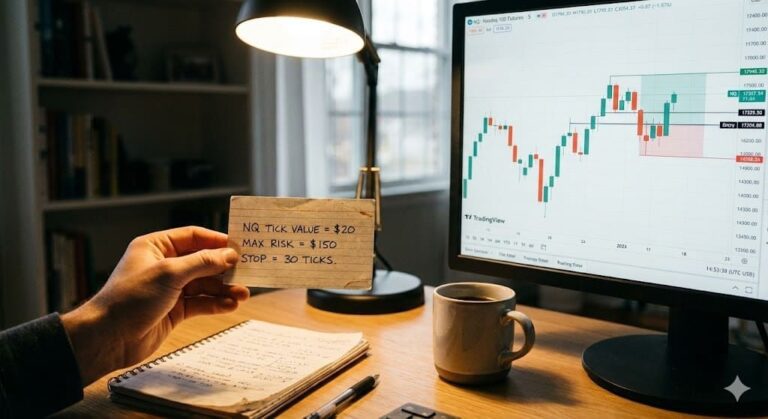
Let the platform do the arithmetic. You set a fixed dollar risk per trade and let size float by symbol.
- Example
Risk per trade: 50 dollars
Planned stop: 0.50 per share
Shares to trade = 50 ÷ 0.50 = 100 shares (CFD notional equivalent) - Index CFD example
Risk per trade: 45 dollars
Stop: 9 points
Dollar per point: 1 dollar
Contracts = 45 ÷ 9 = 5
“Cash language travels across assets. Keep it.”
Two beginner friendly setups for stock CFD trading
Opening range break and retest
Box the first minutes after the bell. After a decisive break, enter on the first clean retest to the box edge with your bracket attached. This harnesses liquidity and avoids chasing the first burst.
Pullback into value
Confirm direction on a higher timeframe. Mark a value zone such as VWAP or a fair mean band. Take the first pullback that pauses. This keeps your entry aligned with the day’s tone.
Short definitions hold when price speeds up.
Guardrails that protect your month
Turn these on before the first buy or sell.
- Per day loss cap that auto pauses trading until reset
- Max position size per symbol and per ticket
- Two attempts per idea, then stand down
- Session filters to avoid thin or news heavy minutes
- Plain messages for blocks and pauses so you know why
Examples that help
- “Order blocked. Free margin below threshold. Reduce size or fund.”
- “Pause active. Daily limit reached. Resets at 00:00 server time.”
Costs that decide more than you think
Treat costs like ingredients. Measure them for twenty sessions.
| Cost line | Where it bites | Practical move |
| Spread and commission | Every fill | Trade liquid names at the bell, avoid chasing |
| Slippage | First seconds of the open, hot headlines | Favor retests, size down on catalysts |
| Overnight funding | Holding CFDs after hours | Match hold time to cost or keep day holds |
| Data and extras | Tools you rarely use | Keep only what changes outcomes |
Cost clarity turns uncertainty into a choice you can live with.
Earnings and news checklist
- Is this name reporting today or this week
- Will a sector peer move first and pull this name with it
- Do I need a smaller risk unit for the first entry
- Am I trading the opening range retest, not the first burst
- Is my bracket template saved and visible on the ticket
Write it on a card near your screen. Read it out loud before you click.
Platform checklist for stock CFD trading
- Cash risk visible on the ticket before submit
- Bracket templates saved as default
- Symbol specs readable in dollars
- Delay and slippage panel pinned by symbol and session
- Export test where statement totals equal CSV
- Status page bookmarked with recent incidents and reverts
If any item feels fuzzy, fix it before you fund more.
Two starter mixes that scale cleanly
Mega cap focus
- Names: one US tech leader, one financial, one consumer staple
- Window: first 60 to 90 minutes
- Risk: 40 to 60 dollars per trade
- Why it works: deep liquidity and smoother learning curve
Europe plus index hedge
- Names: one DAX heavyweight, one FTSE staple
- Hedge: small index CFD with the same rules
- Window: Frankfurt through London mid morning
- Why it works: avoids overlap while rules stay identical
A day you will recognize
The US bell rings and a mega cap builds a tight box. You wait for the break, then take the clean retest with your bracket attached. Risk is your preset number, not a guess. Thirty minutes later a second name tries to move on a headline, but slippage looks wide on the panel, so you skip it. In the afternoon you add a small position on a pullback into value. By evening, statement totals match your CSV export line by line. No detective work. That is stock CFD trading done with a calm routine that lets you trade global company shares and move toward the best broker for stock CFDs with confidence.
FAQ
Is stock CFD trading suitable for beginners
Yes if you size in dollars, use bracket templates, and keep a per day loss cap. Start with one or two names in your best window.
How do I pick the best broker for stock CFDs
Look for cash risk on the ticket, export parity, symbol specs in dollars, and a public status page. If you cannot reconcile a payout or a statement in five minutes, keep looking.
Should I hold stock CFDs overnight
Only if the funding cost fits your plan. Many beginners do better with day holds and clean exits.
How do I limit slippage at the open
Trade the retest of the opening range, not the first burst. Use a smaller risk unit on hot names and during earnings weeks.
Can I trade global company shares from one account
Yes with a broker that enables cross-region access. Set session filters, respect local hours, and keep your routine the same.
What proves my platform is reliable
Ticket shows dollar risk before submit, brackets attach by default, reports equal exports, and incidents are posted with timestamps and planned reverts.