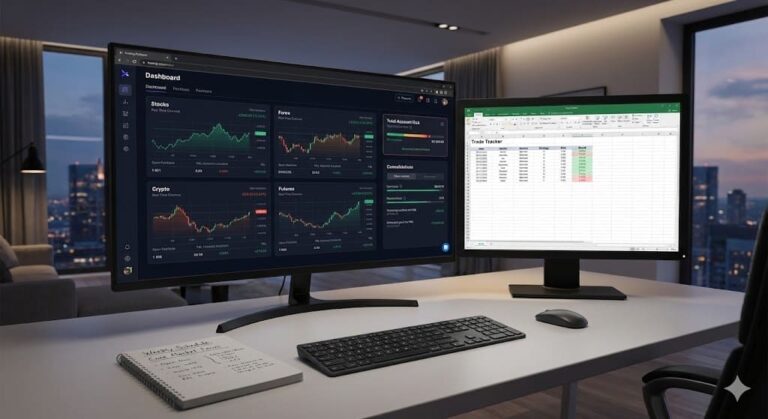


A good day in brokerage is calm. Quotes come in, tickets are processed, and margin stays stable. No one is surprised by a liquidation. That quiet is not luck. It is risk management for forex brokers done right.
This guide explains the choices and tools that help you stay calm during volatile sessions. It covers ab book risk control design and the essentials for a real-time trade monitoring tool.
The big picture in two minutes
Think of your risk stack as three layers working together:
- Pre-trade stops problems before an order leaves the platform.
- At-trade shapes execution under load.
- Post-trade watches concentration, correlation, and cashflows.
When each layer is explicit and logged, your ops team fixes issues in minutes, not days.
“Clarity beats cleverness when spreads widen.”
Map of the modern risk stack
| Layer | Purpose | Typical controls | What great looks like |
| Pre-trade | Block unsafe orders | Size caps, leverage checks, KYC/region blocks, stale-quote reject | Millisecond checks with human-readable reject reasons |
| At-trade | Guide execution | Slippage limits, burst throttles, venue fallbacks | Per-symbol rules by session, shadow mode tests |
| Post-trade | Protect the book | Exposure caps, correlation limits, liquidation steps | Live dashboards, audit-ready logs, clear runbooks |
“Write the rule, then write the exception. People remember the exceptions.”
AB book risk control without the fog
There is no single “right” routing model. There is only the model you can defend and monitor.
Terms in plain language
- A-book: externalize risk to LPs. Broker earns from markup and commissions.
- B-book: internalize risk. Broker earns from client losses net of hedges.
- Hybrid: decide by client profile, symbol, session, or behavior.
ab book risk control you can explain
| Decision point | Good default | Why it helps |
| Client segmentation | Start neutral, promote to A-book as quality rises | Keeps adverse selection low |
| Symbol policy | A-book thin or spiky symbols, consider internalizing majors when exposure is small and stable | Protects during news and off-hours |
| Session policy | Tighten slippage and route externally in wild sessions; allow internal fills in calm windows | Adapts to liquidity cycles |
| Exposure cap | Net exposure ceilings per symbol and side trigger auto-hedge | Prevents slow-creep risk |
| Review cadence | Weekly for retail cohorts, daily for high notional clients | Catches drift before it bites |
Non-negotiables
- Publish a plain-language execution policy.
- Log routing decisions with timestamps and triggers.
- Keep a “kill switch” to force A-book during incidents.
“Route by rules, not by vibes.”
The real-time trade monitoring tool checklist
Your monitoring layer is the truth engine. It turns tick data and events into decisions humans can act on.
Must-have signals
- Equity, margin used, free margin, margin level per account and cohort
- Exposure ladders by symbol, side, and net across A/B books
- Correlation buckets that flag hidden concentration (e.g., USD risk across majors and gold)
- Reject taxonomy: size, permission, stale quote, throttle, risk block
- Copy/MAM health: delay and slippage master vs follower
Take actions
- Hard/soft limit alerts with one-click mitigation (hedge, reduce, pause)
- Partial liquidation steps at clear thresholds (e.g., 95%/92%/90% margin level)
- Circuit breakers that pause new exposure during stale feeds or abnormal spreads
- Shadow mode to test a new rule before it bites live orders
Must-have logs
- Immutable event IDs for every check, reject, liquidation, and override
- Exportable CSV/JSON and webhooks for your data warehouse
- Screens that show “why” in one sentence for support
“A real-time trade monitoring tool that cannot explain a reject in seven words is a support ticket generator.”
Pre-trade: rules that prevent emergencies
- Free-margin rule: reject any new order that would take free margin below a set percent of notional (e.g., 3%).
- Stale-quote rule: reject quotes older than 250 ms on fast symbols; looser on calm pairs.
- Size throttle: limit total notional per minute per account to curb laddering.
- Permissioning: symbol allow-lists by tier and region, with clear messages.
Message examples that cut tickets
- “Order rejected: free margin < 3% of notional. Reduce size or deposit.”
- “Order paused: quote stale. Retry after spread normalizes.”
- “Limit reached: per-minute notional cap. Try smaller tickets.”
At-trade: controls that keep fills sane
| Control | Purpose | Practical default |
| Slippage bands | Avoid off-market fills | Tight during cash hours, wider at session edges |
| Venue fallbacks | Maintain continuity | Route to LP2 after 3 rejects or 500 ms wait |
| Burst throttles | Stop quote stuffing | Cap orders per symbol per account per second |
| News windows | Prevent chaos | Temporarily raise margin or reduce size around scheduled prints |
“During news, clarity beats speed. Change caps with timestamps and restore them on time.”
Post-trade: protect the book and clients
- Exposure ceilings per symbol and house view; auto-hedge to LPs above thresholds.
- Correlation brakes across baskets like USD, JPY, or risk assets.
- Liquidation steps that close worst offenders in tranches, not cliff-edge events.
- Cash reconciliation daily across platform, PSPs, and bank.
Liquidation example
- Warn at 120% margin level, partial close at 100%, progressive close at 95% and 92%, full at 90%. All messages timestamped and stored.
Build your reject taxonomy now (not after an incident)
| Code | Category | Examples | Owner |
| R-01 | Margin/size | Free margin low, ticket too large | Risk |
| R-02 | Permission | Symbol blocked, region rule | Compliance |
| R-03 | Market | Stale quote, spread spike | Trading |
| R-04 | Throttle | Burst limit, per-minute notional | Platform |
| R-05 | Technical | LP timeout, bridge unavailable | SRE |
“Incidents get shorter when rejects have names.”
Designing dashboards your team will actually use
- Top panel: house exposure by symbol, net and gross; correlation dials; unresolved alerts.
- Cohort panel: segments by client tier with PnL, rejects, and utilization of limits.
- Latency panel: pre-trade check time, venue RTT, copy delay heatmap.
- Compliance panel: KYC status, PEP/sanctions hits, maker-checker activity.
- Runbook links: each alert includes the next 3 clicks your analyst should take.
Keep dark mode, keyboard shortcuts, and saved views per role. Your NOC will thank you.
Communication templates that lower blood pressure
Status banner during volatility
“Spreads widened on XAUUSD 08:31–08:36 UTC. Slippage bands adjusted. New orders may reject with message R-03. We will revert settings once normal.”
Liquidation notice
“Your margin level reached 100%. We partially closed positions to reduce risk. Review position size or add funds to avoid further steps.”
Routing change
“We routed your EURUSD flow to external venues 13:00–14:00 UTC due to exposure caps. Execution policy page has details.”
“Silence during stress is expensive. Short, honest updates pay for themselves.”
KPIs you should check every Monday
| KPI | Target or trend | Why it matters |
| Pre-trade check latency | < 5 ms average | Safety without drag |
| Copy health rate | > 95% within threshold | Expectations stay realistic |
| Reject mix (R-01..R-05) | Size and margin < 40% of rejects | Rules are tuned; not blocking everything |
| House exposure > cap time | < 2 minutes per event | Hedging is responsive |
| Liquidation depth | Shallow, predictable steps | Fewer disputes |
| Withdrawal completion | Within published window | Trust and referrals |
| Tickets per 100 actives | Trending down over 60 days | Product clarity improving |
Publish a trimmed scoreboard internally. Transparency improves judgment.
Runbooks: fast paths for common problems
Spread spike on majors
- Confirm on market data and LP feeds.
- Raise slippage caps and cut ticket size limits for 10 minutes.
- Switch routing to A-book for affected symbols.
- Post banner with start time and expected review.
Throttling at US open
- Trigger burst throttle by symbol/account.
- Queue orders; inform clients with R-04 message.
- Review in 5 minutes; reset caps if stable.
Correlation overload (USD risk)
- Hit correlation brake at threshold.
- Hedge house exposure to LPs.
- Restrict new same-side USD exposure until meter drops.
Real-world examples to make it concrete
- The “quiet” gold day that could have hurt
A retail cohort piled into XAUUSD long after a rate rumor. Correlation brakes flagged USD risk across gold and majors. Exposure cap auto-hedged a slice to LPs. The session ended with shallow drawdowns and fewer liquidation tickets because steps were progressive, not cliff-edge. - The USDJPY print that tested the playbook
Quotes went stale for 400 ms around the release. Stale-quote reject saved several off-market fills. A status banner explained the temporary behavior. Tickets were few, short, and polite.
“Good controls feel invisible on quiet days and obvious on wild days.”
Compliance and brand safety made simple
- Plain risk warnings everywhere orders start.
- No implied guarantees in marketing or partner rooms.
- Maker-checker for withdrawals and fee payouts.
- Audit-ready logs for every setting that touches allocation or risk.
- A public status page. Incidents happen; honesty keeps clients.
Security that mirrors your risk posture
- Two-factor authentication for staff and admins.
- Role-based access with least privilege; separate trade and approval roles.
- Vendor access reviews each quarter.
- Backups with restore tests and a written disaster drill.
- Signed change logs for risk rules.
Security is not separate from risk. It is the same discipline wearing a different badge.
One quiet push before you flip the next switch
List the five rules you enforce today, the three that fail most often, and the one alert that wakes you at night. Tune those first. Next, check your real-time trade monitoring tool using the checklist above. Then, write a one-page ab book risk control policy. Make sure it is clear and easy to read aloud, without using complicated words. Do these three things and your risk management for forex brokers will feel less like firefighting and more like a craft.
FAQ
Do I need both A-book and B-book from day one
No. You can start A-book only with clear caps and add internalization later. If you run hybrid, publish the routing logic in plain language.
What is the fastest win for small teams
Add clear reject messages and a visible status banner. Most tickets vanish when clients know what happened and what to do next.
Should I liquidate all at once or in steps
Steps are safer. Progressive partial closes reduce slippage and panic. Pair them with timestamped alerts and post-trade explanations.
How do I measure copy trading health
Track delay, slippage, and reject rate master vs follower by symbol and session. Aim for >95% within your delay threshold in liquid hours.
How often should I review routing and exposure policies
Weekly for retail cohorts and any time a symbol’s behavior changes. Always log changes with a reason and a revert date.