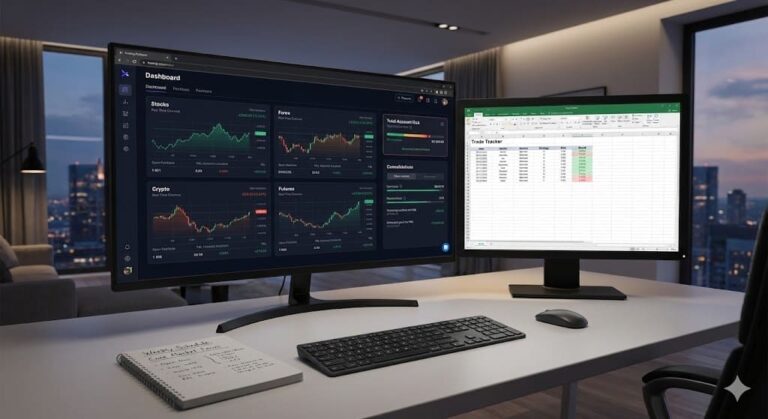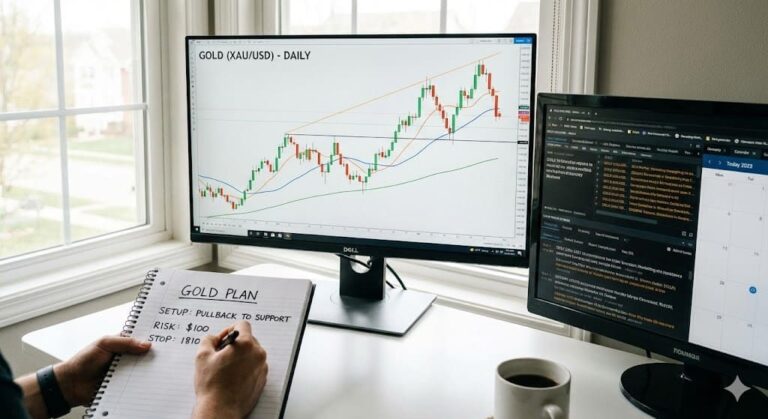


Screens light up, cable pops, someone posts a chart with arrows and a caption that dares you to act. If you are circling live forex signals and chat rooms, the real question is not “who’s hot today” but “which formats help me decide with a cooler head.”
“A forex signal system is a set of analyses used to generate buy or sell signals for currency pairs.”
What “signal + chat” really means
Signals point to potential entries or exits; chat adds real-time context and peer discussion. Some rooms feel like classrooms with charts and calendars. Others run like news squawks with short bursts of commentary. A few bolt on account-level replication, but most leave execution to you.
“Past performance cannot predict how an investment strategy will perform in the future.”
Common formats you will encounter
| Format | Core value | Typical tools | Where it shines | Watch-outs |
| Signal feed + commentary | Timely ideas with quick context | Levels, screenshots, outcome notes | Fast reads during active sessions | Overtrading if you chase every ping |
| Live forex and stock trading chat | Group discussion across assets | Public threads, voice, screen share | Cross-market read throughs | Noise level, conflicting views |
| Live trading chatrooms with mentors | Structured walkthroughs | Calendars, risk templates | Building routine and review habits | Costs, house rules to learn |
| Social platforms with charts | Big community, discovery | Streams, public chats | Scanning sentiment and setups | Mixed quality, promotion risk |
“Where the world charts, chats, and trades markets.”
Signals, copy, and the compliance angle
Signals can be pure information. Once a service moves toward automation or firm-like recommendations, supervisors may treat it as a regulated activity with suitability and governance duties. You do not need to become a lawyer to benefit from this; you just need to recognize the line.
“When firms provide copy trading that qualifies as portfolio management or investment advice, suitability requirements apply.”
Practical filters before you join a room
1) Evidence over anecdotes
Look for transparent stats that include drawdowns, not only winners. Solid rooms show full trade history or outcome notes, not just highlights.
2) Calendar awareness
If the room never flags data releases, spreads, or maintenance windows, your fills will teach you the hard way.
3) Fee clarity
Subscription, performance, or volume based charges should be visible and explained up front. If you cannot find them, hit pause.
4) House rules
Good rooms publish etiquette and escalation paths. That is not bureaucracy; it is how the vibe stays useful.
“The system recalculates investor volume as equity changes.” Even in copy ecosystems, sizing rules must be explicit and visible.
Lightweight playbook for staying calm inside chat
You are not outsourcing judgment; you are compressing research time. Try this compact loop for two weeks.
- Pre-session: write one thesis and a maximum cash loss for the day.
- During chat: bookmark one idea only; ignore everything else.
- After exit: log entry price, spread, slippage, and whether the idea matched your thesis.
- Weekly: keep one behavior that helped, drop one that added noise.
“Trade signals can be generated by technical indicators or algorithms; they are prompts, not guarantees.”
Tools that make a room genuinely useful
| Capability | Why it matters | Good sign |
| Real-time charts and clips | You see the same picture as the host | Screen shares with timestamps |
| News and macro context | Less guessing around volatility | Integrated headlines and calendars |
| Threaded Q&A | Faster learning, searchable | Clear tags for pairs, indices, themes |
| Exportable logs | Review without detective work | Downloadable chat snippets with links to charts |
A platform that pairs charts and community lowers context-switching friction.
Risk notes you will thank yourself for reading
- Size in cash terms first, then convert to lots or shares.
- Treat every signal as a hypothesis; the stop defines the cost of testing it.
- If a room shows performance banners without risk context, remember the regulator’s baseline: “Past performance is not necessarily an indication of future results.”
A quick word on noise and promotion
Regulators have been sharpening rules for finance content on social apps. That does not make chatrooms off limits; it just means your radar should be on when hype outweighs process.
The FCA has tightened expectations for financial promotions on social media and warned influencers and firms about compliance.
Bringing it together
The upside of live forex signals and chat is speed with context; the risk is trading every comment. Pick two rooms, audit their transparency, then run a tiny-risk trial for a week using the loop above. Keep the space where your notes look calmer and your decisions feel repeatable. If you are ready to move, choose one room for currencies and one live forex and stock trading chat for cross-market context, and pin a personal rule: no more than one idea per session inside live trading chatrooms. That simple guardrail turns community energy into steady progress.
FAQ
Are live rooms the same as copy services
No. Rooms share ideas and context; you still execute. Some platforms offer automation, but those can fall under suitability and other obligations when classified as advice or management.
Do I need a news feed if the host narrates
Yes. A basic real-time market news view and an economic calendar help you understand spreads and volatility rather than guessing in the moment.
What should I track to judge value
Track spread at entry, slippage on exit, and your adherence to the stated plan. Rooms that publish full outcomes, not just big wins, are easier to evaluate.
Is there a single best platform
Large social charting sites provide live trading chatrooms and public streams, which makes them a low-risk way to test your fit before paying elsewhere.
“Public chats let you discuss, share, and learn with thousands of market participants.” Use the features, keep your risk small, and let your notes guide you.