

You do not need five platforms to work the major benchmarks. You need one routine for indices trading with leverage that carries from the S&P 500 to the Nasdaq 100 to the DAX without changing your math.
With a steady workflow, margin trading for global indices and CFD trading on US and EU markets becomes a repeatable habit, not a gamble.
“If you can explain the risk in one sentence, the trade is ready.”
What you will find in one minute
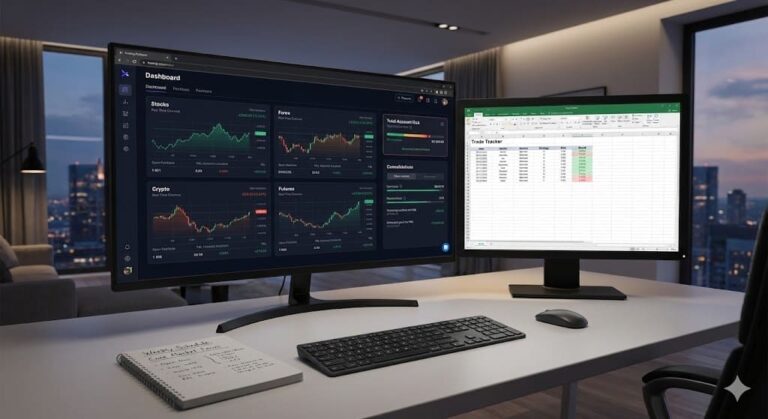
One login. One order ticket. One cash risk number per trade. You size by dollars, attach brackets by default, and review every fill with the same cost lens. When platform and paper tell the same story, trust grows.
“Consistency beats intensity.”
Why trade indices with leverage at all
| Benefit | Plain meaning | Watch out for | Practical guardrail |
| Efficient exposure | One instrument reflects many stocks | Bigger swings per point | Smaller cash risk unit at first |
| Flexible sizing | Adjust size without changing the plan | Oversizing is easy | Dollar risk shown on ticket |
| Global hours | Trade US and EU windows from one account | Thin minutes around news | Session filters and smaller size |
| Clear structure | Indices respect opening ranges and value zones | First bursts are noisy | Trade the retest, not the first break |
Leverage is a tool. Use it to meet a cash risk plan, not to inflate outcomes.
Margin trading for global indices, in practice
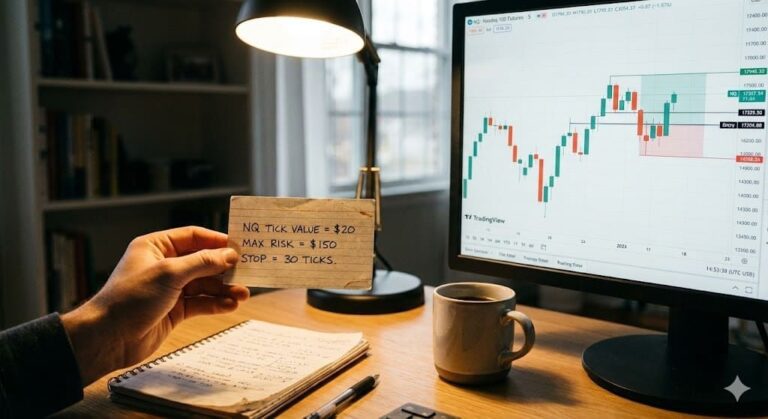
Think in cash risk first, margin second. Let the platform compute size from your stop distance and the index point value.
Ticket math you can trust
- Risk per trade: 45 dollars
- Planned stop: 9 points
- Dollar per point: 1 dollar
- Contracts = 45 ÷ 9 = 5
The same math works on S&P 500, Nasdaq 100, DAX, and FTSE when you read the point value in cash on the ticket.
Margin checklist
- Read required margin per contract in dollars
- Confirm effective leverage after the order sizes
- Keep a free margin buffer so stops can hold during spikes
“Cash language travels across assets. Keep it.”
CFD trading on US and EU markets, the session map
| Region | Active slice | First focus | Guardrail to enable |
| United States | Cash open and last hour | S&P 500, Nasdaq 100 | Opening range rules, smaller first risk |
| Eurozone | Frankfurt to London mid morning | DAX, Euro Stoxx | Wait for retests after the first break |
| United Kingdom | London cash open | FTSE 100 | Modest targets and tight brackets |
Pick two windows you can actually trade and protect them like appointments.
Two setups that travel across indices
Opening range break and retest
Box the first minutes after the bell. After a decisive break, take the first clean retest to the box edge with your bracket attached. This harnesses liquidity and avoids chasing the first burst.
Pullback into value
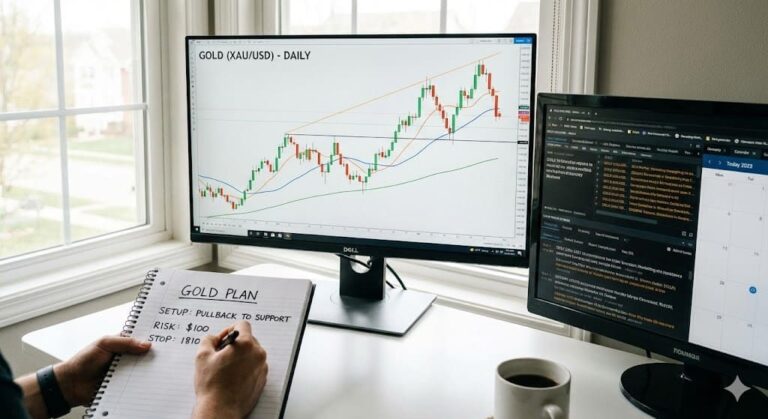
Confirm direction on a higher timeframe. Mark a value zone such as VWAP or a fair mean band. Take the first pullback that pauses. It keeps your entry aligned with the day’s tone on DAX and FTSE, and it tempers Nasdaq speed.
Short definitions hold when price speeds up.
Costs that decide more than headlines
Treat costs like ingredients. Measure them for twenty sessions.
| Cost line | Where it bites | Practical move |
| Spread and commission | Every fill | Trade liquid minutes and avoid chasing |
| Slippage | At the open and near data | Prefer retests over first prints |
| Overnight funding | Holding index CFDs after hours | Match hold time to cost or favor day holds |
| Data and tools | Extras you hardly use | Keep only what changes outcomes |
Cost clarity turns uncertainty into a choice you can live with.
Guardrails that protect your month
- Per day loss cap that auto pauses trading until reset
- Max position size per index and per ticket
- Two attempts per idea, then stand down
- Session filters to skip thin or news heavy minutes
- Plain messages when rules fire so you know why
Examples that help
- “Order blocked. Free margin below threshold. Reduce size or fund.”
- “Pause active. Daily limit reached. Resets at 00:00 server time.”
Index personalities at a glance
| Index | Rhythm you can expect | Common traps | Practical guardrail |
| S&P 500 | Deep liquidity at open and close | Slippage in first seconds | Trade the opening range retest |
| Nasdaq 100 | Fast bursts, tech driven | Chasing momentum candles | Smaller risk preset and strict stops |
| DAX | Active Frankfurt through London | Pre news whips | Wait for the second test, not the first spike |
| FTSE 100 | Measured pace | Midday drift | Modest targets outside the bell |
You do not need every lane at once. One clean lane beats three noisy ones.
Simple routine for indices trading with leverage
Before your window
- Status page green and spreads normal
- Cash risk number visible on the ticket
- Local calendar checked for prints
During
- One setup, two attempts max
- Brackets on by default
- Favor retests over first bursts
After
- Two screenshots and two lines in your journal
- Log spread, commission, and slippage
- Decide changes weekly, not mid-session
“Progress is a series of small, boring upgrades.”
Example playbooks you can copy
Calm opener blend
- Primary: S&P 500 opening range retest
- Secondary: DAX pullback into value
- Risk: 40 to 50 dollars per trade
- Why it works: distinct rhythms, one ticket logic
Tech tempo with a brake
- Primary: Nasdaq 100 on smaller risk preset
- Brake: small S&P 500 trade only after a clean retest
- Why it works: speed with structure, not chase
Platform checklist before you scale
- Dollar risk shown on the order ticket before submit
- Bracket templates saved as default
- Point value, trading hours, and funding visible in cash
- Delay and slippage panel pinned by index and session
- Export test where statement totals equal your CSV
- Public status page with recent incidents and reverts
If any item feels fuzzy, fix it before you fund more.
A day you will recognize
US cash opens and the S&P builds a tight box. You wait for a break, then take the clean retest with brackets attached. Risk equals your preset number, not a guess. Twenty minutes later Nasdaq offers a pullback, so you use the smaller risk preset. In the European window, DAX prints a measured retest and you take one entry with modest targets. Spreads and slippage sit inside your normal band. That evening your statement matches the export line by line. No detective work. That is steady indices trading with leverage across CFD trading on US and EU markets.
FAQ
How much leverage should I use on day one
Start with the smallest contract size that lets your stop equal your cash risk number. Raise size only after two calm weeks where costs and behavior match your plan.
What is margin trading for global indices in simple terms
You post a fraction of the position value as margin and control a larger notional size. Keep a free margin buffer so stops can survive normal spikes.
Can I hold index CFDs overnight
Only if the funding cost fits your plan. Many routines do better with day holds and clean exits.
How do I limit slippage at the open
Trade the retest of the opening range, not the first burst. Use a smaller risk preset on faster indices.
Should I trade multiple indices at once
Start with one index and one setup. Add a second only after your notes, fills, and costs behave for two straight weeks.
What proves my broker is reliable for leveraged indices
Ticket shows dollar risk before submit, brackets attach by default, reports equal exports, and the status page posts real timelines with planned reverts.