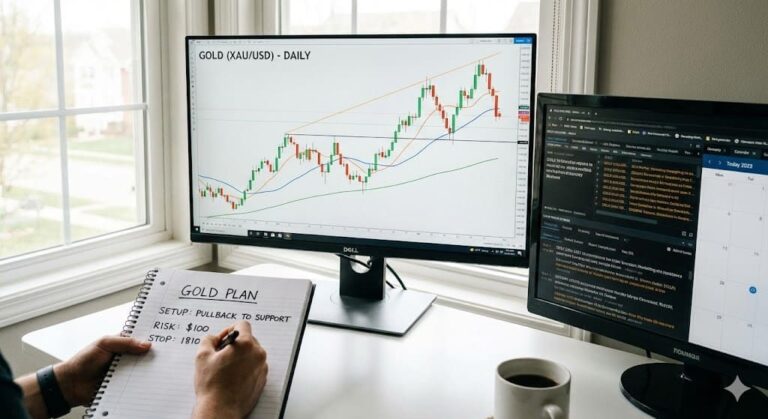

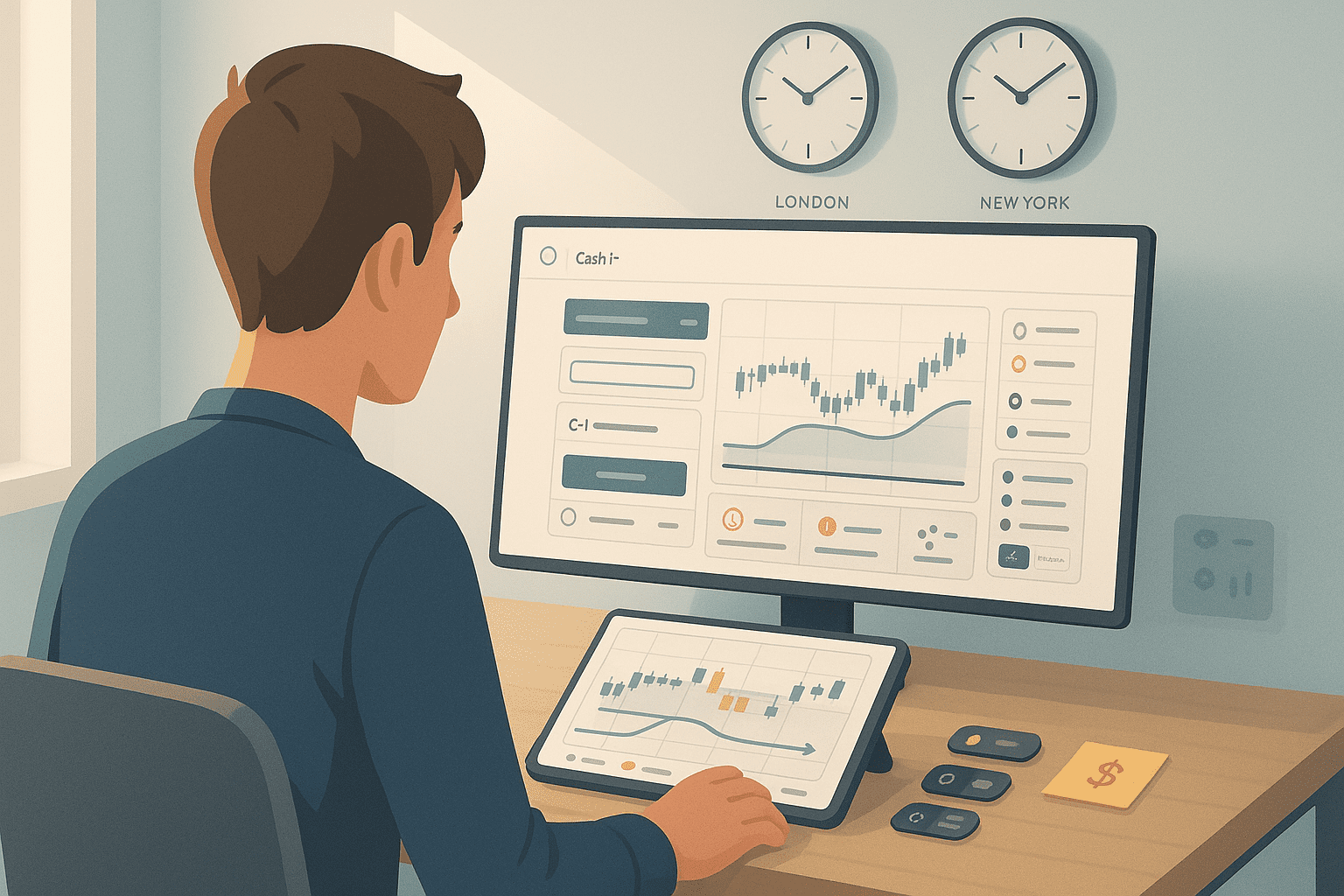
If you are new to indices trading for beginners, breathe. You don’t need ten indicators or a perfect forecast. You need a simple routine you can follow. Get a ticket that shows cash risk before you click. Have a short checklist to keep you safe on busy days.
This guide gives you the basics, explains what index CFD trading is, and walks through how to trade stock indices with clear guardrails.
What is index CFD trading
Index CFDs let you trade price moves of an index without owning futures or the underlying shares. You can use flexible position sizes, see costs upfront, and set risk in cash. Most platforms support brackets so your stop loss and take profit attach the moment you place the order.
Why beginners use CFDs
- Small, adjustable size per trade
- Familiar charts and quick tickets
- Ability to trade both directions
Stay mindful
- Spreads and overnight funding are real costs
- News minutes can widen spreads and create slippage
- Leverage helps position sizing, but it can hurt if you ignore limits
Meet the main indices and their rhythms
| Index | Common symbol on platforms | Typical active windows* | Personality |
| Nasdaq 100 | US100 or NAS100 | First and last US cash hour | Fast bursts, tech heavy |
| S&P 500 | US500 or SPX500 | First 45 minutes, late day | Box break, retest, momentum runs |
| FTSE 100 | UK100 | London morning to midday | Smoother steps, mean reversion pockets |
| DAX 40 | GER40 | Frankfurt open, early London | Firm moves with tidy pullbacks |
*Choose the slices you can actually trade, not the entire day.
Ticket math in plain cash
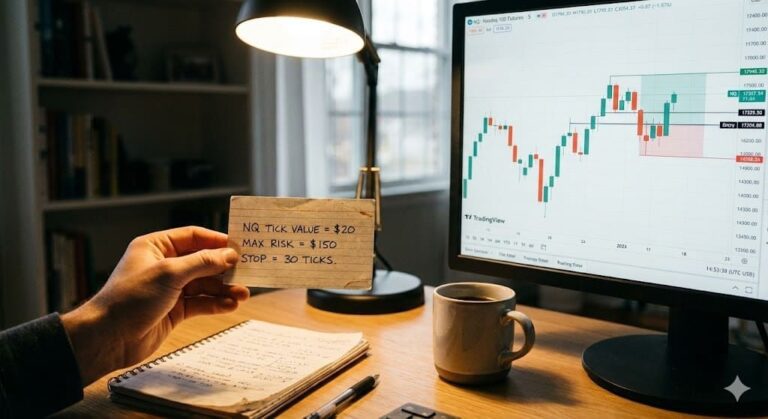
Let the platform do arithmetic. You set the money you are willing to risk per trade. Size follows that choice.
US100 example
- Risk per trade: 40 dollars
- Planned stop: 2.0 index points
- Point value example: 1 point equals 1 dollar per contract
- Risk per contract: 2 dollars
- Position size: 40 ÷ 2 equals 20 contracts
UK100 example
- Risk per trade: 45 dollars
- Planned stop: 10.0 points
- Point value example: 1 point equals 0.5 dollars per contract
- Risk per contract: 5 dollars
- Position size: 45 ÷ 5 equals 9 contracts
“You cannot control the market. You can always control position size.”
Index trading with leverage, handled safely
Leverage is just a tool. Treat it like a seatbelt you tighten on purpose.
| Concept | Plain meaning | Practical move |
| Initial margin | Cash needed to open the trade | Check headroom on the ticket before submit |
| Maintenance margin | Minimum to keep the trade open | Keep a buffer for normal swings |
| Leverage | Contract value divided by required margin | Use the least leverage that still expresses your idea |
| Variation PnL | Mark to market adds or subtracts cash | Expect swings on news days and size down if needed |
Simple rule: pick a fixed dollar risk per trade and let leverage adjust position size, not your emotions.
How to trade stock indices with a simple playbook
Start with two setups you can explain to a friend. Short definitions hold up when price speeds up.
Range break and retest
Box the first minutes of your session. If the price closes outside the box, wait for a clean retest. Enter with brackets attached so the stop and target place automatically.
Pullback into value
Confirm direction on a higher timeframe. Use a value zone or VWAP band. Take the first pullback that pauses. Good for continuation moves mid session.
Quiet session fade
When the market slows, fade stretched moves back toward value with small size and firm stops. Targets are closer. This protects your month during calm days.
“If the entry needs a paragraph to justify it, it is not ready.”
Costs that quietly decide outcomes
Treat costs like ingredients. Measure them for twenty sessions. Better habits will follow.
| Cost line | Where it bites | Practical move |
| Spread plus commission | Every fill | Focus on liquid minutes and avoid chasing breaks |
| Slippage | Opens and data minutes | Prefer retests and use limit orders when speed tempts you |
| Overnight funding | Holding CFDs overnight | Shorten duration or choose futures when carrying longer |
| Data and tools | Extras you rarely touch | Keep only what changes outcomes |
“Cost clarity turns uncertainty into a trade you can choose.”
A checklist to tape near your screen
- Fixed cash risk per trade written down
- Two setups you can describe in one sentence
- Two session windows on your calendar
- Brackets on by default for entries
- Journal with two screenshots and two short lines per trade
Consistency beats intensity.
Safety rails that protect beginners
- Per day loss cap that pauses trading automatically
- Max contracts or notional per index to avoid oversizing
- Two attempts per idea, then stand down for the session
- Session filters that keep you out of thin hours
- Short, human messages for margin or cap blocks
Examples that help:
- “Order blocked. Free margin below threshold. Reduce size or fund.”
- “Pause active. Daily limit reached. Resets at 00:00 server time.”
A day you will recognize
Picture a Tuesday. US100 breaks its opening box, then retests. You size by cash, place one order with brackets, and let it work. Later, UK100 offers a gentle pullback into value during London’s mid morning rhythm. Same ticket, same math, smaller size. That evening your statement matches your notes line by line. No creative labels. No guesswork. That is indices trading for beginners done the calm way.
Mini glossary for quick confidence
| Term | Short definition |
| Bracket order | Entry with attached stop and target |
| Drawdown | Peak to trough decline during a period |
| Slippage | Difference between expected and fill price |
| Spread | Distance between bid and ask |
| VWAP | Volume weighted average price, a value reference |
FAQ
Is index CFD trading good for small accounts
Often yes. You can scale position size to your cash risk, use clean charts, and attach brackets so exits are automatic. Track costs carefully and stick to liquid hours.
How to trade stock indices if I can only watch one window
Pick the opening 45 minutes of either London or New York. Use range break and retest with small size. If you cannot trade, study fills and spreads anyway.
Do I need depth of market to begin
Not always. Many beginners succeed with clean levels, a fixed cash risk per trade, and bracket orders. Buy tools that change your outcomes, not decoration.
What is a realistic daily goal
Protect the month. That means two attempts per idea, a per day loss cap, and a routine that ends on time. Results improve when your rules stay simple.
How do I avoid overtrading
Tape your rules next to your screen. Limit yourself to your two windows and two setups for a month. Say no to anything that falls outside the plan.