
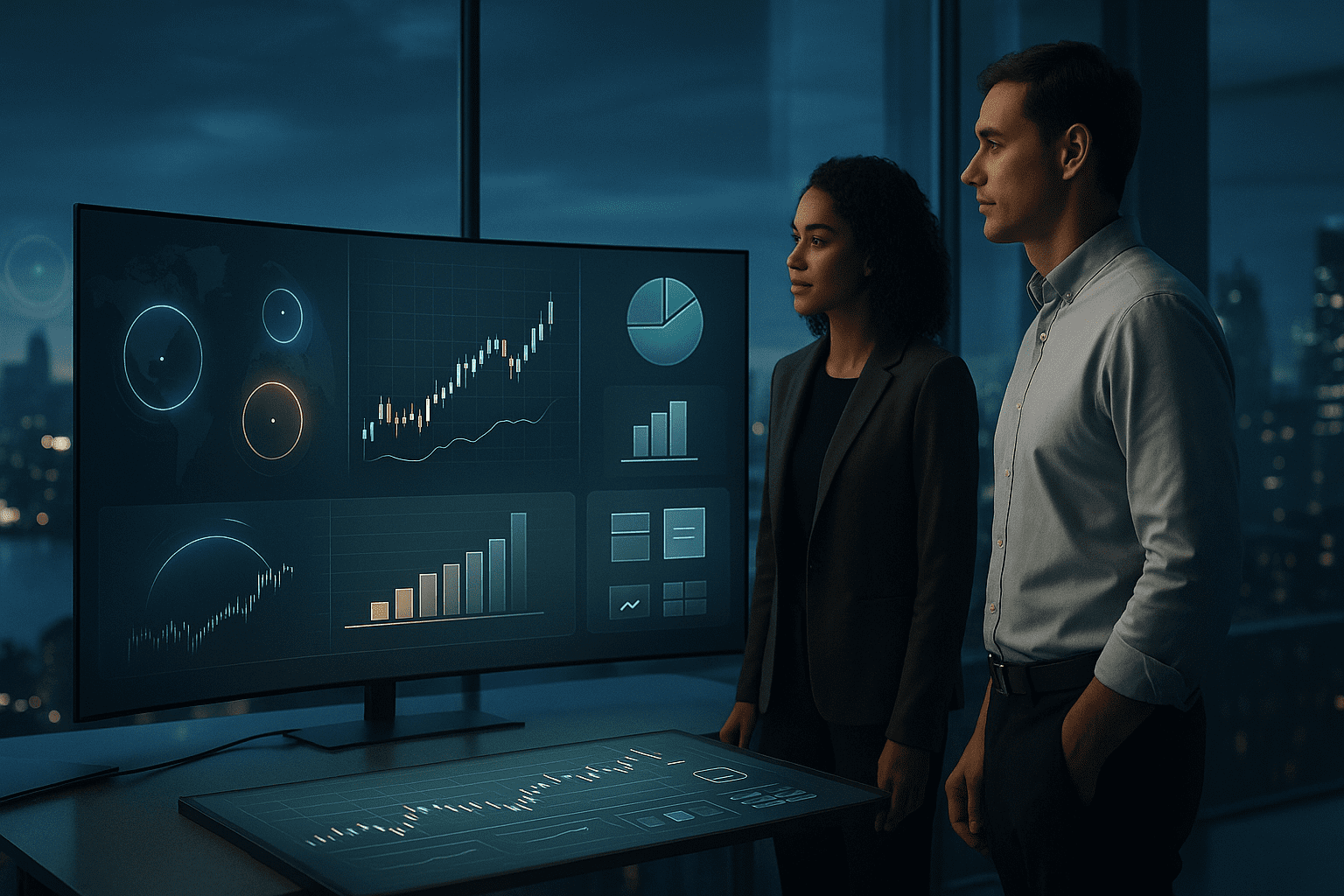
Screens glow, futures tick, and headlines fly. The goal here is to make global indices live data feel usable, not frantic, with a side-by-side look at index funds vs trading and a short, practical read of an s&p 500 chart that doesn’t require three textbooks.
“The S&P 500 is widely regarded as the best single gauge of large cap U.S. equities.”
The live landscape in plain English
Index prices stream almost around the clock thanks to futures and extended hours. Liquidity still clusters during regular cash sessions, which is why your fills often feel different at 10 a.m. than at 2 a.m.
“Core Trading Session: 9:30 a.m. to 4:00 p.m. ET.”
What moves the tape most days
- Cash open and close auctions that concentrate volume
- Macro releases that change rate expectations
- Earnings seasons where sector weights matter more than usual
A quick micro-guide to an s&p 500 chart
You do not need a wall of indicators. Start with structure, pace, and reference levels.
| Element | What to notice | Why it helps |
| Trend vs range | Higher highs and higher lows, or boxed rotation | Sets expectations for pullbacks vs breakouts |
| Session levels | Prior day high and low, opening range | Many intraday turns happen there |
| Moving average as context | A simple 20 or 50 period line | A ruler for momentum, not a signal by itself |
| Volume or volatility spike | Bars expand, ranges stretch | Trade smaller when the tape speeds up |
“The index includes 500 leading companies and covers about 80 percent of the U.S. market cap.”
Index funds vs trading at a glance
Two valid paths serve different jobs. One builds wealth quietly. The other demands timing discipline.
| Topic | Index funds | Active trading |
| Aim | Track an index for broad exposure | Seek outperformance or shorter swings |
| Time demand | Low, periodic contributions | High, planning and reviews required |
| Costs | Fund expense ratio, occasional spread | Spreads, commissions, slippage, data tools |
| Behavior risk | Lower if automated | Higher without rules and sizing |
| Fit | Long horizon portfolios | Short or medium horizon with defined process |
“Regular trading happens between 9:30 a.m. ET and 4:00 p.m. ET” while futures extend access well beyond that window.
When global indices live data is most useful
- Europe to New York overlap, where futures and cash narratives meet
- First hour of the U.S. session, where breadth and pace reveal the day’s character
- Final hour, when rebalancing and news flow often concentrate
If your schedule allows only one window, pick the one you can repeat consistently and let your notes compound.
Three simple index tactics you can test
- Pullback with structure
Price breaks a prior ceiling, then drifts back to that level. Entry near the retest, stop just beyond the structure, first target equal to cash risk, then trail. - Breakout after compression
Several tight candles coil under resistance. A clean push with pace clears the range. Enter on the retest, not the first spike. - Mean reversion back to a session midline
A stretched move stalls, then rotates. Fade to the mean with smaller size, especially near scheduled reports.
These are templates, not signals. Log spread at entry and slippage on exit so you learn what’s repeatable for you.
Cost stack that actually shows up on statements
| Cost | Index funds | Active trading |
| Ongoing fees | Expense ratio | Data, platforms, sometimes borrow fees |
| Execution | Minimal for long holds | Spread and slippage vary by hour |
| Taxes | Depends on jurisdiction and account | More events may mean more realized gains |
Small accounts feel spread the most in the first and last minutes of the session. If your platform allows, practice with limit orders near levels rather than chasing market orders at the bell.
Tiny reading of a live s&p 500 chart example
- Pre market: futures hold above the prior day high
- Open: first five-minute range forms; pullback tags that band and holds
- Plan: buy near the top of the band on a retest, stop just below the band, first target the morning high, then trail under higher swing lows
If the pullback slices through the band on volume, you step aside. Process over prediction.
Bringing it together
Whether you’re building long term exposure with funds or working short swings, the recipe is similar. Respect the schedule, track costs, and let structure guide decisions. If this resonates, set a two week experiment: one hour per day, one setup only, and a one page log. Compare your notes against a clean s&p 500 chart snapshot at the close. If your decisions feel calmer, you’re on the right path with global indices.
If you want a fast next move, pick one broad fund for savings, then practice one intraday template on a tiny size account. That blend keeps compounding steady while you learn the nuances of index funds vs trading in your own notebook.
FAQ
Are extended hours good for beginners
Liquidity and spreads are often better during the regular cash session. Newer traders usually get cleaner fills there.
Should I read futures or cash charts first
Use both. Futures show the overnight story, while cash confirms breadth and pace once the bell rings. Globex continuity helps with context between sessions.
Is the S&P 500 the only index worth watching
No. It is a core U.S. gauge, but regional indices and sector baskets add useful texture. The S&P 500 remains the most referenced large cap benchmark.
Can funds and trading coexist in one plan
Yes. Many keep automatic contributions in funds while using a small, rule-based trading account for skill building and curiosity.
“Core Trading Session: 9:30 a.m. to 4:00 p.m. ET” and “Globex runs Sunday evening to Friday with a daily maintenance pause” are two anchors that make live index data easier to use.