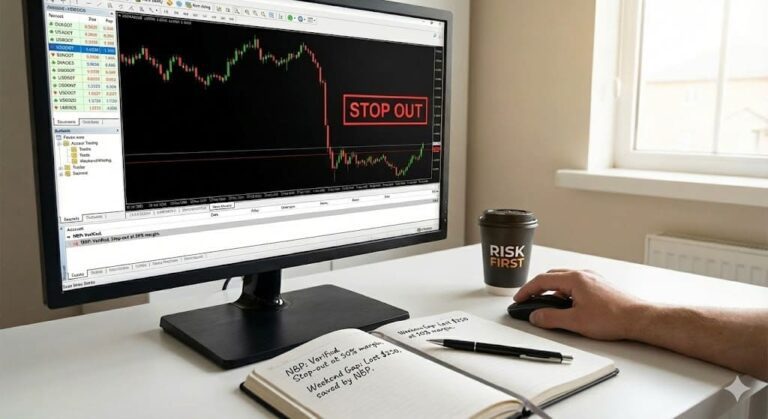

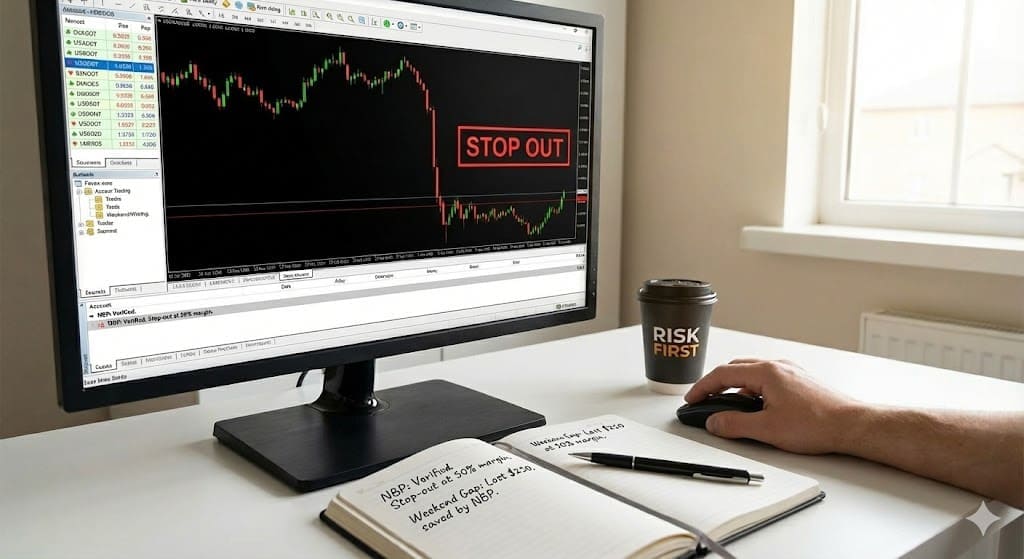
The scariest trading losses usually aren’t the slow, grindy ones. They’re the sudden ones. Price jumps, spreads widen, your stop doesn’t fill where you expected, and your account goes from “down a bit” to “wait… I owe money?” That specific nightmare is why forex with negative balance protection matters, especially for newer traders and anyone trading leveraged positions.
Negative balance protection is not a magic shield that makes trading safe. It’s more like a seatbelt: it helps in a particular type of crash, but it doesn’t stop you from crashing. Your job is still to manage risk, understand margin mechanics, and choose a setup (broker plus tech plus habits) that doesn’t rely on luck.
“The goal isn’t to avoid losses. The goal is to avoid the kind of loss that changes your life.” (Risk Journal, p. 12)
The risk that sneaks in between ticks
In normal conditions, your stop loss should cap the damage. The issue is that markets don’t always move smoothly. Big moves can happen quickly, and execution isn’t guaranteed at your chosen price. When price gaps or liquidity thins out, you can get filled worse than expected.
The typical culprits:
- Weekend gaps when markets reopen
- Major news releases that cause sudden spikes
- Thin liquidity sessions where spreads stretch
- Fast drops that trigger stop-outs with slippage
This is exactly the scenario where Forex with negative balance protection can prevent you from ending up below zero.
Forex with negative balance protection: what it actually covers
At its simplest, negative balance protection means your broker is designed to prevent your account balance from going negative, even if a position closes at a worse price than your stop.
In plain terms: if the market jumps past your stop and your loss exceeds your deposit, the protection aims to cap the account at zero instead of turning it into a debt.
That’s the concept. The real-world outcome depends on the broker’s policy details and how their risk systems handle extreme conditions.
What it does not do
Negative balance protection does not:
- Guarantee your stop loss fill price
- Prevent slippage
- Protect you from repeated bad risk decisions
- Make high leverage “safe”
“Protection can limit the worst-case bill. It can’t fix a bad habit.” (Coach Note, Week 3)
The fine print that changes the outcome
Most misunderstandings come from the policy details, not the headline promise. Before you trust the label, you want to understand how it’s applied.
Eligibility: which accounts and products count
Some brokers apply negative balance protection only to:
- Retail clients (not professional classifications)
- Certain account types
- Certain instruments (forex pairs vs CFDs vs crypto)
If you trade multiple products, verify that the coverage is consistent across them.
Timing: when and how the broker “resets” a negative balance
In a fast market, an account can go negative temporarily before the broker adjusts it. The key questions are:
- Do they reset balances automatically?
- How quickly do they do it?
- Do they require a support ticket?
Edge cases: fees, swaps, and chargebacks
Even with protection, there can be messy situations involving:
- Swap charges pushing balance close to zero
- Fees that apply after liquidation
- Disputes and chargebacks (rare, but worth knowing)
Two quick examples that make this real
Examples are not predictions, just simple “this can happen” scenarios that show the mechanism.
Example 1: Weekend gap surprise
You hold a position over the weekend with a stop loss. Market reopens with a gap past your stop. Your order closes at the first available price, which is worse than planned.
- Planned risk: $100
- Actual fill increases loss: $350
- Account equity before gap: $200
Without forex with negative balance protection, you could end up at -$150. With it, many brokers aim to cap you at $0.
Example 2: News spike with widened spreads
During a major release, spreads widen and price jumps. Your stop triggers, but liquidity is thin and the fill is worse.
- You risked 1% based on a normal spread
- At the spike, the spread triples temporarily
- Slippage pushes the realized loss above the intended amount
Negative balance protection doesn’t stop the damage, but it can stop the account from going below zero if the move is extreme.
Broker mechanics that matter more than the marketing
To use forex with negative balance protection responsibly, it helps to understand what’s happening under the hood: margin, stop-out levels, and liquidation rules.
Margin, equity, and free margin in one minute
- Balance: closed P and L plus deposits minus withdrawals
- Equity: balance plus open P and L
- Margin: the collateral held for open positions
- Free margin: equity minus margin
When equity falls too far, brokers typically trigger:
- margin call warning (sometimes)
- stop-out, where positions are closed to reduce risk
Stop-out behavior can change your results
Different brokers close positions differently:
- Closing the largest loser first
- Closing all positions at once
- Partial liquidation until margin is restored
Even if negative balance protection exists, sloppy stop-out mechanics can increase slippage and create ugly fills.
“Your real safety feature is the stop-out logic plus your sizing. The policy is the backstop.” (Operations Checklist, v2)
Choosing a Forex trading platform that supports safer decisions
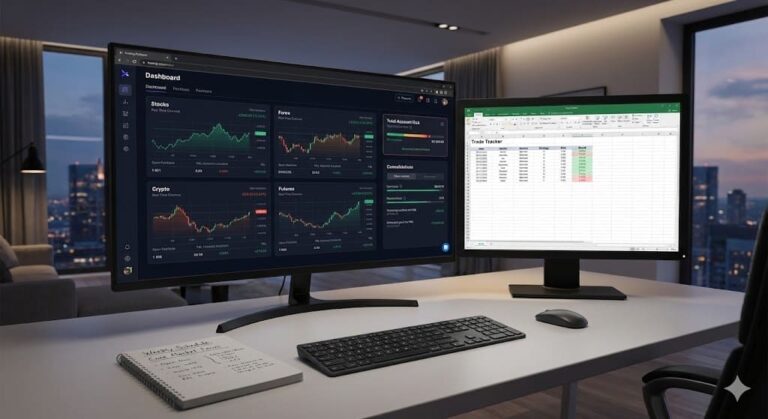
A Forex trading platform won’t create negative balance protection by itself (that’s broker-side policy), but it can absolutely help you avoid the situations that lead to disasters.
Risk tools worth having on a Forex trading platform
Look for:
- Fast order entry with clear stop and take-profit fields
- One-click modification of stop loss (moving it should be simple, not a treasure hunt)
- Clear margin impact display before placing a trade
- Alerts for margin level and price levels
- Clean statements and exportable history for journaling
Features that look impressive but don’t help much
Be careful with:
- Overloaded indicator libraries (more choices often means more confusion)
- “AI signals” without transparency
- Leaderboards that reward reckless leverage
A good forex trading platform makes it easier to follow your plan and harder to make accidental mistakes.
A broker checklist for negative balance protection that you can actually use
Here’s a practical checklist you can run in a call, in chat, or while reading terms.
| Question to verify | Why it matters | A reasonable answer looks like |
| Is negative balance protection automatic? | Manual requests create delays | “Applied automatically across eligible accounts” |
| Does it cover all instruments I trade? | Coverage can vary | “Yes for FX, here’s the list for others” |
| Retail only or all clients? | Classification changes protections | “Retail accounts covered, pro accounts differ” |
| How fast is a negative balance corrected? | Reduces stress and account lock issues | “Same day or within X hours, policy stated” |
| Any exceptions tied to disputes or fraud? | Rare, but important | Clear, specific exceptions listed |
| What are stop-out levels and liquidation rules? | This affects slippage outcomes | Transparent stop-out %, explained workflow |
| Can I see execution and slippage stats? | Helps set realistic expectations | Reports or clear disclosure, not vague claims |
If a broker can’t answer these cleanly, treat that as a signal. Not a deal-breaker automatically, but a sign you’ll get fuzzy answers later too.
The IB angle: best forex ib program without nasty surprises
A lot of traders first meet brokers through affiliates and IBs. If you’re choosing a broker through an introducing broker relationship, the best forex ib program isn’t just about high rebates. It’s about transparency, tracking, and whether the incentives encourage sane risk.
Why negative balance protection matters for IB relationships
In some arrangements, extreme losses, chargebacks, or account adjustments can impact:
- Commission eligibility
- Clawback rules
- Payment timing
Even if you’re “just a trader,” those rules can affect the quality of support and the type of broker an IB pushes.
“If the incentive rewards volume at any cost, the community will trade like a casino.” (Community Moderator Note)
Quick comparison table for an IB program
Use this table to evaluate whether an IB setup is built for long-term relationships.
| IB feature | Why you should care | Healthy sign |
| Clear rebate formula | Prevents confusion | Simple tier rules, written |
| Tracking visibility | Avoids “missing payouts” drama | Dashboard with trade IDs |
| Payout schedule | Predictability matters | Fixed dates, not “whenever” |
| Clawback policy | Protects you from surprises | Clear rules, limited edge cases |
| Compliance guardrails | Keeps marketing honest | No profit promises, documented terms |
| Support escalation | Fixes account issues faster | Named contact path |
A best forex ib program usually feels boring in the best way: clear math, clear rules, and fewer “trust me” moments.
If you’re picking a broker through a community or IB
Ask these questions:
- Are rebates tied to volume only, or also to spread/commission structure?
- Are there restrictions on strategies (scalping, EAs, news trading)?
- Who supports withdrawals and account issues, the IB or the broker?
- Is Forex with negative balance protection explicitly stated for my account type?
A simple setup plan for your first 30 days
This is the part people skip because it’s less exciting than strategy talk. It’s also the part that prevents the ugly outcomes.
Step 1: Set risk defaults before you trade
- Pick a fixed risk per trade (0.5% to 1% is common for newer traders)
- Set a max daily loss that stops you from spiraling
- Limit the number of open positions until you’re consistent
Step 2: Treat leverage like a tool, not a flex
High leverage isn’t a badge. It’s a faster way to hit a margin stop-out.
Practical rule: if you can’t calmly explain your stop distance and position size, reduce size.
Step 3: Use the platform to enforce your plan
On your Forex trading platform, set:
- Alerts at key levels
- Templates that include your preferred stop and target layout
- A routine to export history weekly
Step 4: Avoid the worst timing traps
You don’t need to avoid news forever, but don’t learn risk management during the most violent minutes of the week.
For your first month:
- Consider staying flat around major scheduled releases
- Avoid holding random positions into weekends until you have a reason and a plan
Step 5: Review like a coach, not a critic
Use a simple journal:
- Setup name
- Entry, stop, target
- Reason for entry in one sentence
- Rule grade (A, B, C)
- One improvement for next time
“Your journal is a mirror. It’s not a courtroom.” (Trading Notes)
Common misunderstandings that cause pain
“Negative balance protection means I can’t blow up”
You can still blow up your account to zero. The protection is about not owing money beyond your deposit, not about preventing loss.
“My stop loss guarantees my max risk”
Stops are instructions, not guarantees. In fast conditions, fills can be worse.
“The biggest rebate means the best deal”
Not always. The best forex ib program is the one that doesn’t nudge you toward overtrading, hides fewer rules, and gives clean tracking.
A practical next step before the FAQ
If you’re opening or switching brokers soon, pick two options and run the checklist above in writing: ask about Forex with negative balance protection, verify stop-out behavior, and test your Forex trading platform workflow in a demo with a weekend gap scenario and a news-spike scenario (just observation, no hero trades). Then compare IB offers using the table and choose the best forex ib program based on transparency and support, not just the headline rebate, and you’ll start with fewer unpleasant surprises and a cleaner risk routine.
FAQ
Does Forex with negative balance protection apply to every broker?
No. Policies vary by broker, region, client classification, and product type. Always verify the exact terms for your account.
Can a Forex trading platform guarantee negative balance protection?
No. A platform can help with risk tools and execution workflow, but negative balance protection is a broker-side policy and risk control.
Does negative balance protection eliminate slippage?
No. Slippage can still happen. The protection is typically about preventing your account from going below zero during extreme moves.
Is a higher leverage setting safe if negative balance protection exists?
It can still be dangerous. Higher leverage increases the chance of margin stop-outs and rapid losses. The protection is a last-resort backstop, not a strategy.
Best forex ib program: what matters beyond rebates?
Clarity of payout rules, tracking transparency, clawback policy, compliance standards, and real support escalation when account issues happen.
Should beginners trade through an IB or community link?
It can be fine if the relationship is transparent and the broker terms are clear. Avoid setups that pressure you into higher volume or promise outcomes.