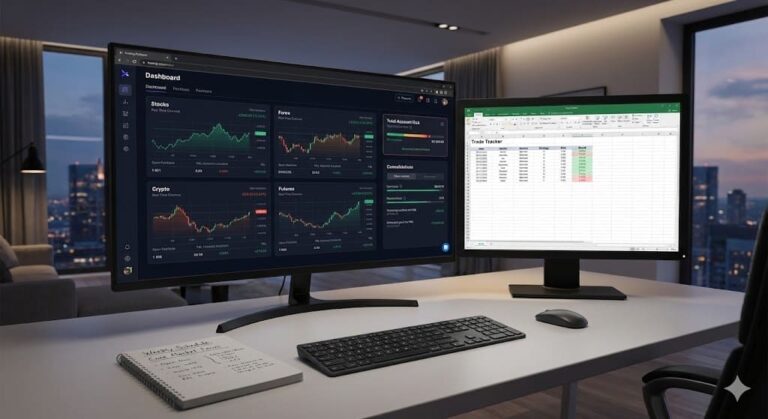


Chat pings, charts flicker, and five people see five different trades. Healthy groups turn that chaos into a signal. This page puts community trading strategies in plain language you can apply, using roles, rituals, and data that make collaboration useful without turning everyone into clones. You will see examples, compact tables, and a short routine you can try this week.
“Groups win by reducing blind spots, not by guessing faster.”
What a community can do that a solo trader cannot
Communities compress research time, spread attention across assets and sessions, and pressure test ideas before capital moves. The magic is structure, not noise. A strong room defines who does what, how ideas travel from chat to ticket, and which metrics decide whether a tactic stays or goes.
Core building blocks
| Building block | Purpose | What good looks like |
| Roles | Avoid gaps and overlap | Scout posts levels, Newswatch flags events, Risk lead tracks exposure |
| Shared map | Keep everyone aligned | One-page plan with instruments, hours, risk per idea, review cadence |
| Playbooks | Turn ideas into repeatable actions | Entry logic, stop logic, exit options, example screenshots |
| Post-trade review | Turn activity into learning | End-of-day thread with fills, slippage, and lessons in 3 lines |
“Write rules that survive busy minutes, then let the numbers judge them.”
Types of collaboration inside community trading strategies
| Collaboration mode | Use it for | Strength | Watch-out |
| Live call and chat | Fast tape and key releases | Real-time coordination | Herding into the same mistake without risk caps |
| Asynchronous threads | Swing ideas and debriefs | Deep thinking with receipts | Threads that drift without conclusions |
| Micro-squads | One tactic, two to four people | Rapid iteration and accountability | Overfitting one market regime |
| Rotating roles | Fresh eyes on the same task | Cross training and resilience | Hand-offs that miss critical context |
From idea to trade without the mess
A simple flow that scales from two friends to a hundred members.
- Scout names a clean level with a screenshot and the risk per idea.
- Others attempt to invalidate the idea politely. If it survives, it enters the watchlist.
- The first trader who sees the trigger posts entry, stop, and target in one line.
- Only the trader whose plan matches takes it. Everyone logs spread and slippage.
- End-of-day, one summary lists what worked, what failed, and one change to test tomorrow.
“Debate hard before the trade, stay quiet during the trade, learn loudly after.”
A compact playbook for intraday and swing
Intraday template
- Context: cash session open for your index or FX pair
- Trigger: break and retest of a premarket level
- Risk: fixed cash amount, stop beyond structure
- Exit: first target equals risk, remainder trails under swing lows
Swing template
- Context: daily uptrend, pullback to rising 20 or 50
- Trigger: reversal candle at prior breakout with volume confirmation
- Risk: 1 to 2 ATR from entry, position sized to a fixed percent
- Exit: scale at recent high, trail under higher lows
Keep screenshots in a shared folder so new members see what “good” looks like without a lecture.
Governance and risk that keep friendships intact
- Cap risk per idea and per day at the account level.
- Only hosts post entries during news minutes, others observe.
- Tag positions by theme so you do not stack the same bet five ways.
- Rotate the skeptic role so someone always asks the hard question.
“A community is not a signal factory. It is a discipline amplifier.”
Metrics that prove the room is helping
| Metric | Why it matters | Target to start |
| Idea to trade conversion rate | Filters noise | Under 25 percent shows discipline |
| Average heat vs stop | Reveals entry quality | Under 40 percent of stop distance |
| Slippage by hour | Guides timing | Shrink during your chosen window over 2 weeks |
| Retrospective adoption | Confirms learning | One tangible change per week, per member |
Tools that make coordination feel natural
- Shared calendar with data releases and earnings dates
- One-page templates for entries and debriefs
- Tags for asset, setup type, and risk tier
- A searchable archive of annotated charts
Try this two-week routine
Day 1, pick one window and one setup.
Days 2 to 9, post exactly one idea a day, even if it is a pass.
Day 10, publish a summary with three screenshots and a single change you will test next.
Small and boring wins more often than clever and chaotic.
“If you cannot explain the setup in one sentence, the market will explain the loss in one minute.”
Bringing the pieces together
If your group wants fewer pings and more outcomes, adopt a single-page plan, one intraday and one swing playbook, and a debrief ritual that fits in fifteen minutes. That is all community trading strategies need to become a durable edge. If you are ready to move, pick a start date, name your roles, and schedule the first two reviews. You will feel the difference in a week.
Before you jump to the next tab, write a short note in your channel that sets the new rhythm. Invite one friend to hold you to it. Treat this as the first brick, not the entire house.
FAQ
Does a community replace personal responsibility
No. A trading room reduces blind spots and speeds learning, yet each trader still sizes risk and executes. The goal is clarity, not outsourcing.
How many strategies should a group run
Two is enough to start, one intraday and one swing. Add more only when the metrics say both are stable.
What if people trade different assets
Keep the playbook agnostic and tag by asset. The logic of level, trigger, and risk math travels across FX, indices, and stocks.
How do we onboard new members without chaos
Pin the one-page plan, a glossary, and five example trades. Require a short intro and a shadow week before posting live ideas.
Can we share signals without copying blindly
Yes. Share levels and triggers with exact risk, then let each trader decide. The room’s job is context. Execution is personal.