
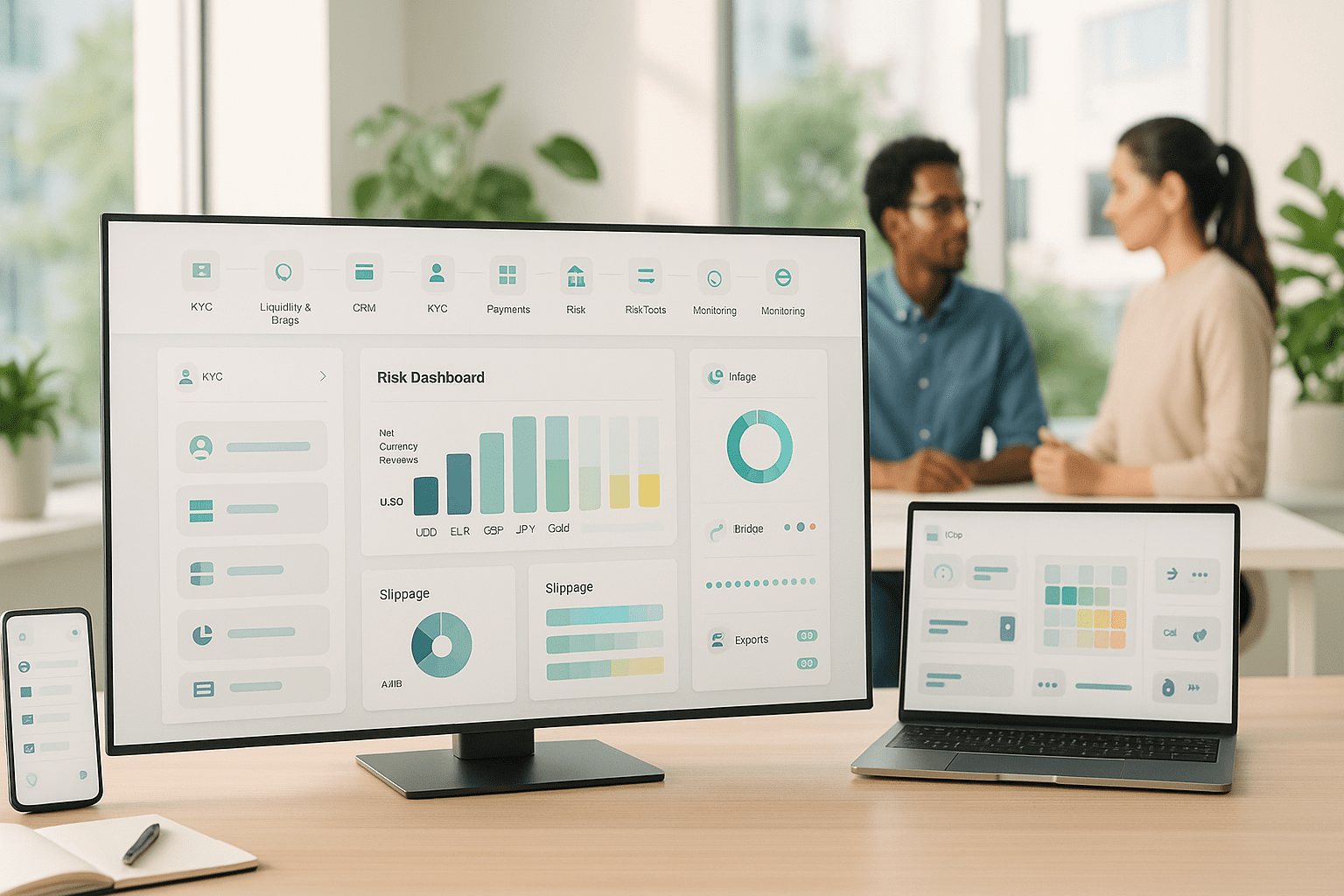
A healthy community-based trading platform is not a noisy feed. It is a focused space that helps make better decisions. Here, social features for traders teach without distracting. Trading groups and leaderboards reward discipline instead of drama.
This playbook shows how to design that room so it stays calm on loud days and useful on quiet ones.
What “good” feels like in motion
You open the prep room. People post two levels, a calendar item in local time, and a one line plan with cash risk stated. During the session, executions arrive with brackets already attached. After the bell, members drop recaps with before and after screenshots. Newcomers can learn the culture in ten minutes because the furniture never moves.
“Useful conversations beat loud conversations.”
Rooms that turn talk into outcomes
Organize by intent so nobody wonders where to post.
| Room | Purpose | What members see |
| Learn | Fundamentals and tool tips | Glossary, order types, risk in cash, platform guides |
| Prep | Levels and daily plans | Two or three zones, catalysts with local times, one line plan |
| Live | Execution and quick reads | Watchlists, alerts, short updates with images |
| Review | Lessons and patterns | Two screenshots, reason in, reason out, lesson in one sentence |
| Strategies | Playbooks to reuse | Setup rules, typical hours, risk per trade in cash |
| Copy or MAM hub | Structured following | Cash allocation presets, equity stops, delay and slippage stats |
| Support | Calm problem solving | Status notes, known issues, help links with timestamps |
When intent is obvious, contribution becomes normal.
Social features for traders that actually help
Design features to make better behavior the easy choice.
- Local time calendars so nobody trades into a print by accident
- Post templates that force a plan: level, trigger, stop, target, cash risk
- Pinned recaps that compress lessons into two screenshots and two lines
- Reaction types that highlight evidence, not hype
- Mentor tags that surface consistent teachers without creating celebrities
- Threaded Q&A with accepted answers and links to docs
- Device aware alerts that deliver early and quietly, not loud and late
“Make the right habit one tap away.”
Trading groups and leaderboards that teach, not tease
You can keep motivation high without turning the room into a casino.
Group structure that scales
- Public groups for majors, indices, metals, and stocks
- Private cohorts for cohorts following a specific playbook
- Regional chapters with moderators who know local hours
- “Study hall” groups for silent practice and weekly reviews
Leaderboards that reward discipline
Show both the reward and the cost. Rank on a blended card, not one headline number.
| Metric on the card | Good example | Why it belongs |
| Time weighted return | 11.4 percent over 9 months | Normalizes deposits and withdrawals |
| Max drawdown | 8.9 percent | Calibrates pain tolerance |
| Recovery time | 16 trading days | Tests resilience, not luck |
| Avg risk per trade | 35 dollars | Teaches sizing and consistency |
| Typical hours | London and early New York | Helps followers match schedules |
| Notes cadence | Weekly, concise | Proves a method exists |
“A smooth twelve with a ten down often beats a noisy forty with thirty five down.”
Safety, moderation, and trust by design
Clear boundaries make collaboration feel safe.
- Rules table with examples of allowed and removed posts
- Maker checker for bans, unbans, and sensitive deletions
- Status page with incident timestamps and planned reverts
- Partner disclosures on any sponsored tools or links
- Privacy options for username, PnL masking, and opt out of leaderboards
- Region aware permissions for leverage, symbols, and copy access
Short messages reduce tickets:
“Post removed. No chart or cash risk. Please use the prep template.”
“Copy paused. Per day loss cap reached. Resumes at 00:00 server time.”
“Order blocked. Free margin below threshold. Reduce size or fund.”
Onboarding that cuts confusion
A clean first day creates better second weeks.
First five minutes
- Pick two rooms to follow by default
- Choose a daily window with local times
- Paste a cash risk number into your profile
- Read a 60 second rules card with pictures
- Save a prep template as your default post
First session
- Post a plan with two levels and one catalyst
- Tag your setup type so search learns your style
- After the session, publish a two line recap
Consistency beats intensity.
Feature spec: the post that trains the room
Every execution post should carry the same four lines and two images.
- Plan in one sentence
- Cash risk and stop distance
- Reason in and reason out
- Result in R with spread, commission, and any slippage noted
- Images before and after
This turns the feed into a searchable textbook.
Data, logs, and exports that end debates
- Thread IDs and post hashes for provenance
- Trade links from posts to fills where supported
- Delay and slippage panels by symbol and session
- CSV and API exports so statements and community data agree
- Incident archive members can cite by timestamp
When platform and paper match, arguments end quickly.
Cost lines you should plan for
Treat costs like ingredients. You will cook a better platform.
| Cost line | Where it shows | Practical move |
| Moderation and support | Hours and SLAs | Train with examples, rotate by region |
| Data and storage | Images, logs, exports | Tiered retention, cold storage after 90 days |
| Notification rails | SMS, email, push | Prefer push for cost and timing control |
| Compliance and KYC* | Copy or MAM features | Keep risk warnings and disclosures plain |
| Tooling | Risk calculator, calendar, search | Build fewer, better; maintain weekly |
*Only if you enable managed features.
Two launch plans that work
Starter community, focus on depth
- Rooms: Learn, Prep, Live, Review
- Features: templates, local time calendar, pinned recaps
- Groups: majors and indices, no leaderboard in month one
- Goal: calm rhythm, fast learning, low support
Growth community, add gentle competition
- Turn on trading groups and leaderboards with the blended card
- Introduce mentor tags and a monthly review circle
- Add copy or MAM hub only after stable metrics
- Goal: motivation without noise, real distribution for proven methods
“Add one new variable at a time. Measure it. Keep it or cut it.”
Common mistakes and clean fixes
| Mistake | Why it hurts | Clean fix |
| One giant chat for everything | Experts leave, beginners drown | Split by asset and session with templates |
| Percent only leaderboards | Rewards leverage and luck | Pair returns with drawdown and recovery |
| Loud, late alerts | Whipsaw and regret | Quiet, early, local time aware notifications |
| No post structure | Unsearchable noise | Enforce plan, cash risk, reason in and out |
| Silence during incidents | Rumors fill the gap | Status notes with timestamps and reverts |
“Progress is a series of small, boring upgrades.”
A typical Tuesday that proves the model
London opens. The prep room fills with two clean levels on EURUSD and a gold note. Alerts nudge early, in local time. In Live, posts show a bracket with cash risk already set. Two hours later, Review threads land with images and one sentence lessons. The leaderboard updates with drawdown and recovery next to return, so the same faces appear for the right reasons. New members follow the template because it is easier than skipping it. That is a community-based trading platform doing the job you built it to do.
A small nudge before you launch
Write the three rules you will enforce everywhere. List the two metrics you will publish every Monday. State the one thing you will never ship without a template. Then, enable the social features for traders that reward evidence. Turn on trading groups and leaderboards that teach instead of tease. Let the room improve quietly every week.
FAQ
What makes a community-based trading platform different from a forum
Structure, not volume. You guide posts through templates, show cash risk in plain numbers, and pair returns with drawdown and recovery. The result is a room you can learn in.
Which social features for traders are worth building first
Local time calendars, post templates with risk fields, quiet alerts, and pinned recaps. These four raise quality fast without adding noise.
How should trading groups and leaderboards be designed
Organize groups by asset and session. Rank leaderboards with a blended card that includes return, drawdown, recovery time, average cash risk, and notes cadence.
Can beginners and advanced traders thrive in the same space
Yes, if rooms are split by intent and templates level the field. Beginners get clarity and mentors can teach without repeating themselves.
Is copy or MAM necessary for a community to grow
No. Communities grow on rhythm and clarity. Managed features can be added later when execution and moderation metrics are stable.
How do we keep moderation fair
Use a rules table with examples. Apply a maker-checker system for sensitive actions. Post incident notes with timestamps and planned reverts.