
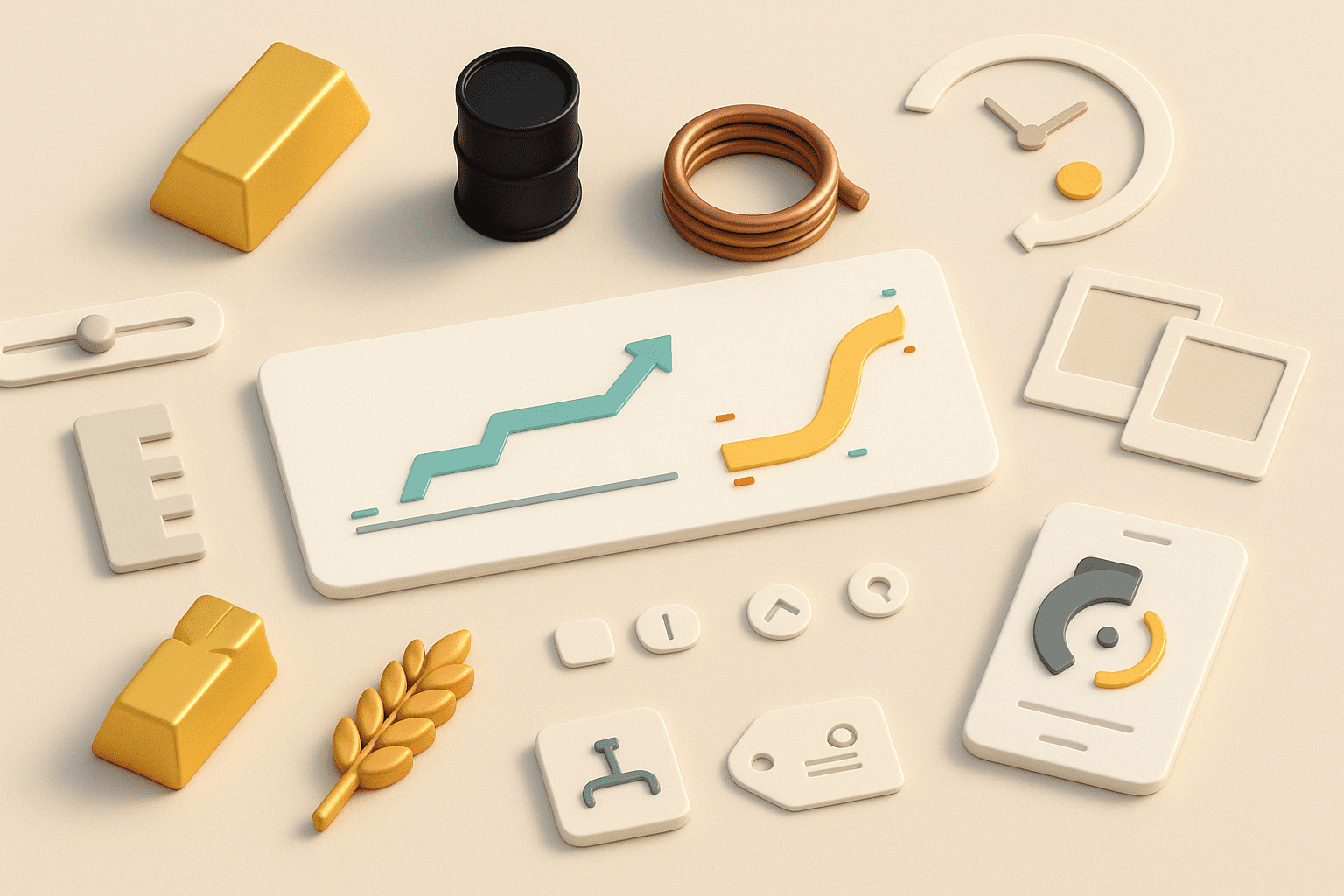
Screens light up, crude spikes on a headline, and gold wobbles after a policy soundbite. If that noise feels like a riddle, breathe. This playbook turns commodities trading strategies for new traders into something usable, built around simple market structure, risk math you can explain, and tools that keep costs visible.
“The S&P GSCI is a widely recognized benchmark for broad commodity market beta.”
What a commodity move is really telling you
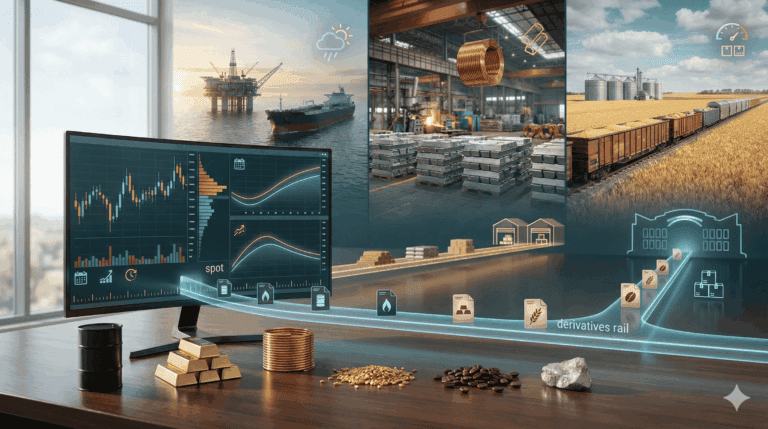
A commodity is not just a ticker. It is a story about supply, demand, storage, weather, and policy. Energy squeezes ripple into freight and manufacturing. Food shocks show up at the supermarket. Metals often telegraph construction and tech cycles.
Instruments you can actually manage
| Instrument | Access style | Carry or financing | When beginners use it |
| Futures | Exchange traded with near 24 hour access on many contracts | Carry embedded in the futures price to expiry | Intraday or swing with defined specs |
| Commodity CFDs | OTC quotes via a broker | Daily financing often applies | Small notions and flexible sizing |
| ETFs on commodities | Cash market hours | Fund fees and tracking error | Longer holding and portfolios |
| Options on futures or ETFs | Premium based | Time decay is central | Defined risk structures |
“The bid is the highest price a buyer will pay, the ask is the lowest a seller will accept, and the difference is the spread.”
The inflation lens: top commodities to watch during inflation
Some tapes react faster when prices across the economy rise. Others lag. A focused watchlist helps new traders build context without drowning in symbols.
| Commodity | Why it turns heads | Typical drivers | Risk note |
| Gold | Long history as a store of value and policy hedge | Real rates, currency moves, central bank demand | Can churn around benign CPI prints even in uptrends |
| Crude oil and products | Energy costs seep into everything | OPEC policy, inventories, geopolitics, growth | Sudden shocks around supply headlines |
| Copper | “Doctor Copper” tracks global activity | Construction, grid, China demand, tech buildouts | Growth slowdowns can flip trends quickly |
| Wheat and grains | Food drives headline inflation during supply stress | Weather, logistics, export bans, conflict | Event risk around crop reports and trade policy |
“Export restrictions and war disruptions amplified spikes in wheat and vegetable oil prices in 2022.”
A clean starting framework
Think in layers that stack into skill over time.
1. Pick a liquid market and a consistent window
Front month crude, a major metals contract, or a highly traded grain during its active session. Liquidity clusters around major calendar events and cash market hours.
2. Define entries that fit on one line
- Trend pullback into a prior high or low
- Break and retest of the session range
- Mean reversion inside a balanced midday box
3. Size in dollars, not emotions
Decide a fixed account risk per idea. Translate that into ticks or cents. If a 15 cent crude stop equals your limit, one micro contract might fit while three do not.
4. Journal what actually happened
Screenshots and fill reports beat memory. Track spread at entry, heat against your stop, and slippage on exits. Your next improvement hides in those notes.
“Slippage is the difference between intended and actual execution price and tends to rise in volatile or illiquid markets.”
Two strategies that teach quickly
Energy trend pullback
Inventory chatter sends crude higher. After the first push, price revisits a broken premarket high. Entry near that retest, stop a few ticks under structure, first target equal to risk, then trail. If the report flips the tape, the predefined loss keeps you ready for the next handoff.
Gold range rotation
Gold builds a clear intraday box. A failed break at the top sends the price back inside. Short near the failure with a stop just above, target the opposite edge. If momentum returns, scratch early and wait for a cleaner read.
Tools that keep costs honest: live commodity price charts and spreads
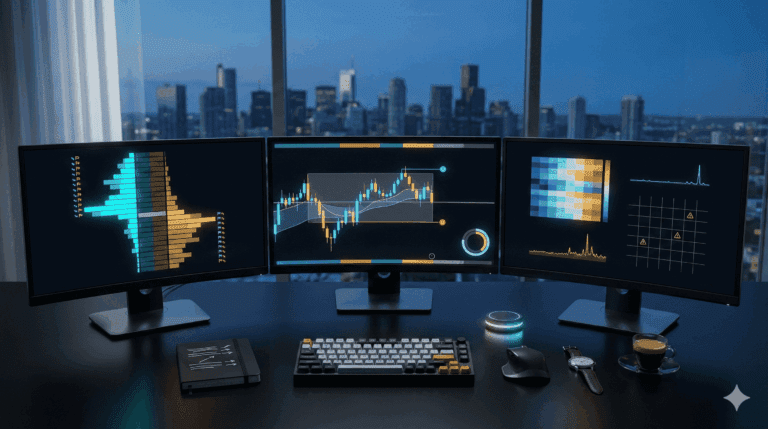
Charts alone are not the edge. Seeing the spread and depth while you decide is.
| Tool or metric | Why it matters | What good looks like |
| Real time bid and ask | The spread is your hidden toll | Tight, stable quotes in liquid times |
| Depth of book | Where size sits and shifts | Smooth updates without stutter |
| Order types | Controlled entries and exits | Limits, stop limits, OCO, alerts that actually trigger |
| Audit trail | Honest review and learning | Time stamped fills with fees itemized |
“A tight bid ask spread makes efficient entry and exit possible, while a wide spread raises trading costs.”
Sample two week routine you can keep
- Choose one commodity from the inflation table and one repeatable window.
- Trade a single setup at tiny size four sessions per week.
- Record spread at entry, slippage on exit, and max heat versus your stop.
- At weekend, cut one behavior that hurt results and keep one that clearly helped.
“Futures trade nearly around the clock on CME Globex with a brief daily maintenance pause.”
Pulling it together
You do not need a grand theory on day one. You need a liquid market you understand, a time of day you can show up for, and rules that survive surprise headlines. If this matches your style, create a watchlist titled top commodities to watch during inflation, add gold, crude, copper, and wheat, and practice on a venue that shows live commodity price charts and spreads clearly. When your notes start telling a consistent story, scale only the parts that worked.
If you want momentum right now, pick one platform that feels stable, run this routine for two weeks, and keep the venue where your journal shows fewer surprises and cleaner fills while applying commodities trading strategies for new traders.
FAQ
Do I need futures to learn commodities
No. ETFs and some CFDs mirror futures prices with different cost structures. Futures add exchange transparency and defined specs. Choose the path that matches your time and risk tolerance.
Is gold a reliable inflation hedge for small accounts
Gold often attracts demand during uncertainty, yet its short term link to CPI can be weak. Sizing still decides outcomes more than narrative.
Why do fills look worse around reports
Spreads widen and depth thin during major releases, which lifts slippage. Trading the most liquid windows can reduce that effect.
Does copper really signal growth
Copper is used across construction, power, and electronics, so its price often reflects the business cycle. Treat it as context, not a guarantee.