

Screens are calmer after the bell fades, yet trends keep breathing. This guide turns noise into a short list of best swing trading strategies for US stocks with clear timing, sizing, and the real role your stock broker plays when you hold for days instead of minutes.
“Edge in swing trading comes from picking the right moments to act and the discipline to do nothing the rest of the time.”
Strategy archetypes that actually travel across markets
| Strategy archetype | Setups you look for | Typical hold | Good fit when |
| Breakout and retest | Weekly or daily range break, then a pullback that holds prior resistance as support | 2 to 10 sessions | Momentum is broad and volume confirms |
| Mean reversion to value | Stretch away from a 20 to 50 day average, exhaustion candles, volume fade | 1 to 5 sessions | Index breadth is mixed and leaders rotate |
| Trend pullback with higher low | Rising 50 day, shallow dips that hold a rising channel | 5 to 20 sessions | Macro trend is healthy and spreads are tight |
| Post earnings drift | Gap on results, flag pattern, continuation on rising volume | 3 to 15 sessions | Guidance lifts and analysts raise targets |
| Relative strength pair | Long sector leader, hedge with weak peer or ETF | 5 to 15 sessions | Sector rotation is choppy and you want smoother P/L |
“A plan earns its keep when entry, invalidation, and first target fit in one line.”
Timing windows that matter for swing traders
| Window | Why it matters | Practical move |
| After earnings day plus one | Noise settles, true direction shows | Enter on first clean retest rather than the initial gap |
| First two trading days of the month | Flows and positioning reset | Favor leaders that already reclaimed the 20 day |
| Options expiration week | Pinning and gamma swings | Reduce size, let levels confirm before adding |
| FOMC and CPI weeks | Volatility shock windows | Trade smaller, widen stops only if your stats justify it |
A one page routine you can actually follow
- Screen weekly and daily charts for structure first, not indicators.
- Write a single sentence per candidate: entry zone, invalidation, first target.
- Risk in cash before shares, then translate to size.
- Log spread at entry, slippage at exit, and heat against your stop for ten sessions.
- Keep only what your notebook confirms.
Risk math that stays simple
- Per trade loss in dollars fixed in advance
- Portfolio cap for correlated names within a sector
- No averaging down unless the original structure remains valid
“Small size plus strict exits beats perfect entries.”
Tools and signals worth your attention
- Higher time frame first, weekly trend gives context to daily setups
- Two moving averages at most for slope and rhythm, not signals by themselves
- Volume clusters to spot real support and resistance
- A calendar that flags earnings and macro dates you will not trade through without a rule
Broker and platform realities for swing holds
So, what is the role of a stockbroker?
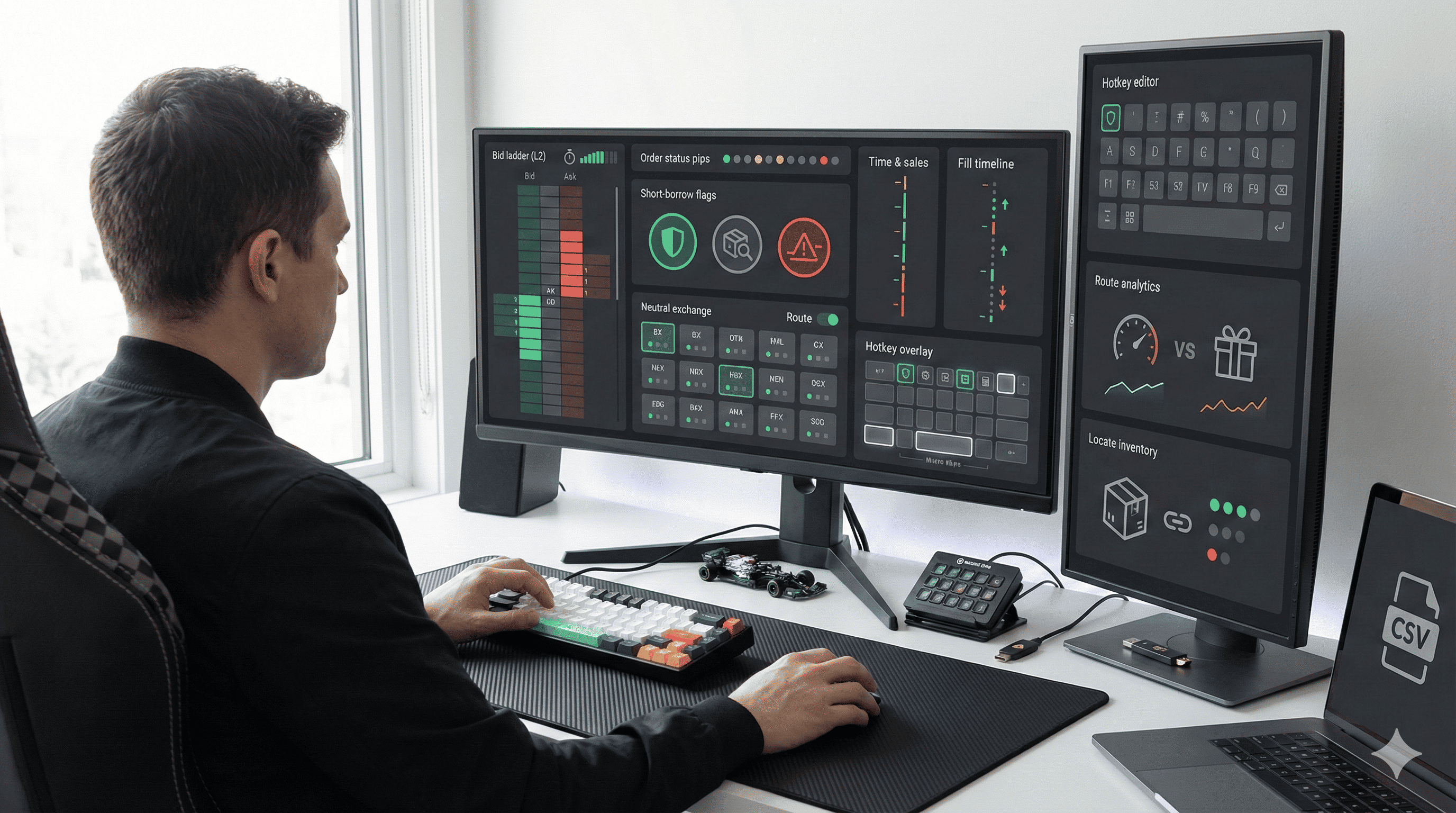
Your stock broker routes orders, reports positions and cash, applies corporate actions, lends shares for shorts when available, and enforces margin rules. For swing trading, that means fill quality, borrow availability, and clean statements matter as much as chart reading.
| Topic | Why it changes outcomes | What to ask your broker |
| Order routing and fills | Slippage compounds over multi day plans | Can I export venue and timestamps for each fill |
| Short borrow and fees | Availability and borrow cost can erase edge | Do you show borrow rates and locate status before entry |
| Corporate actions | Splits, dividends, mergers alter charts and P/L | How are adjustments reflected in statements and charts |
| Margin and risk | Overnight gaps require conservative leverage | What are the overnight margin rules by symbol |
“Process beats prediction when a gap opens against you. Your broker’s rails decide how cleanly that process runs.”
Checklist for the best swing trading strategies for US stocks
- Weekly trend up or basing, daily structure clean, volume confirms
- Catalyst known and on your calendar, not a surprise
- Entry planned at retest or value, not at the extreme of a bar
- Stop beyond structure, first target equal to or greater than cash risk
- Review days set in advance so decisions are scheduled, not emotional
Example trade card you can copy
| Field | Fill it in before you click |
| Ticker and setup | ABC, breakout and retest above 50 |
| Entry zone | 49.80 to 50.20 on light intraday pullback |
| Invalidation | Daily close back inside prior range, 48.90 |
| First target | 53.00 near measured move from range height |
| Position size | 0.75 percent cash risk on the stop distance |
| Notes | Earnings in 3 weeks, will trim to half if gap risk grows |
Portfolio balance in plain English
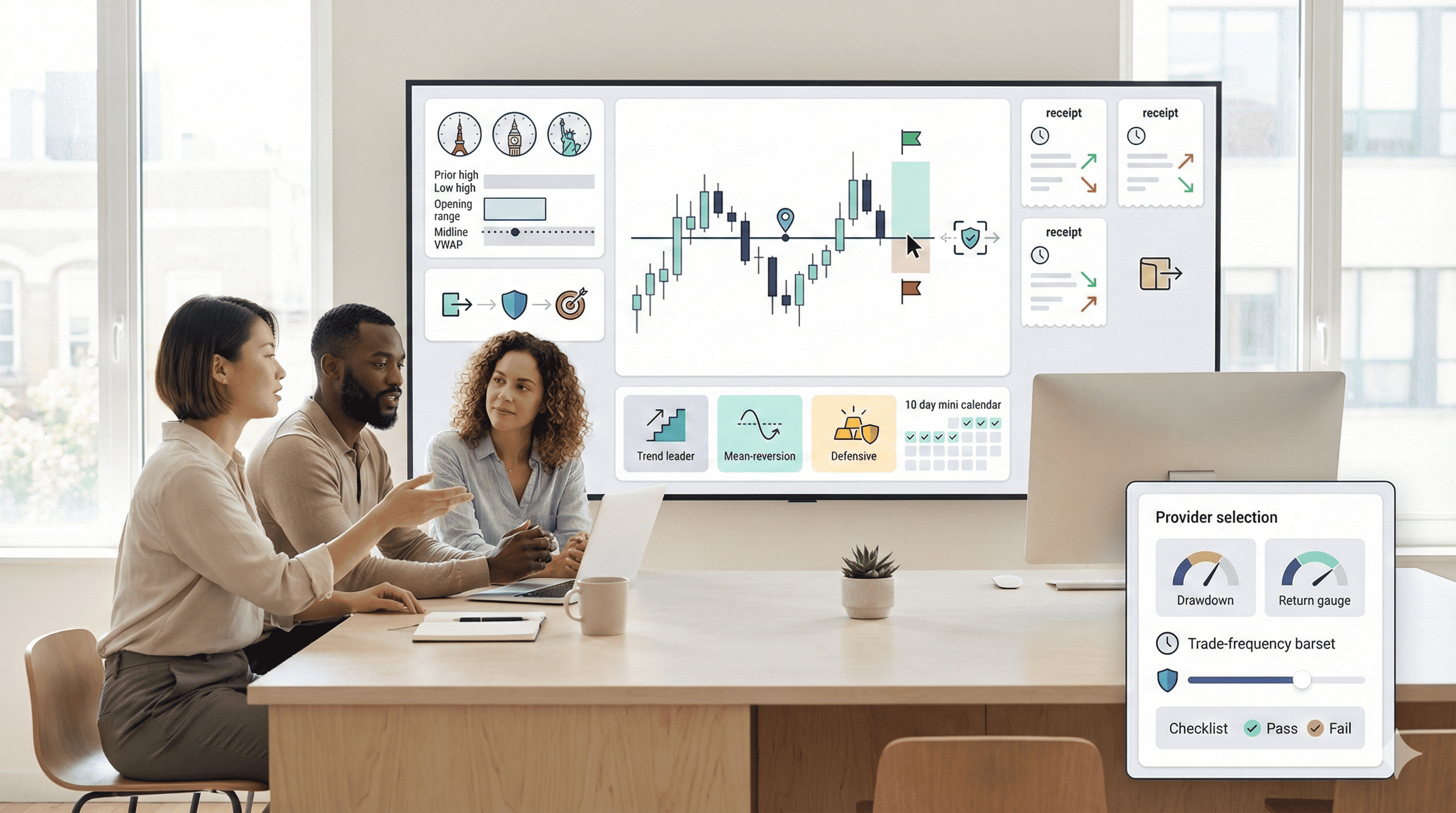
- One momentum leader, one mean reversion candidate, one defensive or low beta anchor
- Keep correlation in check; three semiconductor longs are one bet in disguise
- Cash is a position when setups are thin
If this rhythm fits, pick two archetypes from the table and run a two week micro test at small size. Your goal is not quick profits, it is cleaner habits. When your notes look calmer and your exits get faster, you are on the right path.
FAQ
Do I need a lot of indicators for swing trading
No. Structure and volume do most of the work. Indicators are context, not orders.
How many positions should I carry at once
Fewer than you think. Three to five well chosen names usually beat a crowded book.
Can I swing trade through earnings
You can, yet gap risk is real. Many traders reduce size before reports or wait for the post earnings drift setup.
Does broker choice really matter for swing trading
Yes. Borrow availability, borrow costs, routing quality, and statement clarity change outcomes. A stock broker that exposes venue tags and borrow info helps you act with fewer surprises.
Where should I start if I am new
Pick one setup from this page and trade it for ten sessions with a fixed cash risk. Add a second setup only when your stats are stable.