

Most people do not quit trading because charts are “too hard.” They quit because the routine breaks. They watch a few videos, place a couple of impulsive trades, then get stuck: mixed signals, unclear rules, and a pile of tabs that never turns into a plan.
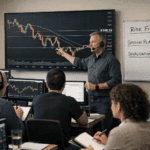
A global trading Academy works best when it feels less like a lecture hall and more like a gym: simple drills, feedback, and consistency. You can absolutely learn on your own, but structure helps you avoid the classic loop of switching strategies every week.
“A strategy is only ‘good’ after it survives your daily schedule.” (Mentor note)
This guide focuses on three practical pillars: choosing a Forex trading platform that supports your workflow, using a stock trading community without getting dragged into hype, and building a learning path you can actually stick to.
The learning problem nobody talks about
Trading information is everywhere. Without structure, you end up with noise instead of skill. A solid global trading Academy closes three gaps:
- Sequencing: learning the next right thing, not everything.
- Feedback: knowing whether you followed your plan or just got lucky.
- Context: understanding which tools fit which market conditions.
Knowledge is not a routine
Execution is built from repeatable habits:
- Pre-market scan
- A small watchlist
- Clear entry and exit rules
- Position sizing rules
- Journaling
If your “system” does not include those, it is not a system yet.
“Your edge is your process, not your prediction.” (Journal entry)
Choosing a Forex trading platform that supports learning
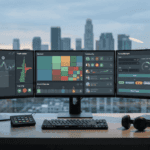
A Forex trading platform is not just a place to click buy or sell. It is your training environment. When it is messy, you learn bad habits fast.
The must-haves for building discipline
Order controls
- Market, limit, and stop orders that behave predictably
- Easy-to-set stop loss and take profit
- Clear display of pip value and margin impact
Charting and layout
- Clean templates you can save and reuse
- Multi-timeframe views without clutter
Risk and reporting
- Account history that exports cleanly
- Realized vs unrealized P and L that is easy to read
A simple check: if you cannot explain your platform’s margin and pip value for your typical trade, you are learning in the dark.
A quick platform comparison checklist
| Feature | Why it matters | Quick test |
| Stable execution | Reduces “did it fill?” confusion | Place demo orders during news |
| Simple order entry | Less misclick risk | Can you place a stop in 10 seconds? |
| Clean statements | Makes journaling possible | Export and read it in 2 minutes |
| Watchlists | Keeps focus | Can you limit to 8 to 12 symbols? |
| Mobile usability | Real life happens | Can you manage risk from your phone? |
A global trading Academy should teach platform basics early, because many avoidable losses come from execution mistakes, not from “bad analysis.”
A stock trading community: helpful or distracting?
A stock trading community can be a cheat code or a trap. It is a cheat code when it improves your decision process. It is a trap when it turns into a constant stream of hot takes.
The useful version of community
Look for communities that do these things well:
- Share trade plans, not only screenshots of wins
- Discuss risk, not only entries
- Allow disagreement without drama
- Separate education from signals
- Encourage journaling and review
A good global trading Academy uses community as a feedback loop: you post your plan, someone pokes holes in it, and you adjust before the trade, not after.
“Community should sharpen your thinking, not borrow your conviction.” (Peer review note)
Boundaries that protect focus
- No trades from chat. Only trade your written plan.
- Mute during execution. Reduce impulse entries.
- One review window. Check the community at a set time, not all day.
- Ask for process feedback. “Did I follow rules?” beats “Should I buy?”
A learning path that feels like progress
The easiest way to stall is to mix advanced topics too early. A practical global trading Academy sequences learning from foundation to execution to review.
Phase 1: Market basics that prevent confusion
You want to understand:
- How orders work (market vs limit vs stop)
- What moves price in your chosen market
- Session behavior (Asia, London, New York)
- Spreads, slippage, and liquidity
Example: a new forex learner trades a quiet session with a tight spread, then trades a high-impact news release with a wider spread and faster moves. The “same setup” behaves differently. Without context, they blame themselves instead of market conditions.
Phase 2: One setup, one timeframe, one risk model
Pick one approach and keep it boring for a month.
A beginner-friendly structure:
- One market type (forex majors or a small basket of stocks)
- One timeframe (15m or 1h is often manageable)
- One setup (breakout retest, trend pullback, or range fade)
- Fixed risk per trade (example: 0.5% to 1%)
You are not trying to be clever. You are trying to be consistent.
Phase 3: Review like an athlete
Your review should answer:
- Did I follow the rules?
- Did I size correctly?
- Was the trade taken at the right time of day?
- Did I enter because of a signal or because of emotion?
A simple journal template you can copy
- Setup name:
- Market and timeframe:
- Entry, stop, target:
- Risk in dollars and percent:
- Reason for entry (one sentence):
- Screenshot before:
- Screenshot after:
- Rule grade (A, B, C):
- One improvement for next time:
“If you can’t grade the trade, you can’t improve the trade.” (Review note)
Practical drills used inside a global trading Academy
Drills turn theory into reflex.
Drill 1: The 10-trade rule-following challenge
Goal: execute ten trades where success is defined as rule compliance, not profit.
Rules:
- Take only your chosen setup
- Risk stays constant
- Stop loss is placed immediately
- Journal within 15 minutes of closing
Drill 2: Replay trading for pattern recognition
Use market replay or historical charts:
- Mark your setup conditions
- Write the entry and exit
- Compare your plan to what happened
Drill 3: The “no new tools” week
For one week:
- No new indicators
- No new strategies
- No new YouTube rabbit holes
Just execute and review.
Using community feedback without copying trades
A strong stock trading community can level you up if you ask the right questions.
Try prompts like:
- “Is my stop placed where my idea is invalidated?”
- “Does my entry match my setup rules?”
- “Is my position size consistent with my plan?”
Avoid prompts like:
- “Buy or sell?”
- “What’s your target?”
A global trading Academy that includes community trains people to seek feedback on decision quality, not on predictions.
Risk management that stays simple, even on busy days
Most blowups come from two behaviors: increasing size after a win and revenge trading after a loss. Keep risk boring.
A clean risk framework
- Risk per trade: 0.5% to 1% of account
- Max loss per day: 2% to 3%
- Max open risk at once: 1.5% to 2%
- Stop trading after two rule-breaking trades, even if you are “up”
Example: $5,000 account
- 1% risk per trade = $50
- If your stop is 25 pips, pip value should be $2 per pip
- If the pip value is higher, reduce lot size
“Your first goal is survival. Skill comes after repetition.” (Coach note)
A realistic weekly schedule for learning and trading
Time is a real constraint. A good global trading Academy respects that.
A 5-day schedule for someone with a job
Monday
- Review last week’s journal
- Pick watchlist and key levels
Tuesday to Thursday
- Pre-session scan
- Trade window
- Journal
Friday
- Weekly review and screenshots
- Note one change for next week
If you can do less than this, do less. Consistency beats intensity.
Metrics that show real progress
Profit is not the only score early on. Track process metrics.
| Metric | Why it matters | Target for beginners |
| Rule-follow rate | Predicts long-term consistency | 70% then 85% |
| Overtrading count | Detects impulsive days | Trending down |
| Journal completion | Builds feedback | Near 100% |
| Setup clarity | Reduces “maybe” trades | Fewer vague entries |
A Forex trading platform that makes exporting and screenshotting easy will make these metrics easier to track.
Common roadblocks and quick fixes
“I keep changing strategies”
Commit to one setup for 20 trading days. Review only after day 20.
“Community makes me FOMO”
Set a time window for the community. Mute during your trade window.
“I panic close trades”
Reduce size and practice in replay so the plan feels familiar.
“I don’t trust my platform fills”
Trade demo during volatile periods and learn order behavior before risking real money.
Choosing the right global trading Academy for you
Not every program fits every person. Use practical criteria:
- Teaches platform basics and order behavior
- Includes risk rules you can measure
- Has reviews, homework, and accountability
- Supports journaling and trade grading
- Uses community with clear rules and moderation
If the whole experience depends on signals, you are renting confidence, not building it.
A grounded next step before the FAQ
Pick one market you can follow consistently, set up your Forex trading platform with a clean layout, and write one simple setup with fixed risk rules. Then join a stock trading community with the single goal of getting feedback on your plan quality, not getting trade ideas. If you want the structure of a global trading Academy, turn this into a two-week sprint: ten rule-following trades, full journaling, and one weekly review. That routine is boring enough to work, and clear enough to improve.
FAQ
Is a global trading Academy useful for complete beginners?
Yes, if it focuses on order mechanics, risk rules, and review. Beginners benefit most from structure and feedback, not from advanced strategies.
Can I use one Forex trading platform for learning and real trading?
Usually, yes. Many traders start in demo, then move to small real size on the same platform to keep workflows consistent. The key is understanding order types, spreads, and margin.
Does a stock trading community replace a course?
Not really. Community helps with feedback and accountability, but it can also be noisy. It works best alongside a clear learning path and a journal routine.
How long until the routine feels natural?
Many people notice improvement after 4 to 8 weeks of consistent journaling and rule-following. The timeline depends more on consistency than on intelligence.
Should I trade forex and stocks at the same time?
Early on, it is easier to focus on one market type. Once your process is stable and your results are consistent, adding a second market can make sense.
What is the simplest way to avoid big mistakes?
Keep risk per trade small, set a max daily loss, and stop trading after rule-breaking trades. Your job is to stay in the game long enough to learn.