

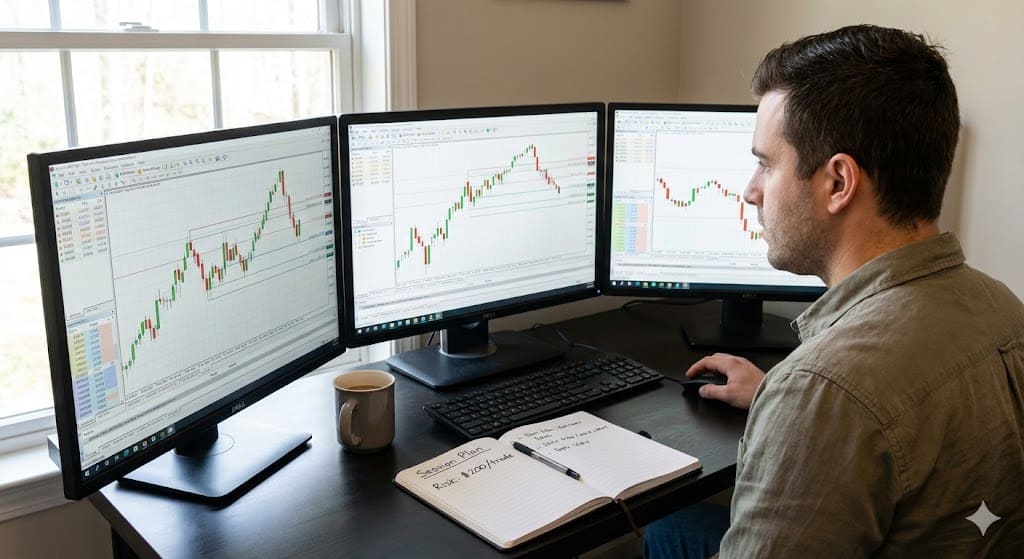
The book is ticking, liquidity shifts by the minute, and opinions pile up. This guide keeps you focused on the pieces that actually matter when you trade futures day after day.
“Preparation beats prediction when the tape runs fast.”
The landscape in plain English
Near around-the-clock access does not mean the same quality all day. Liquidity breathes with regions and exchanges. Knowing when you operate best is half the edge when you trade global futures.
Session rhythm you can use
| Window (your local time) | What usually happens | Practical move |
| Asia open | Thinner books, cleaner ranges | Smaller size, favor retests over first breaks |
| Europe ramp | Spreads tighten, pace improves | Let levels confirm, then add |
| US cash session | Highest volume and speed | Pre set brackets, avoid improvising |
| Daily maintenance | Matching engines pause briefly | No trades, review and set alerts |
“If the plan is not written, it is not a plan.”
Contracts, margins, and the costs you feel
Futures are standardized but not identical. Contract size, tick value, margin, and hours change by product. Your notebook should include these four numbers for every symbol you trade.
| Contract | Tick value | Typical day margin note | Why it matters |
| Equity index mini | Small tick, tight markets | Lower requirement intraday | Designed for scaling in and out |
| Energy or metals | Larger tick swings | Higher margin in events | Volatility magnifies slippage |
| Rate futures | Modest tick but fast moves | Exchange driven | Macro releases change behavior |
Simple rule: risk in cash first, size second. If your stop distance equals 8 ticks and each tick is 5 dollars, a 40 dollar risk per contract guides your size without guesswork.
A one page routine that travels across markets
- Mark prior day high and low, opening range, and one midline like VWAP
- Choose one setup per instrument: break and retest or mean reversion
- Attach brackets so entry, stop, and first target travel together
- Journal three numbers per trade: quoted spread at entry, slippage at exit, heat against the stop
“Small size plus strict exits beats perfect entries.”
Platform habits that pay you back
You can trade with MetaTrader 5 or any pro grade platform if it helps you act faster with fewer mistakes.
What to enable if you trade with MetaTrader 5
- One click brackets or OCO orders so risk rides every ticket
- Depth of market and a clean ladder for your active hour
- Custom time zones and alerts tied to session re opens and reports
- A template that prints your one line plan into the order comment for audits
Keep it boring: the best platform is the one that makes maintenance windows obvious, attaches risk by default, and lets you export fills with timestamps for quick review.
How to Trade global futures without chaos
Pick two contracts from different regions or asset classes so your book does not hinge on one headline.
| Pairing idea | Why it helps | Watch out |
| US index mini plus European index | Different session peaks | Mind the overlap and your sleep |
| Energy future plus rate future | Different macro drivers | Events can still correlate on big days |
| Metals plus index mini | Defensive tone vs growth tone | Size metals smaller during spikes |
“Diversification is protection from being exactly wrong at the wrong time.”
Two setups you can copy today
Break and retest
Level breaks on volume, price returns to test it, entry near the retest, stop beyond structure, first target equals your cash risk, trail the rest.
Mean reversion to the session midline
A stretched move stalls, pace slows, price rotates toward the midline. Trade smaller near scheduled releases.
Bringing it together
If this rhythm fits, pick one contract and a two hour window, then trade at micro size for ten sessions. Keep a two line journal per trade and measure slippage by hour. When your notes look calmer and your mistakes shrink, widen slowly. That is how you trade futures as a routine, not a rush.
Before the FAQs, one nudge. If you already trade with MetaTrader 5, save a bracket template, set session alerts, and pin your one line plan near the screen. If you Trade global futures, add a second contract from a different region only after your first window feels steady.
FAQ
Is it better to trade the open or wait for the retest
Both work. Many futures traders prefer the retest since it defines risk more clearly and reduces whipsaw.
How many contracts should a beginner follow
One to two liquid contracts are enough. Depth and rhythm beat novelty.
Can I Trade global futures from a single platform
Yes if your broker routes to the venues you need and shows product hours in your time zone. Confirm fees, margins, and maintenance windows for each exchange.
What matters most when I trade with MetaTrader 5
Brackets on by default, session timers visible, and exportable fills. Pretty screens do not replace evidence.
How do I grow size safely
Scale only when your last ten sessions show steady slippage and consistent exits. Keep a fixed cash risk per trade and raise it slowly.