

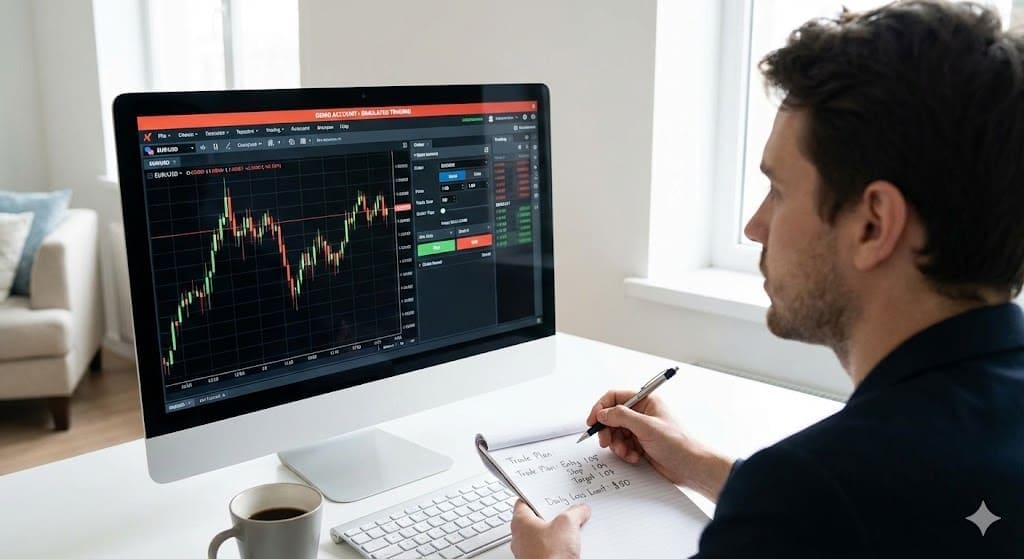
The first chart loads, spreads look tiny, and confidence creeps in. A trading demo account is the safest place to turn curiosity into routine, but only if you treat it like a rehearsal for money you care about.
“Practice small, review honestly, repeat quickly.”
The point of a demo isn’t wins, it’s proof
A demo is a sandbox for decisions: entries, exits, and record-keeping. That means you measure behavior, not just P/L.
| Focus | In demo | In live later |
| Risk rule | Fixed cash risk written on screen | Same number for first 2 weeks |
| Orders | Brackets on every entry | Identical templates |
| Review | Screenshot, spread, slippage noted | Same notes, same times |
| Emotions | Low stakes, easy discipline | Stress appears, rules protect you |
“A plan fits on one line: entry, stop, target.”
Build a routine you can lift into cash
Your repeatable session
- Pick a single two-hour window and trade only then
- One setup per market per day, no exceptions
- Stop goes in with the entry, not later
The journal that pays you back
Write three numbers for every trade: quoted spread at entry, slippage on exit, maximum heat against the stop. Ten sessions of these notes will tell you more than a month of random wins.
Use demo to trade multiple markets online without chaos
The fastest way to learn structure is to rotate through a few liquid symbols, not everything you can click.
| Market rail | Starter symbols | What you learn |
| FX | EURUSD, GBPUSD | Session rhythm and event windows |
| Indices | S&P 500 or Nasdaq CFD/futures micro | Breakout vs retest behavior |
| Metals | XAUUSD | Volatility pockets and spread changes |
Keep the layouts identical. The goal is consistent reading, not novelty. As confidence grows, add one new product to your list for broader online market trading, then remove the weakest fit so focus stays tight.
When the demo has done its job
Clues you’re ready to scale from practice to tiny money:
- You can write a one-line plan before the click
- Your average slippage and worst minutes are known
- You’ve logged ten sessions without breaking your daily loss cap
Move to live with the smallest size available, copy the same layout, and keep the journal running.
Common demo traps and better choices
- Chasing every alert → Pick one setup and trade only that
- Adding indicators daily → Lock the chart to levels, a midline, and volume
- Ignoring costs → Log spread and slippage by hour for two weeks
“Discipline is the edge that survives markets you didn’t expect.”
Bringing it together
If this rhythm fits, keep practicing on a trading demo account this week with one market and one setup. Next week, add a second symbol so you can trade multiple markets online without losing focus. When your notes look calmer and mistakes shrink, bring the plan to cash at the smallest size. That’s how online market trading becomes a repeatable routine, not a roller coaster.
FAQ
Is a demo account realistic enough to trust
Close on mechanics, different on emotions. Treat the demo like live by fixing a cash risk, using brackets, and journaling slippage. Then step to live with a tiny size.
How many markets should I practice at once
Two or three liquid symbols are plenty. The aim is to compare structure across markets, not to chase movement everywhere.
How long should I stay in demo
Until you have ten sessions of notes that show steady behavior and known costs. Then transition to live with minimal size and the same rules.
Do indicators help in demo
A few do, many distract. Levels, a session midline, and volume are enough to learn timing and exits.
What’s the best first step today
Write a one-page rule sheet with your session, setup, cash risk, and daily stop. Tape it near the screen and follow it for ten sessions before any change.