
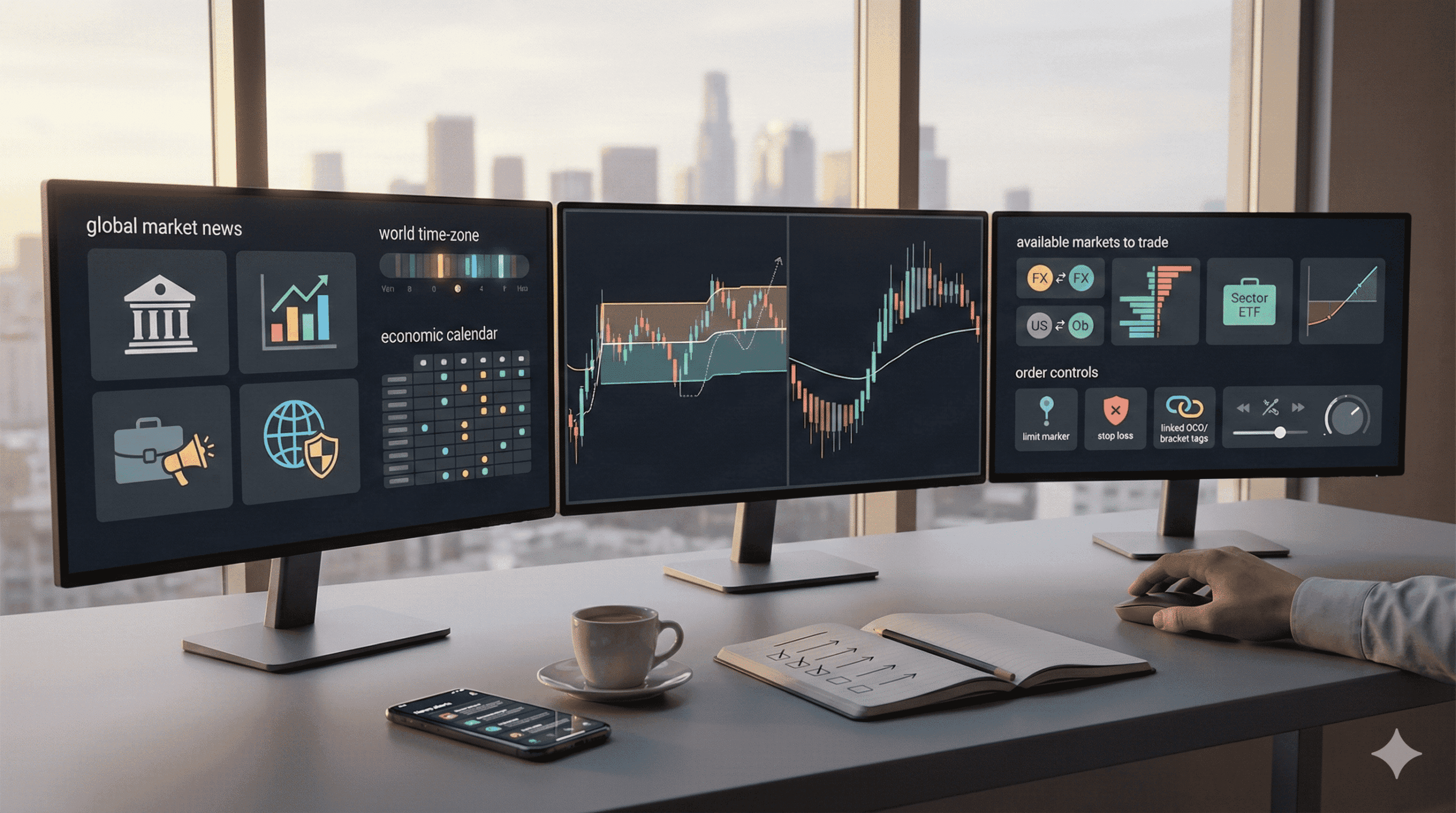
The calendar pings, futures wobble, chat fires off hot takes. You don’t need louder alerts, you need a way to turn global market news into clean, evidence-based choices. Here’s the practical flow, tied to live market charts and the available markets to trade today, without the hype.
“News is noise until it changes price, liquidity, or your risk math.”
What “news” actually means when you trade
Not all headlines are equal. Some shift interest rates or earnings paths; others just add commentary. The goal isn’t to react first, it’s to react well.
| Headline type | Why markets care | What to watch on charts |
| Policy & central bank signals | Reprices rates, FX, and equity risk | Range breaks, volatility spikes, trend shifts |
| Macro data (jobs, inflation) | Confirms or challenges the policy path | Spread widening, speed changes, failed retests |
| Earnings & guidance | Resets cash flows and sector tone | Gaps, volume clusters, leadership rotation |
| Geopolitics & supply | Alters costs, logistics, and risk premia | Correlation shocks, commodity ripples |
“Price is the final vote; your job is tally clerk, not cheerleader.”
Link headlines to live market charts (without guesswork)
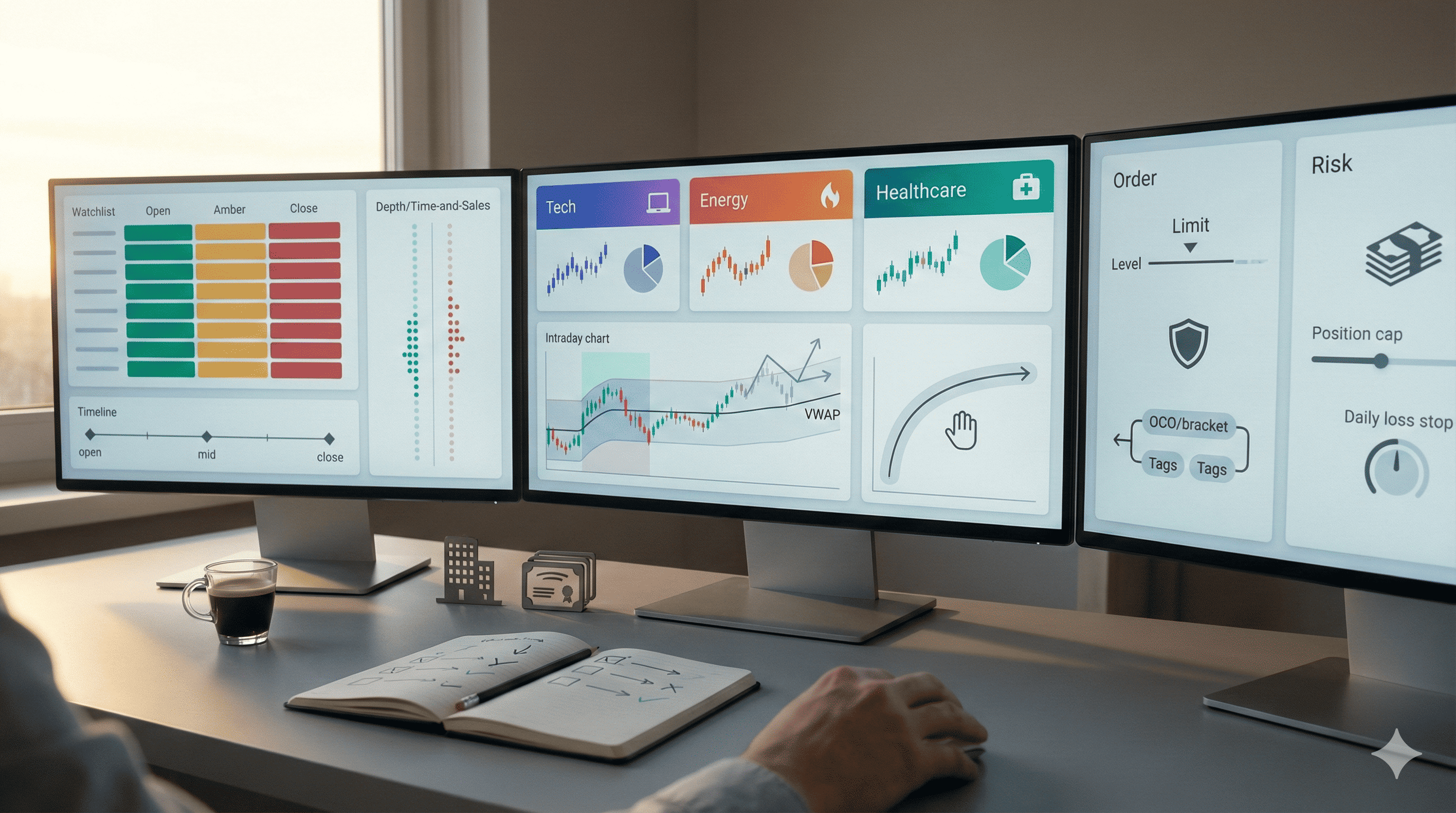
- Mark the session map: prior high/low, opening range, simple midline (e.g., VWAP).
- Tag the catalyst on your chart (time stamp + short label).
- Let structure speak first: did the level hold or break?
- Size in cash before you click; the chart only tells you where the stop lives.
Quick visual tells
- Expansion: bigger candles, wider spreads → trade smaller.
- Compression: tight bars near a key level → plan for breakout/retest.
- Failure: work through a level, immediate snap back → fade with tight risk or skip.
The available markets to trade when news hits
You don’t need to chase every asset. Pick rails that match your hours, account, and risk limits.
| Market rail | Typical instruments | Strengths | Watch-outs |
| Spot & CFDs | Major FX pairs, indices, metals | 24h access, flexible size | Provider model, financing on holds |
| Exchange futures | Equity index, rates, energy, gas | Central clearing, deep liquidity | Margin calls, roll management |
| Cash equities & ETFs | Single stocks, sector funds | Company-specific exposure | Gaps, borrow/short rules |
| Options on futures/stocks | Calls/puts, spreads | Defined risk structures | Greeks, assignment/expiry details |
“Pick one rail per idea. Mixing three venues for the same view is how slippage wins.”
From alert to trade in three moves
- Filter: does this headline change the trend or only narrate it?
- Frame: on live market charts, choose break–retest or mean-revert; not both.
- Fix risk: pre-set stop and first target; no ad-hoc moving lines once in.
Two templates that travel well
- Break & retest: level breaks, price returns, you enter near the retest; stop beyond structure, target = cash risk, then trail.
- Mean reversion: stretched move stalls, rotate back to midline; use smaller size near scheduled releases.
Costs and frictions you’ll actually feel
- Spread & slippage: spike around releases, log them by hour for two weeks.
- Attention tax: every extra “maybe” trade steals focus from the one you can measure.
- Financing/rolls: matter if you hold through sessions or across expiries.
“If your notebook gets calmer, your P/L usually follows.”
Tiny toolkit you can set up today
- One watchlist with time zones and catalyst icons
- A clean level template (H/L, opening range, midline)
- A three-line trade ticket macro: entry, stop, first target
- A debrief note: spread at entry, slippage on exit, rule you broke (if any)
Bringing it together
Treat global market news as raw material, not marching orders. Let charts confirm, let size protect you, and let your log decide what stays. If this resonates, run a five-session test: one setup, one hour, tiny size. Keep the routine only if your notes look calmer and your decisions faster.
Before the FAQ: if you want a nudge, shortlist two assets, pin their catalysts for the week, and promise yourself you’ll skip everything else. Restraint is a strategy.
FAQ
Do I need premium terminals to act on news
Not at the start. A reliable feed, a calendar, and disciplined levels on live market charts get you most of the way.
Which assets react fastest to macro headlines
Rates and FX usually move first, then equity indices and sectors. Pick one lane you can actually monitor.
Is it better to trade the first spike or the retest
Both can work; your logs will tell you which fits your temperament. Many traders prefer the retest for cleaner risk.
How many available markets to trade should I track
Fewer than you think. Two or three liquid symbols that match your hours will beat ten half-watched charts.